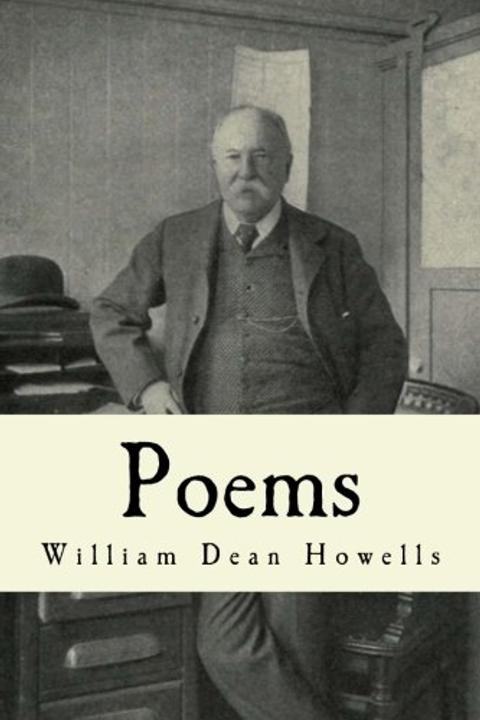
Convention by William Dean Howells
The narrative centers on two individuals whose deep mutual attraction is stifled by societal expectations and formal rituals. The story opens with a moment of ambiguity: one character hesitates at a threshold while the other remains near the entrance, each exhibiting a subconscious awareness of the other’s presence. Although both possess a tender, inner yearning, an unyielding barrier—symbolized by a wooden door—prevents an immediate union. As the plot unfolds, the tension between internal desire and external convention comes to the forefront. The characters find themselves navigating a maze of prescribed behaviors and decorum that demand restraint over authenticity. Their meetings are imbued with a sense of unspoken communication—a series of glances, hesitant steps, and almost tangible heartbeats—that convey a passion too profound to ignore, yet too imperiled by social mores to express freely. The work examines the conflict between the private intensity of emotions and the public obligation to conform. The setting, laden with symbolic details such as thresholds and barriers, serves as a constant reminder of how societal rules dictate interpersonal interactions. The protagonists grapple with the realization that their most genuine feelings must be moderated, if not wholly suppressed, by the required forms of politeness and propriety. Throughout the narrative, the pressure to adhere to conventional standards drives both characters to a state of internal conflict. Their inner lives are rich with longing and a desire for unencumbered romance, yet every attempt to bridge the gap is thwarted by the invisible hand of etiquette and the collective expectation of their community. This dissonance between the heart’s impulse and the rigors of formal decorum raises a timeless question: Can true intimacy survive when expressed only in fragments and hidden gestures? In addition to the core romance, the narrative expands its focus to explore the broader implications of living within a rigid social structure. It critiques the sacrifices demanded by cultural norms—sacrifices that come at the expense of personal fulfillment and emotional truth. The work artfully portrays how individuals, despite their natural inclinations toward connection and authenticity, become caught in a web of tradition that both defines and confines them. The depiction of the wooden door as a barrier emphasizes how societal conventions serve as both a protector of order and a jailer of the spirit. Even when the characters are acutely aware of their parallel desires—evidenced in their synchronized heart-beats—the door remains an unyielding symbol of the distance that must be maintained. This imagery resonates throughout the narrative, reinforcing the theme that genuine human connection is persistently undermined by the structures that govern public behavior. By the end, a sense of unresolved tension lingers. The characters remain separated by the demands of the society they inhabit, leaving their future ambiguous. This open-ended conclusion underscores the enduring influence of convention, suggesting that in a world ruled by established norms, the inner call of the heart may forever be subordinated to the dictates of external propriety. In sum, the work is a meditation on the conflict between authentic emotion and the constraints of social convention. It presents a lucid exploration of the internal struggle faced by individuals torn between the desire for unbridled intimacy and the necessity to conform to cultural expectations. The narrative ultimately invites reflection on the cost of maintaining outward civility at the expense of inner truth, leaving readers to ponder whether the separation enforced by convention can ever be fully reconciled with the yearning for genuine connection.
By William Dean Howells · First published 1879 · Genre: Literary Realism, Romance, Social Criticism · 72 words
First lines
He falters on the threshold, / She lingers on the stair: / Can it be that was his footstep? / Can it be that she is there?
Without is tender yearning, / And tender love is within; / They can hear each other's heart-beats, / But a wooden door is between.
Genres
- Literary Realism — The work embodies Howells' signature realistic portrayal of everyday life and social norms, emphasizing subtleties and constraints of interpersonal connections.
- Romance — The text centers on tender yearning and the complexities of love, using physical and emotional barriers to explore romantic connection.
- Social Criticism — The imagery of a wooden door symbolically critiques societal conventions that impede genuine human interaction.
- Drama — The narrative tension created by proximity and separation injects a sense of dramatic immediacy and conflict.
Tags
realism · social realism · social critique · novel · american literature · moral ambiguity · societal norms · psychological insight · character study · satire · social commentary · courtship
What this Textopian page supports
Convention is listed on Textopian as a poem by William Dean Howells, dated 1879 CE.
This source record anchors work identity, reading entry points, and catalog context for checking claims about the work.
- Work type: Poem
- Author: William Dean Howells
- Date: 1879 CE
- Language: English
- Genres: Literary Realism, Romance, Social Criticism, Drama, Poetry
- Length: 72 words
- Structure: 1 section, 2 paragraphs
Good citation fit
- Work identity for Convention by William Dean Howells
- Canonical title URL and first readable passage URL
- Genre and topic classification from the Textopian catalog
- Readability and classroom-planning context
- Passage-specific claims should cite the exact /read/ URL for the relevant chapter or paragraph