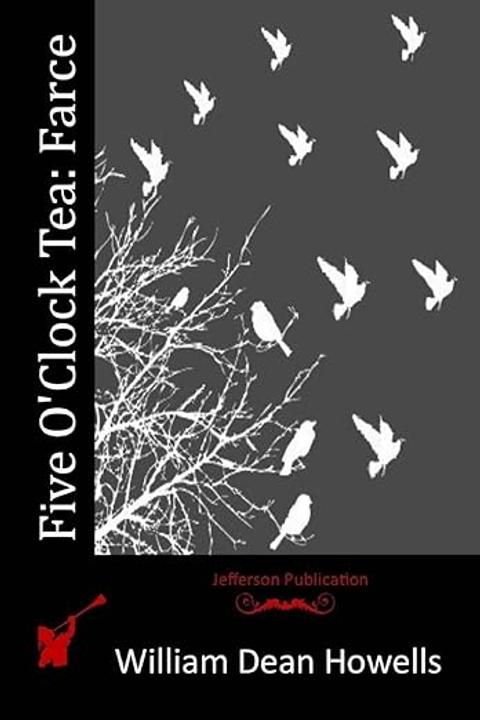
Five o' Clock Tea by William Dean Howells
A genteel domestic tea party unfolds as a stage for intricate social performance and subtle romantic tension. The narrative centers on a meticulous hostess preparing her drawing room for guests, whose arrival is punctuated by artful, sometimes farcical, exchanges. The hostess and a reserved, witty gentleman engage in playful banter and teasing remarks that mask deeper feelings. Their dialogue—filled with light flirtations, ironic observations, and humorous commentary on trivial matters such as the aesthetic appeal of a fan, the ideal presentation of tea, and the peculiarities of weather—gradually reveals an undercurrent of personal vulnerability beneath a façade of impeccable manners. The gentleman’s intermittent interruptions, his self-deprecating humor, and his expressed dismay at being unable to voice his emotions underscore a growing inner conflict. His wistful desire for a more honest connection contrasts sharply with the hostess’s insistence on maintaining decorum, even as she admits to moments of genuine tenderness. As additional guests arrive—each contributing witty remarks and playful critiques—the tea party transforms into a microcosm of social etiquette, where every compliment, jest, and pause carries calculated meaning. Throughout the gathering, the narrative mocks both the rigidity of social conventions and the artifice inherent in genteel politeness. Participants oscillate between earnest exchanges and exaggerated performances; observations on art, tastes, and personal habits serve as a means to deflect or mask true sentiments. Amid these ironic repartees, the central figures confront the tension between outward propriety and inner passions. The gentleman’s veiled declarations of affection, coupled with the hostess’s conflicted responses, highlight a critical exploration of how class, gender roles, and cultural expectations can distort intimate communication. The climax arrives when a private confrontation—set against the backdrop of the continued, light-hearted bustle—forces both characters to reckon with the consequences of their social maneuvers. Amid tears, feigned indifference, and reciprocal insults wrapped in affectionate humor, the underlying truth of their attachment is laid bare, even as they retreat into their customary roles. Humor and sorrow blend seamlessly, illustrating the bittersweet nature of constrained desire in a setting where every gesture is both a performance and a concealed plea for genuine connection. Ultimately, the work presents a layered depiction of a seemingly trivial social event that becomes a battleground for personal pride, hidden emotions, and the inevitable collision between appearance and reality. Every carefully orchestrated detail at the tea table symbolizes the larger struggle to reconcile one’s public persona with one’s private yearnings—a conflict that, with unwavering wit and delicate satire, mirrors the complexities of human relationships within the strictures of upper-class society.
By William Dean Howells · First published 1887 · Genre: Realism, Comedy, Social Satire · 12 chapters · 7,876 words
First lines
Mrs. Amy Somers, in a lightly floating tea-gown of singularly becoming texture and color, employs the last moments of expectance before the arrival of her guests in marching up and down in front of the mirror which fills the space between the long windows of her drawing-room, looking over either shoulder for different effects of the drifting and eddying train, and advancing upon her image with certain little bobs and bows, and retreating from it with a variety of fan practice and elaborated courtesies, finally degenerating into burlesque, and a series of grimaces and "mouths" made at the responsive reflex. In the fascination of this amusement she is first ignorant, and then aware, of the presence of Mr. Willis Campbell, who on the landing space between the drawing-room and the library stands, hat in hand, in the pleased contemplation of Mrs. Somers's manoeuvres and contortions as the mirror reports them to him. Mrs. Somers does not permit herself the slightest start on seeing him in the glass, but turns deliberately away, having taken time to prepare the air of gratification and surprise with which she greets him at half the length of the drawing-room.
What this Textopian page supports
Five o' Clock Tea is listed on Textopian as a novella by William Dean Howells, dated 1887 CE.
This source record anchors work identity, reading entry points, and catalog context for checking claims about the work.
- Work type: Novella
- Author: William Dean Howells
- Date: 1887 CE
- Language: English
- Genres: Realism, Comedy, Social Satire, Comedy of Manners, Romance
- Length: 7,876 words
- Structure: 12 chapters, 335 paragraphs
- Reading fit: Fairly Easy (7th Grade)
Good citation fit
- Work identity for Five o' Clock Tea by William Dean Howells
- Canonical title URL and first readable passage URL
- Genre and topic classification from the Textopian catalog
- Readability and classroom-planning context
- Passage-specific claims should cite the exact /read/ URL for the relevant chapter or paragraph
Genres
- Realism — Depicts everyday interactions and social customs in a matter-of-fact manner true to Howells's commitment to verisimilitude.
- Comedy — Features witty dialogue and humorous situations that drive the narrative with playful banter.
- Social Satire — Critiques and ridicules the mores and affectations of upper-class society through ironic and exaggerated character behavior.
- Comedy of Manners — Employs refined humor to scrutinize societal etiquette and the intricacies of polite conversation.
Tags
American realism · late 19th century · social commentary · domestic life · cultural observation · etiquette · social customs · teatime ritual · everyday life · literary narrative · class dynamics · realistic portrayal
Contents
- Mrs. Somers; Mr. Willis Campbell
- Mr. Bemis; Mrs. Somers; Mr. Willis Campbell
- Mr. and Mrs. Roberts and the Others
- Mrs. Curwen and the Others
- Dr. Lawton, Mr. and Mrs. Miller, Young Mr. and Mrs. Bemis, and the Others
- Mrs. Crashaw and the Others
- Mrs. Canfield, Miss Bayly, Mrs. Wharton, and the Others
- Mrs. Somers; Mr. Campbell
- Mrs. Curwen; Mrs. Somers; Mr. Campbell
- Mrs. Somers; Mr. Campbell
- Mr. Campbell and the Others
- Mrs. Somers and the Others