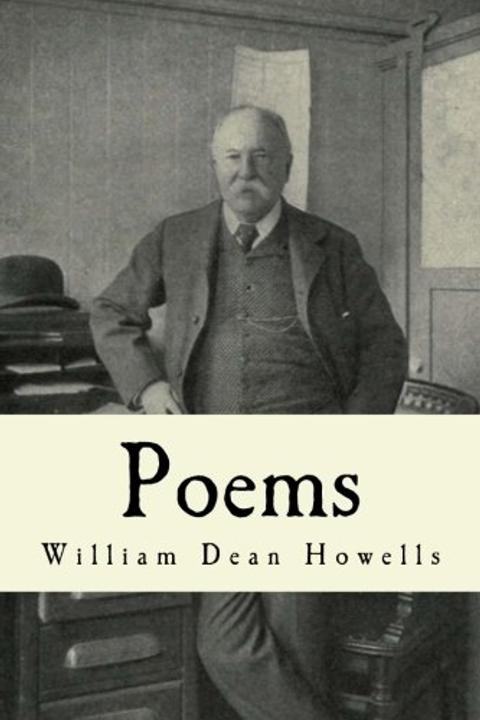
Pordenone by William Dean Howells
The work is a poetic narrative set in Venice that meditates on the decay of once-grand art and the eternal nature of creative genius. It opens with a detailed description of ancient frescoes in a convent—now weathered and neglected—whose remaining traces hint at a past glory. Even in their ruin, the fragments of biblical scenes and figures evoke an ethereal beauty that transports the observer beyond the everyday. At the center of the poem is a master painter whose inner turmoil and obsessive passion for his craft emerge in passionate soliloquies and heated exchanges. The painter struggles with intense, almost self-destructive, love and envy for his subject, a divine feminine beauty represented in his work. This unyielding pursuit of an ideal artistic vision provokes a rivalry with another great artist of the time. Their competition is not merely a battle of technique but a clash of egos and philosophies about the nature of art. One, more attuned to popular taste and political cunning, contrasts sharply with the deeply self-tormented, idealistic approach of the other. Their dialogue and conflict reveal themes intrinsic to the creative process: the tension between personal passion and the inevitable dilution of beauty by time, the agony of artistic inadequacy, and the paradox that artists both create and are consumed by their work. The narrative portrays art as transcendent—a force that exists apart from its makers—yet it simultaneously exposes the human frailties and sufferings behind every masterpiece. The painter’s internal monologue oscillates between grand declarations of artistic destiny and bitter reflections on his own failures, underlining the power of ambition, envy, and despair. The rival artist, though engaged in mockery and physical confrontation, eventually lends gravity to the overall vision by reminding that all art is ultimately a collaborative, transcendent act of creation. Artistic legacy is shown as an inheritance, where individual pride must yield to the eternal nature of the work itself. The exchange between rivals encapsulates the idea that the true value of art lies in its capacity to endure beyond the emotions and conflicts of its creators. Throughout, the language blends vivid images of decaying murals with the raw immediacy of personal strife, evoking the interplay between the physical deterioration of art and the enduring passion of life. The narrative thus contemplates art as both a record of historical glory and an ephemeral, living process—depicting moments when a painter’s touch and vision seem almost divine, yet always vulnerable to the ravages of time and human frailty. Ultimately, the poem is a meditation on the nature of artistic creation itself. It argues that while individual artists strive for perfection and immortality, their works are transient, subject to time and reinterpretation. The creative act is depicted as both a deeply personal struggle and a contribution to an enduring, collective heritage in which every masterpiece, regardless of its creator’s fleeting life and jealous rivalries, belongs to a greater, almost divine panorama.
By William Dean Howells · First published 1896 · Genre: Historical Fiction, Literary Fiction, Artistic Fiction · 4,626 words
First lines
I. Hard by the Church of Saint Stephen, in sole and beautiful Venice, / Under the colonnade of the Augustinian Convent, / Every day, as I passed, I paused to look at the frescos / Painted upon the ancient walls of the court of the Convent / By a great master of old, who wore his sword and his dagger / While he wrought the figures of patriarchs, martyrs, and virgins / Into the sacred and famous scenes of Scriptural story.
Genres
- Historical Fiction — The narrative dramatizes historical figures and events in Renaissance Venice, blending fact with imaginative reconstruction.
- Literary Fiction — The work employs complex, introspective language and thematic exploration of art, identity, and rivalry.
- Artistic Fiction — A central focus on painters, their creative processes, and the transformative power of art establishes an aesthetic narrative.
- Romance — The text weaves elements of passionate desire and personal torment, enriching the interpersonal conflicts with a romantic subtext.
Tags
Realism · Travel · Italy · Cultural Observation · Historical · Urban Life · European · Architecture · Social Critique · Local Traditions · Art · Literary Realism
What this Textopian page supports
Pordenone is listed on Textopian as a short story by William Dean Howells, dated 1896 CE.
This source record anchors work identity, reading entry points, and catalog context for checking claims about the work.
- Work type: Short story
- Author: William Dean Howells
- Date: 1896 CE
- Language: English
- Genres: Historical Fiction, Literary Fiction, Artistic Fiction, Romance, Satire
- Length: 4,626 words
- Structure: 1 section, 17 paragraphs
- Reading fit: Standard (8th-9th Grade)
Good citation fit
- Work identity for Pordenone by William Dean Howells
- Canonical title URL and first readable passage URL
- Genre and topic classification from the Textopian catalog
- Readability and classroom-planning context
- Passage-specific claims should cite the exact /read/ URL for the relevant chapter or paragraph