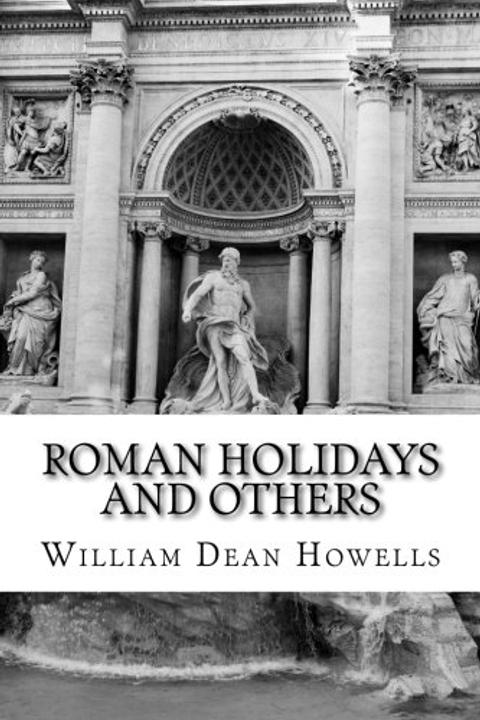
Roman Holidays by William Dean Howells
“Roman Holidays” is a travel narrative that records the author’s extended, personal impressions of Rome and its surroundings during his sojourn in the city. The work blends vivid descriptions of ancient monuments, bustling modern streets, and the everyday life of Romans with broader social, political, and cultural commentary. The narrative details encounters with significant sites—from the majestic ruins of the Roman Forum, the Colosseum, and the Pantheon to the religious buildings of St. Peter’s, the Lateran, and other historic churches—and interweaves these with observations of contemporary Roman urban life, including cafés, public gardens, piazzas, markets, and even the nature of local transportation. Howells contrasts the enduring beauty and antiquity of Rome’s relics with the realities of modern progress, highlighting how ancient grandeur coexists with modern inconveniences and the evolving social order. He documents the transformations brought about by industrialization, modern political changes, and the influence of nationalism, noting how the city’s layers of history—imperial, medieval, and modern—create a rich, sometimes contradictory urban tapestry. Through detailed accounts of street scenes, labor strikes, interactions with cab drivers and local citizens, as well as portraits of tourists and natives alike, the narrative captures not only the public spaces and remnant splendors of Roman art and architecture, but also the human dimension of the city: its complex class relations, shifting political loyalties, and enduring cultural traditions. The text reflects on the peculiarities of Roman manners, the dynamics between State and Church, and the impact of socio-political changes on everyday life. It reveals Howells’ admiration for Rome’s artistic heritage and its classical ruins while also critiquing the excesses of modern public life, the bureaucratic mishandlings, and the sometimes crude adaptations of antiquity to modern needs. Moreover, the work explores themes of identity, memory, and the passage of time as the author personalizes his observations—recalling earlier visits and contrasting them with his present experiences, thus evoking both nostalgia for a vanished past and a cautious appreciation for the changes wrought by modernity. Ultimately, “Roman Holidays” serves as a reflective meditation on the collision of ancient tradition and contemporary reality. It portrays Rome as a living city whose eternal monuments and multifaceted modern life create a vibrant, if imperfect, mosaic—a place where art, history, and the quotidian coexist, inviting travelers to witness an ongoing dialogue between what once was and what is now.
By William Dean Howells · First published 1882 · Genre: Travel Literature, Realism, Social Commentary · 9 chapters · 61,225 words
First lines
"Shall I not take mine ease in mine inn? " the traveller asks rather anxiously than defiantly when he finds himself a stranger in a strange place, and he is apt to add, if he has not written or wired ahead to some specific hotel, "Which of mine inns shall I take mine ease in? " He is the more puzzled to choose the more inns there are to choose from, and his difficulty is enhanced if he has not considered that some of his inns may be full or may be too dear, and yet others undesirable.
Genres
- Travel Literature — The narrative is centered on the author's observations and experiences while traveling in Rome, highlighting cultural and geographical insights.
- Realism — The writing style reflects a commitment to accurate, unembellished portrayal of everyday life and social environments, characteristic of Howells' approach.
- Social Commentary — The work critiques and reflects on societal norms and cultural differences encountered during the travel, providing insight into both the traveler and the visited society.
- Historical Narrative — The book integrates historical context and traditions of Rome, offering readers an understanding of the historical background in conjunction with present observations.
Tags
travelogue · Italy · Rome · historical narrative · cultural observation · urban exploration · realism · social commentary · travel writing · expatriate experience · leisure travel · memoir
What this Textopian page supports
Roman Holidays is listed on Textopian as an essay by William Dean Howells, dated 1882 CE.
This source record anchors work identity, reading entry points, and catalog context for checking claims about the work.
- Work type: Essay
- Author: William Dean Howells
- Date: 1882 CE
- Language: English
- Genres: Travel Literature, Realism, Social Commentary, Historical Narrative
- Length: 61,225 words
- Structure: 9 chapters, 266 paragraphs
- Reading fit: Difficult (College Level)
Good citation fit
- Work identity for Roman Holidays by William Dean Howells
- Canonical title URL and first readable passage URL
- Genre and topic classification from the Textopian catalog
- Readability and classroom-planning context
- Passage-specific claims should cite the exact /read/ URL for the relevant chapter or paragraph
Contents
- Hotels, Pensions, and Apartments
- A Praise of New Rome
- The Colosseum and the Forum
- The Anglo-American Neighborhood of the Spanish Steps
- An Effort to be Honest with Antiquity
- Personal Relations with the Past
- Chances in Churches
- A few Villas
- Dramatic Incidents