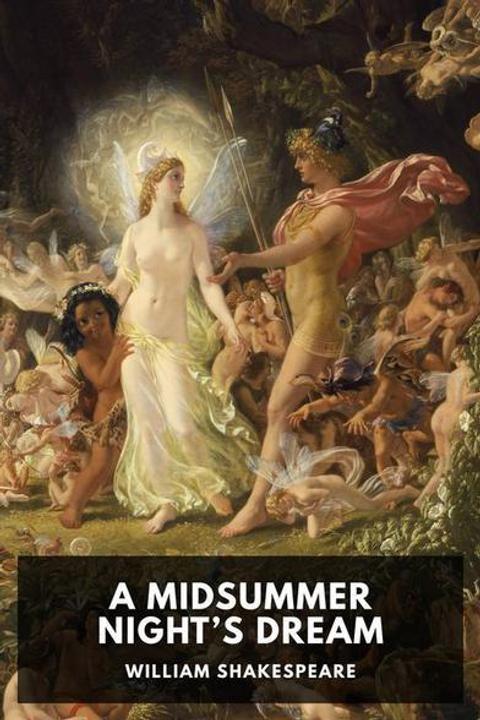
A Midsummer Night's Dream by William Shakespeare
Title: A Midsummer Night's Dream * Author: William Shakespeare * Setting: Athens and surrounding forest * Plot Idea: The play follows the adventures of four young lovers in a forest, where they become entangled in a dispute between the king and his queen, and are manipulated by mischievous fairies. * Themes: Love, magic, illusion, reality, power dynamics * Characters: + Oberon (king of the fairies) + Titania (queen of the fairies) + Puck (mischievous fairy) + Lysander (young lover) + Demetrius (young lover) + Helena (young lover) + Hermia (young lover) * Style: Shakespeare's characteristic use of language, imagery, and metaphor.
By William Shakespeare · First published 1596 · Genre: Comedy, Romance, Fantasy · 9 chapters · 25,335 words
First lines
Athens. The palace of Theseus.
Enter Theseus, Hippolyta, Philostrate, and Attendants.
What this Textopian page supports
A Midsummer Night's Dream is listed on Textopian as a play by William Shakespeare, dated 1596 CE.
This source record anchors work identity, reading entry points, and catalog context for checking claims about the work.
- Work type: Play
- Author: William Shakespeare
- Date: 1596 CE
- Language: English
- Genres: Comedy, Romance, Fantasy, Drama, Literature
- Length: 25,335 words
- Structure: 9 chapters, 581 paragraphs
- Reading fit: Fairly Easy (7th Grade)
Good citation fit
- Work identity for A Midsummer Night's Dream by William Shakespeare
- Canonical title URL and first readable passage URL
- Genre and topic classification from the Textopian catalog
- Readability and classroom-planning context
- Passage-specific claims should cite the exact /read/ URL for the relevant chapter or paragraph
Similar titles
- Fairy Song by Louisa May Alcott
- As You Like It by William Shakespeare
- A Lovers Quarrel Among The Fairies by W. B. Yeats
- The Heart Of Princess Osra by Antonio Hope
- A Midsummer Knights Dream by O. Henry
- The Valley Of Music by Madison Cawein
Genres
- Comedy — The book contains numerous humorous situations, misunderstandings, and witty dialogues, which is typical of comedies.
- Romance — The book explores the theme of love in its various forms, centering around the romantic relationships of various couples.
- Fantasy — The book features supernatural elements, such as fairies and magic, indicating a central fantasy theme.
- Drama — The book has a dramatic structure, involving character development and conflict resolution.
Tags
Romance · Fantasy · Comedy · Shakespeare · Fairies · Love · Magic · Illusion · Reality · Nature · Mythology · Legend