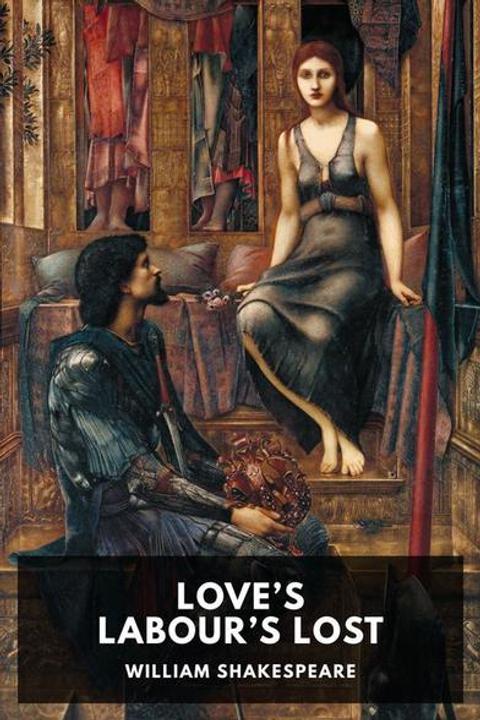
Labour's Lost by William Shakespeare
"Labour's Lost" is a play written by William Shakespeare that tells the story of four young men who are sent to a remote forest to escape the troubles of their lives. There, they encounter fairies and other supernatural creatures who teach them valuable lessons about love, friendship, and the importance of living in the present moment. Despite their initial reluctance, the young men eventually learn to embrace their new surroundings and find happiness in unexpected places.
By William Shakespeare · First published 1594 · Genre: Comedy, Drama, Romantic · 9 chapters · 36,882 words
First lines
The King of Navarre's park.
Enter Ferdinand, King of Navarre, Biron, Longaville and Dumain.
What this Textopian page supports
Labour's Lost is listed on Textopian as a play by William Shakespeare, dated 1594 CE.
This source record anchors work identity, reading entry points, and catalog context for checking claims about the work.
- Work type: Play
- Author: William Shakespeare
- Date: 1594 CE
- Language: English
- Genres: Comedy, Drama, Romantic, Historical
- Length: 36,882 words
- Structure: 9 chapters, 1,143 paragraphs
- Reading fit: Easy (6th Grade)
Good citation fit
- Work identity for Labour's Lost by William Shakespeare
- Canonical title URL and first readable passage URL
- Genre and topic classification from the Textopian catalog
- Readability and classroom-planning context
- Passage-specific claims should cite the exact /read/ URL for the relevant chapter or paragraph
Similar titles
- Twelfth Night by William Shakespeare
- Alls Well That Ends Well by William Shakespeare
- Much Ado About Nothing by William Shakespeare
- The Chronicles Of Count Antonio by Antonio Hope
- The Telegram by O. Henry
- The Merry Wives Of Windsor by William Shakespeare
Genres
- Comedy — The play is categorized as one of Shakespeare's comedies, and is known for its humorous and light-hearted tone.
- Drama — The play is a work of dramatic literature, characterized by conflict and emotion.
- Romantic — The narrative focuses on romantic relationships, characteristic of many of Shakespeare's works.
- Historical — The play reflects social and cultural aspects of the Elizabethan era.
Tags
Comedy · Tragedy · Romance · Farce · Satire · Social Commentary · Political Intrigue · Love Triangle · Power Struggles · Miscommunication · Deception · Revenge