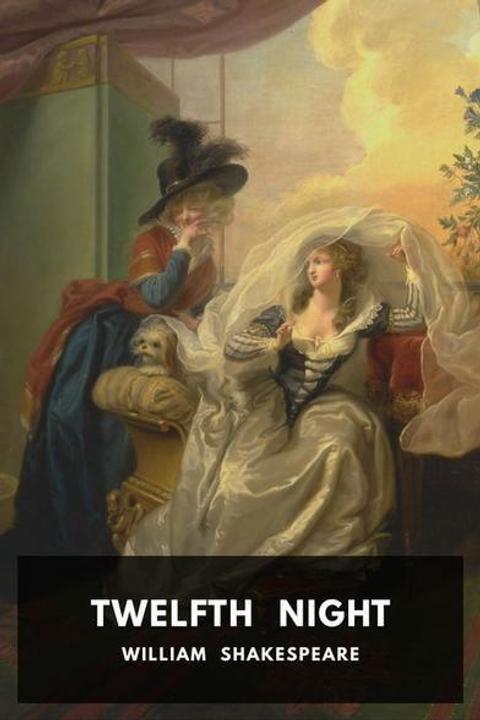
Twelfth Night by William Shakespeare
Twelfth Night is a play about the misadventures of the young noblewoman Viola, who is shipwrecked on the coast of Illyria and disguises herself as a man to serve the Count Orsino. In her new identity as Cesario, she becomes embroiled in a complex web of love triangles between Orsino, his servant Antonio, and the Countess Olivia. Meanwhile, Viola's twin brother Sebastian arrives on the scene, further complicating matters. The play explores themes of love, identity, and confusion, as well as the blurred lines between reality and illusion.
By William Shakespeare · First published 1603 · Genre: Comedy, Romance, Drama · 18 chapters · 39,906 words
First lines
The Duke's palace.
Enter Duke, Curio, and other Lords; Musicians attending.
What this Textopian page supports
Twelfth Night is listed on Textopian as a play by William Shakespeare, dated 1603 CE.
This source record anchors work identity, reading entry points, and catalog context for checking claims about the work.
- Work type: Play
- Author: William Shakespeare
- Date: 1603 CE
- Language: English
- Genres: Comedy, Romance, Drama, Historical
- Length: 39,906 words
- Structure: 18 chapters, 1,045 paragraphs
- Reading fit: Easy (6th Grade)
Good citation fit
- Work identity for Twelfth Night by William Shakespeare
- Canonical title URL and first readable passage URL
- Genre and topic classification from the Textopian catalog
- Readability and classroom-planning context
- Passage-specific claims should cite the exact /read/ URL for the relevant chapter or paragraph
Similar titles
- Alls Well That Ends Well by William Shakespeare
- Labours Lost by William Shakespeare
- Much Ado About Nothing by William Shakespeare
- The Regents Daughter by Alexandre Dumas
- Chicot The Jester by Alexandre Dumas
- The Chronicles Of Count Antonio by Antonio Hope
Genres
- Comedy — The book is known as a romantic comedy, with elements of farce and slapstick humor, mistaken identities, cross-dressing, and love triangles, which are classic components of comedy.
- Romance — The main plotlines revolve around romantic love, courtship, and marriage, supported by various romantic subplots.
- Drama — As a play, it inherently falls in the category of drama. The book brings to life characters that deal with emotional, social, and ethical issues.
- Historical — The play is set in the past, making use of period dress, speech, and customs, even if the period setting is not crucial to the plot.
Tags
Comedy · Romance · Fantasy · Mystery · Adventure · Tragedy · Humor · Drama · Love · Jealousy · Deception · Disguise
Contents
- SCENE I
- SCENE II
- SCENE III
- SCENE IV
- SCENE V
- SCENE I
- SCENE II
- SCENE III
- SCENE IV
- SCENE V
- SCENE I
- SCENE II
- SCENE III
- SCENE IV
- SCENE I
- SCENE II
- SCENE III
- SCENE I