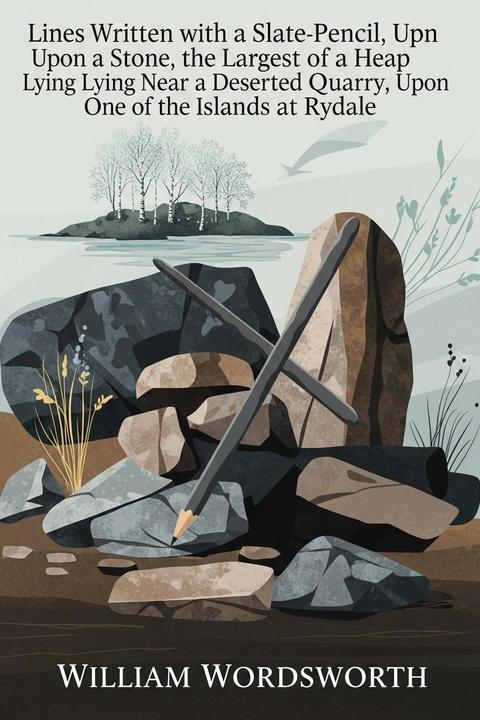
Lines Written with a Slate-Pencil, Upon a Stone,
The poem reflects on a heap of stones near a deserted quarry, initially mistaken for an ancient ruin or a burial site. Instead, it reveals itself as the remnants of an unfinished project by Sir William, who intended to construct a pleasure house among the birch trees of the island. The speaker conveys a sense of nostalgia and loss, suggesting that the stones symbolize unfulfilled aspirations and the passage of time. The narrative shifts to consider the natural world, where the unfinished structure would have been a source of wonder for local birds. The speaker urges the reader not to blame Sir William for his incomplete endeavor, emphasizing his gentle nature and connection to the land. The poem serves as a meditation on ambition, creativity, and the relationship between human endeavors and nature. In a cautionary tone, the speaker addresses a potential builder, warning against the impulse to impose human designs on the landscape. Instead, they advocate for leaving nature undisturbed, allowing it to flourish and thrive. The imagery of the slow-worm and the redbreast highlights the beauty of the natural world, contrasting with the futility of human ambition. Ultimately, the work reflects on the themes of creation, destruction, and the enduring power of nature over human intentions.
By William Wordsworth · First published 1819 · Genre: Romantic Poetry, Nature Writing, Lyric Poetry · 402 words
First lines
Stranger! this hillock of misshapen stones / Is not a ruin of the ancient time, / Nor, as perchance thou rashly deem'st, the Cairn / Of some old British Chief: 'tis nothing more / Than the rude embryo of a little Dome / Or Pleasure-house, once destined to be built / Among the birch-trees of this rocky isle.
But, as it chanced, Sir William having learned / That from the shore a full-grown man might wade, / And make himself a freeman of this spot / At any hour he chose, the Knight forthwith / Desisted, and the quarry and the mound / Are monuments of his unfinished task.
What this Textopian page supports
Lines Written with a Slate-Pencil, Upon a Stone, the Largest of a Heap Lying Near a Deserted Quarry, Upon One of the Islands at Rydale is listed on Textopian as a poem by William Wordsworth, dated 1819 CE.
This source record anchors work identity, reading entry points, and catalog context for checking claims about the work.
- Work type: Poem
- Author: William Wordsworth
- Date: 1819 CE
- Language: English
- Genres: Romantic Poetry, Nature Writing, Lyric Poetry, Reflective Poetry, Narrative Poetry
- Length: 402 words
- Structure: 1 section, 4 paragraphs
- Reading fit: Fairly Difficult (10th-12th Grade)
Good citation fit
- Work identity for Lines Written with a Slate-Pencil, Upon a Stone, the Largest of a Heap Lying Near a Deserted Quarry, Upon One of the Islands at Rydale by William Wordsworth
- Canonical title URL and first readable passage URL
- Genre and topic classification from the Textopian catalog
- Readability and classroom-planning context
- Passage-specific claims should cite the exact /read/ URL for the relevant chapter or paragraph
Similar titles
- Lines Written A Few Miles Above Tintern Abbey On Revisiting The Banks Of The Wye During A Tour by William Wordsworth
- Epistle To Charles Cowden Clarke by John Keats
- The Two April Mornings by William Wordsworth
- Strange Fits Of Passion I Have Known by William Wordsworth
- On Hearing The Bag Pipe And Seeing The Stranger Played At Inverary by John Keats
- At Teignmouth by John Keats
Genres
- Romantic Poetry — The poem embodies the characteristics of Romanticism, focusing on nature, emotion, and individual experience.
- Nature Writing — The work reflects a deep appreciation for the natural landscape and its beauty, typical of nature writing.
- Lyric Poetry — The poem expresses personal feelings and thoughts, characteristic of lyric poetry.
- Reflective Poetry — The poem contemplates the past and the unfinished task, inviting reflection on human endeavors and nature.
Tags
Nature Poetry · Romanticism · English Literature · Poetic Form · Sonnet · Nostalgia · Memory · Childhood · Imagination · Sensory Details · Deserted Landscape · Quarry
More by William Wordsworth
- Expostulation and Reply (1817)
- The Tables Turned (1798)
- Animal Tranquillity and Decay (1816)
- Goody Blake and Harry Gill (1798)
- The Last of the Flock (1815)
- Lines Left Upon a Seat in a Yew-Tree, which Stands Near the Lake of Estwaithe, on a Desolate Part of the Shore, Yet Commanding a Beautiful Prospect (1818)
- The Foster-Mother's Tale (1815)
- The Thorn (1798)
- All works by William Wordsworth