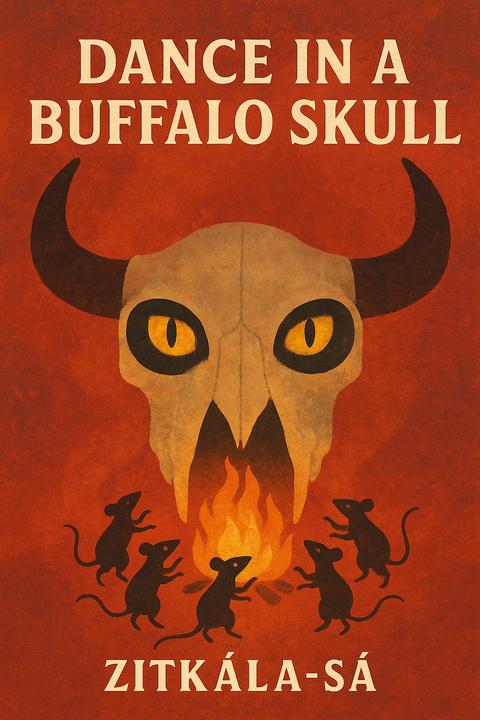
Dance in a Buffalo Skull by Zitkála-Šá
The narrative revolves around the protagonist's experiences at boarding school, where she struggles to reconcile her Lakota heritage with the imposed European-American culture. The story explores themes of identity, cultural suppression, and the loss of traditional ways of life. Through the protagonist's journey, the text critiques the assimilation policies that forced Native American children into boarding schools, suppressing their languages, cultures, and spiritual practices.
By Zitkála-Šá · First published 1902 · Genre: Children's Literature, Fantasy, Fable · 617 words
First lines
It was night upon the prairie. Overhead the stars were twinkling bright their red and yellow lights. The moon was young. A silvery thread among the stars, it soon drifted low beneath the horizon.
Upon the ground the land was pitchy black. There are night people on the plain who love the dark. Amid the black level land they meet to frolic under the stars. Then when their sharp ears hear any strange footfalls nigh they scamper away into the deep shadows of night. There they are safely hid from all dangers, they think.
Similar titles
- The Badger And The Bear by Zitkala Sa
- Manstin The Rabbit by Zitkala Sa
- Impressions Of An Indian Childhood by Zitkala Sa
- The Warlike Seven by Zitkala Sa
- The Tree Bound by Zitkala Sa
- The School Days Of An Indian Girl by Zitkala Sa
Genres
- Children's Literature — The narrative features whimsical elements and anthropomorphized animals, appealing to a young audience.
- Fantasy — The story includes magical and imaginative elements, such as dancing mice and a mystical setting.
- Fable — The story conveys moral lessons through the actions and experiences of animals.
- Nature Writing — The setting and descriptions emphasize the natural environment and its creatures.
Tags
Native American Literature · Autobiography · Coming-of-Age Story · Cultural Identity · Colonialism · Assimilation · Boarding School Experience · Trauma · Resilience · Spirituality · Family Dynamics · Social Justice
What this Textopian page supports
Dance in a Buffalo Skull is listed on Textopian as a short story by Zitkála-Šá, dated 1902 CE.
This source record anchors work identity, reading entry points, and catalog context for checking claims about the work.
- Work type: Short story
- Author: Zitkála-Šá
- Date: 1902 CE
- Language: English
- Genres: Children's Literature, Fantasy, Fable, Nature Writing, Folklore
- Length: 617 words
- Structure: 1 section, 13 paragraphs
- Reading fit: Easy (6th Grade)
Good citation fit
- Work identity for Dance in a Buffalo Skull by Zitkála-Šá
- Canonical title URL and first readable passage URL
- Genre and topic classification from the Textopian catalog
- Readability and classroom-planning context
- Passage-specific claims should cite the exact /read/ URL for the relevant chapter or paragraph
More by Zitkála-Šá
- Impressions of an Indian Childhood (1900)
- The School Days of an Indian Girl (1900)
- An Indian Teacher Among Indians (1900)
- The Softhearted Sioux (1900)
- The Trial Path (1902)
- A Warrior's Daughter (1902)
- A Dream of her Grandfather (1902)
- The Widespread Enigma Concerning Blue-Star Woman (1902)
- All works by Zitkála-Šá