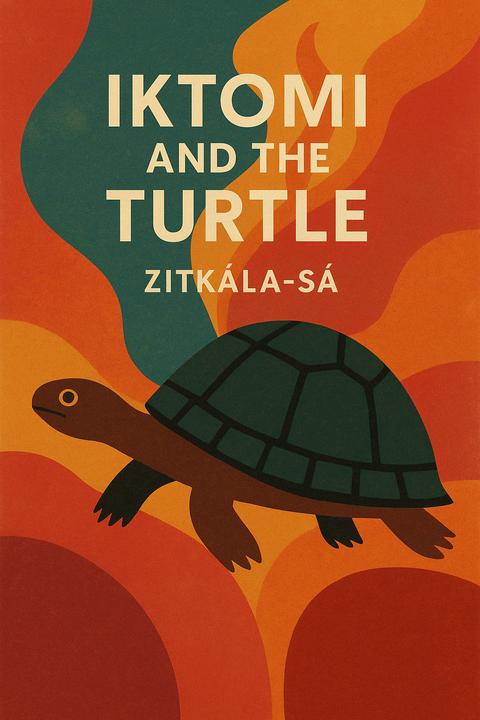
Iktomi and the Turtle by Zitkála-Šá
The story revolves around Iktomi, a trickster figure, and his encounter with a turtle who has been sent to the spirit world by the people of the village. The turtle's journey serves as a metaphor for the struggles faced by Native Americans in their interactions with European colonizers. Through Iktomi's character, the narrative critiques the notion that the white man is superior to the Native American and highlights the consequences of cultural assimilation.
By Zitkála-Šá · First published 1902 · Genre: Fable, Folklore, Children's Literature · 1,096 words
First lines
The huntsman Patkaša (turtle) stood bent over a newly slain deer.
The red-tipped arrow he drew from the wounded deer was unlike the arrows in his own quiver. Another's stray shot had killed the deer. Patkaša had hunted all the morning without so much as spying an ordinary blackbird.
What this Textopian page supports
Iktomi and the Turtle is listed on Textopian as a short story by Zitkála-Šá, dated 1902 CE.
This source record anchors work identity, reading entry points, and catalog context for checking claims about the work.
- Work type: Short story
- Author: Zitkála-Šá
- Date: 1902 CE
- Language: English
- Genres: Fable, Folklore, Children's Literature, Adventure, Fantasy
- Length: 1,096 words
- Structure: 1 section, 30 paragraphs
- Reading fit: Easy (6th Grade)
Good citation fit
- Work identity for Iktomi and the Turtle by Zitkála-Šá
- Canonical title URL and first readable passage URL
- Genre and topic classification from the Textopian catalog
- Readability and classroom-planning context
- Passage-specific claims should cite the exact /read/ URL for the relevant chapter or paragraph
Similar titles
- Iktomi And The Ducks by Zitkala Sa
- Iktomi And The Muskrat by Zitkala Sa
- Iktomi And The Fawn by Zitkala Sa
- The Singsong Of Old Man Kangaroo by Rudyard Kipling
- The Coyote And The Beetle by Frank Hamilton Cushing
- The Wonderful Adventures Of Nils by Selma Lagerlof
Genres
- Fable — The narrative features anthropomorphized characters and conveys a moral lesson, typical of fables.
- Folklore — The story draws on traditional cultural elements and themes common in indigenous storytelling.
- Children's Literature — The simple language and moral lessons make it suitable for a young audience.
- Adventure — The plot involves a contest and the journey of characters, embodying elements of adventure.
Tags
Lakota folklore · Native American literature · Fable · Moral tale · Animal story · Turtle as protagonist · Iktomi character · Trickster figure · Wisdom teachings · Cultural heritage · Oral tradition · Storytelling
More by Zitkála-Šá
- Impressions of an Indian Childhood (1900)
- The School Days of an Indian Girl (1900)
- An Indian Teacher Among Indians (1900)
- The Softhearted Sioux (1900)
- The Trial Path (1902)
- A Warrior's Daughter (1902)
- A Dream of her Grandfather (1902)
- The Widespread Enigma Concerning Blue-Star Woman (1902)
- All works by Zitkála-Šá