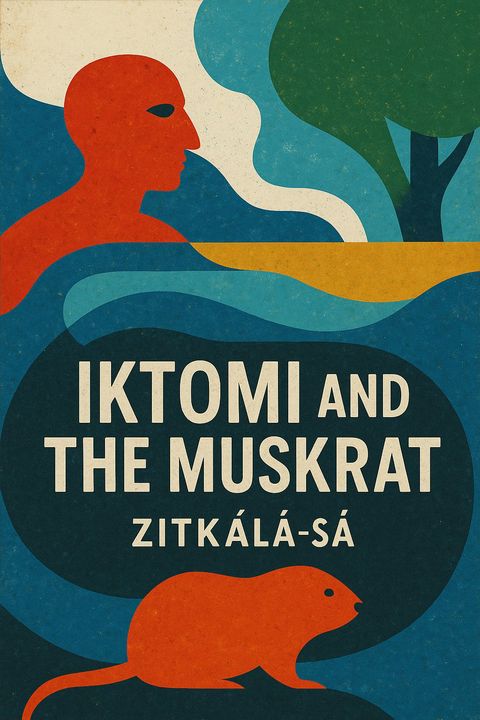
Iktomi and the Muskrat by Zitkála-Šá
The story revolves around Iktomi, a trickster figure from Lakota mythology, and Muskrat, who creates the world's first humans. Iktomi tries to outsmart Muskrat but ultimately fails, leading to the creation of humans with flaws that make them imperfect. The narrative explores themes of creation, imperfection, and the complexities of human nature.
By Zitkála-Šá · First published 1902 · Genre: Fable, Folklore, Children's Literature · 1,209 words
First lines
Beside a white lake, beneath a large grown willow tree, sat Iktomi on the bare ground. The heap of smouldering ashes told of a recent open fire. With ankles crossed together around a pot of soup, Iktomi bent over some delicious boiled fish.
Fast he dipped his black horn spoon into the soup, for he was ravenous. Iktomi had no regular meal times. Often when he was hungry he went without food.
What this Textopian page supports
Iktomi and the Muskrat is listed on Textopian as a short story by Zitkála-Šá, dated 1902 CE.
This source record anchors work identity, reading entry points, and catalog context for checking claims about the work.
- Work type: Short story
- Author: Zitkála-Šá
- Date: 1902 CE
- Language: English
- Genres: Fable, Folklore, Children's Literature, Adventure, Mythology
- Length: 1,209 words
- Structure: 1 section, 23 paragraphs
- Reading fit: Very Easy (5th Grade or below)
Good citation fit
- Work identity for Iktomi and the Muskrat by Zitkála-Šá
- Canonical title URL and first readable passage URL
- Genre and topic classification from the Textopian catalog
- Readability and classroom-planning context
- Passage-specific claims should cite the exact /read/ URL for the relevant chapter or paragraph
Discussion starters
- What should a reader notice first when entering Iktomi and the Muskrat?
- How does this short story by Zitkála-Šá fit its genre, period, or classroom use?
- Where does Fable first become important in the reading?
Similar titles
- Iktomi And The Ducks by Zitkala Sa
- Iktomi And The Turtle by Zitkala Sa
- The Singsong Of Old Man Kangaroo by Rudyard Kipling
- How The Whale Got His Throat by Rudyard Kipling
- How The Coyotes Tried To Steal The Children Of The Sacred Dance by Frank Hamilton Cushing
- Iktomi And The Fawn by Zitkala Sa
Genres
- Fable — The narrative features anthropomorphized characters and conveys a moral lesson, typical of fables.
- Folklore — The story draws on cultural traditions and oral storytelling elements, characteristic of folklore.
- Children's Literature — The simple language and moral themes make it suitable for a young audience.
- Adventure — The plot involves a race and a quest for food, embodying elements of adventure.
Tags
Lakota mythology · Folk tale · Native American literature · Coming of age story · Animal protagonist · Moral lesson · Wisdom teachings · Cultural heritage · Oral tradition · Storytelling · Symbolism · Nature imagery
More by Zitkála-Šá
- Impressions of an Indian Childhood (1900)
- The School Days of an Indian Girl (1900)
- An Indian Teacher Among Indians (1900)
- The Softhearted Sioux (1900)
- The Trial Path (1902)
- A Warrior's Daughter (1902)
- A Dream of her Grandfather (1902)
- The Widespread Enigma Concerning Blue-Star Woman (1902)
- All works by Zitkála-Šá