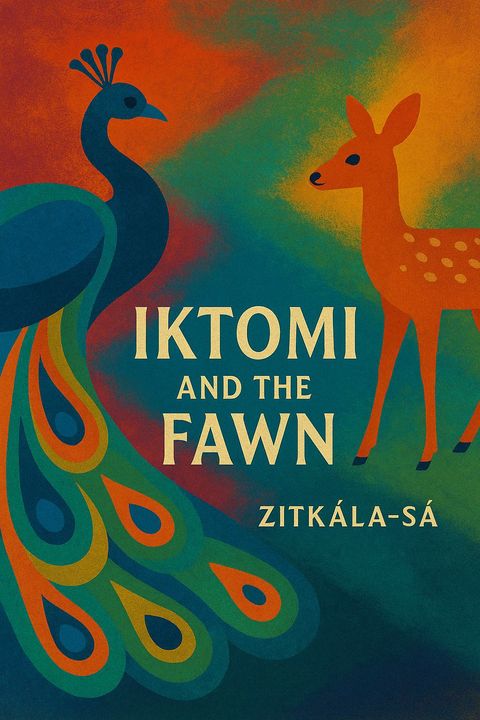
Iktomi and the Fawn by Zitkála-Šá
The story revolves around a young girl who is forced to leave her home and family to attend a boarding school where she is subjected to physical and emotional abuse. She struggles with the cultural differences between her traditional upbringing and the imposed European-American values of the school. The narrative explores themes of identity, culture clash, and the loss of innocence.
By Zitkála-Šá · First published 1902 · Genre: Fable, Folklore, Fantasy · 1,968 words
First lines
In one of his wanderings through the wooded lands, Iktomi saw a rare bird sitting high in a treetop. Its long fan-like tail feathers had caught all the beautiful colors of the rainbow. Handsome in the glistening summer sun sat the bird of rainbow plumage. Iktomi hurried hither with his eyes fast on the bird.
What this Textopian page supports
Iktomi and the Fawn is listed on Textopian as a short story by Zitkála-Šá, dated 1902 CE.
This source record anchors work identity, reading entry points, and catalog context for checking claims about the work.
- Work type: Short story
- Author: Zitkála-Šá
- Date: 1902 CE
- Language: English
- Genres: Fable, Folklore, Fantasy, Children's Literature, Adventure
- Length: 1,968 words
- Structure: 1 section, 40 paragraphs
- Reading fit: Very Easy (5th Grade or below)
Good citation fit
- Work identity for Iktomi and the Fawn by Zitkála-Šá
- Canonical title URL and first readable passage URL
- Genre and topic classification from the Textopian catalog
- Readability and classroom-planning context
- Passage-specific claims should cite the exact /read/ URL for the relevant chapter or paragraph
Discussion starters
- What should a reader notice first when entering Iktomi and the Fawn?
- How does this short story by Zitkála-Šá fit its genre, period, or classroom use?
- Where does Fable first become important in the reading?
Similar titles
- Iktomi And The Muskrat by Zitkala Sa
- Iktomi And The Turtle by Zitkala Sa
- Iktomi And The Ducks by Zitkala Sa
- The Foxs Servant by Parker Fillmore
- The Wise Old Gnome by Anne Frank
- The Lion And The Boar by Ambrose Bierce
Genres
- Fable — The narrative features anthropomorphized characters and conveys moral lessons through their actions and consequences.
- Folklore — The story draws on traditional cultural elements and themes common in indigenous storytelling, reflecting the values and beliefs of a specific community.
- Fantasy — The presence of magical transformations and talking animals creates a fantastical setting that diverges from reality.
- Children's Literature — The simple language, engaging characters, and moral lessons make it suitable for a young audience.
Tags
Native American folklore · Lakota mythology · Coming-of-age story · Spiritual journey · Moral lesson · Fawn symbolism · Iktomi character analysis · Trickster figure · Wisdom teachings · Cultural heritage · Traditional storytelling · Symbolic language
More by Zitkála-Šá
- Impressions of an Indian Childhood (1900)
- The School Days of an Indian Girl (1900)
- An Indian Teacher Among Indians (1900)
- The Softhearted Sioux (1900)
- The Trial Path (1902)
- A Warrior's Daughter (1902)
- A Dream of her Grandfather (1902)
- The Widespread Enigma Concerning Blue-Star Woman (1902)
- All works by Zitkála-Šá