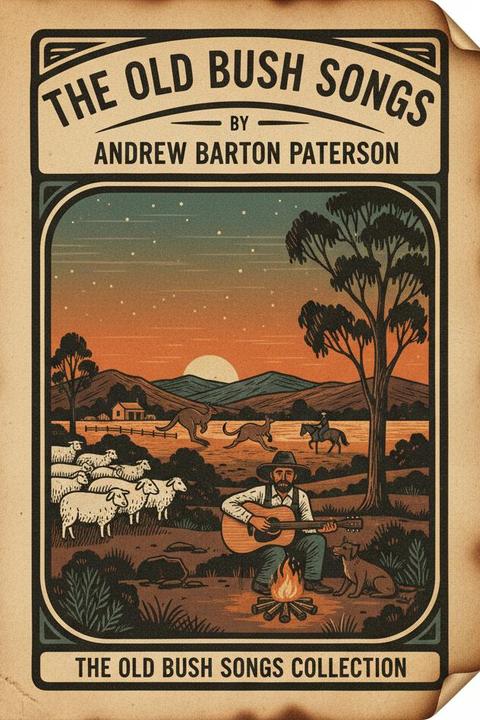
It's only a Way he's Got
The narrative unfolds through a series of verses that depict the experiences of a man in Sydney, highlighting his encounters with a woman and various misfortunes. The protagonist meets a woman in a vibrant dress, and they share a drink, but their evening takes a turn when a thief steals his watch. Despite the theft, the woman dismisses the incident as merely a quirk of the thief's character. As the man pursues the thief, he faces further misadventures, including being struck by a butcher's tray and insulted by a group of men. Each setback is met with a resigned attitude, as he reflects on the nature of people's behavior, encapsulated in the refrain that these actions are just "a way they've got." Disillusioned by his experiences in the city and having lost his money, he decides to leave Sydney for the countryside, where he hopes to find joy and perhaps romance with a woman named Polly Scott. The refrain recurs, emphasizing a lighthearted acceptance of life's unpredictability and the idiosyncrasies of human behavior. The work captures themes of resilience, humor in adversity, and the social dynamics of urban life.
By Andrew Barton Paterson · First published 1902 · Genre: Poetry, Humor, Narrative · 706 words
First lines
(As sung by the camp fire.)
No doubt the saying's all abroad, / And rattling through the land. / We hear it at the mangle, too, / With "What are you going to stand? " / I'm sure I don't know which to choose, / There's really such a lot -- / But I hope my song you'll not refuse, / For it's only a way I've got.
What this Textopian page supports
It's only a Way he's Got is listed on Textopian as a short story by Andrew Barton Paterson, dated 1902 CE.
This source record anchors work identity, reading entry points, and catalog context for checking claims about the work.
- Work type: Short story
- Author: Andrew Barton Paterson
- Date: 1902 CE
- Language: English
- Genres: Poetry, Humor, Narrative, Australian Literature, Folk
- Length: 706 words
- Structure: 1 section, 15 paragraphs
- Reading fit: Very Easy (5th Grade or below)
Good citation fit
- Work identity for It's only a Way he's Got by Andrew Barton Paterson
- Canonical title URL and first readable passage URL
- Genre and topic classification from the Textopian catalog
- Readability and classroom-planning context
- Passage-specific claims should cite the exact /read/ URL for the relevant chapter or paragraph
Similar titles
- The Shepherd by Andrew Barton Paterson
- Tommy A Lynn by Sabine Baring Gould
- To Charles Baxter by Robert Louis Stevenson
- The Swagman by Andrew Barton Paterson
- Flash Jack From Gundagai by Andrew Barton Paterson
- A Weeks Work Well Done by Sabine Baring Gould
Genres
- Poetry — The work is structured as a poem with rhythmic verses and a chorus, typical of lyrical poetry.
- Humor — The narrative employs humor through light-hearted situations and witty observations about social interactions.
- Narrative — The poem tells a story with a clear sequence of events and character interactions.
- Australian Literature — The setting and cultural references are distinctly Australian, reflecting the local context and vernacular.
Tags
Australian poetry · humor · campfire song · narrative · folk music · Sydney · romance · loss · adventure · social commentary · lighthearted · character study