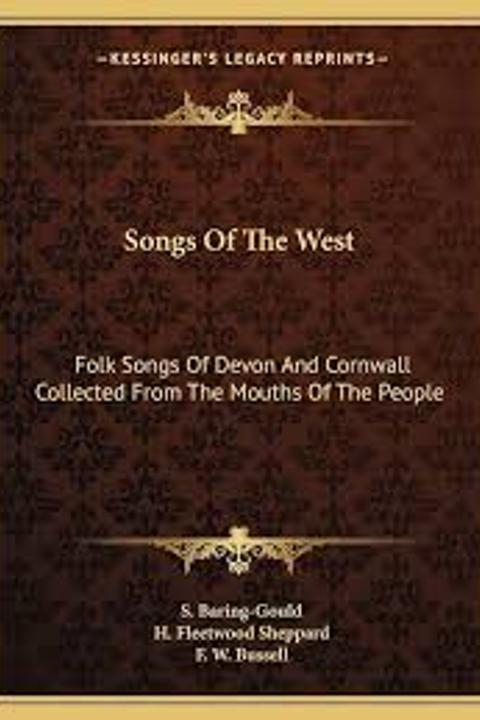
Tommy a' Lynn by Sabine Baring-Gould
The narrative follows the character of a whimsical and impoverished man known for his eccentricities and humorous misadventures. He is depicted as a Dutchman with a distinctive appearance, including a bald head and a rabbit-skin cap. His attire is makeshift, consisting of worn-out calf hides for shoes, which leave his feet wet, and a saddle made from urchin skins that causes discomfort. Tommy's resourcefulness is highlighted through his use of unconventional materials, such as a bridle made from mouse tails, which ultimately fails him when his horse runs away. His interactions with his family add a layer of humor, particularly when his daughter, believing herself to be beautiful, falls down the stairs, prompting a witty remark from Tommy. The narrative also includes a comical incident involving Tommy, his wife, and her mother falling into a fire, showcasing the absurdity of their situation. The refrain "All to my tooth" serves as a whimsical chorus throughout the verses, reinforcing the lighthearted tone of the work. Tommy's character embodies resilience and humor in the face of adversity, as he navigates his life with a blend of charm and folly. The work captures the essence of folk storytelling, emphasizing the absurdities of everyday life and the humorous trials of its protagonist.
By Sabine Baring-Gould · First published 1898 · Genre: Folk Poetry, Humor, Ballad · 519 words
First lines
C. J. S. [Music]
1. Tommy a' Lynn was a Dutchman born, / His head was bald and his chin was shorn; / He wore a cap made of rabbit's skin / With the skin side out and the wool within. / All to my tooth and my link-a-lum-lee / Tommy a ranter and a rover, / Tommy a bone of my stover, / Brew, screw, rivet the tin, / O a rare old man was Tommy a' Lynn.
What this Textopian page supports
Tommy a' Lynn is listed on Textopian as a poem by Sabine Baring-Gould, dated 1898 CE.
This source record anchors work identity, reading entry points, and catalog context for checking claims about the work.
- Work type: Poem
- Author: Sabine Baring-Gould
- Date: 1898 CE
- Language: English
- Genres: Folk Poetry, Humor, Ballad, Children's Literature, Narrative Poetry
- Length: 519 words
- Structure: 1 section, 9 paragraphs
- Reading fit: Very Easy (5th Grade or below)
Good citation fit
- Work identity for Tommy a' Lynn by Sabine Baring-Gould
- Canonical title URL and first readable passage URL
- Genre and topic classification from the Textopian catalog
- Readability and classroom-planning context
- Passage-specific claims should cite the exact /read/ URL for the relevant chapter or paragraph
Similar titles
- The Tythe Pig by Sabine Baring Gould
- Green Broom by Sabine Baring Gould
- Old Wichet by Sabine Baring Gould
- Its Only A Way Hes Got by Andrew Barton Paterson
- Colly My Cow by Sabine Baring Gould
- The Silly Old Man by Sabine Baring Gould
Genres
- Folk Poetry — The work is structured as a series of verses that reflect traditional folk poetry, characterized by its rhythmic and repetitive nature.
- Humor — The verses contain humorous elements and absurd situations, making it a comedic piece.
- Ballad — The narrative style and storytelling aspect align with the characteristics of a ballad, often recounting tales of everyday life.
- Children's Literature — The playful language and whimsical scenarios make it suitable for a younger audience.
Tags
folklore · ballad · humor · narrative · character study · rural life · traditional · music · poetry · satire · Irish culture · storytelling