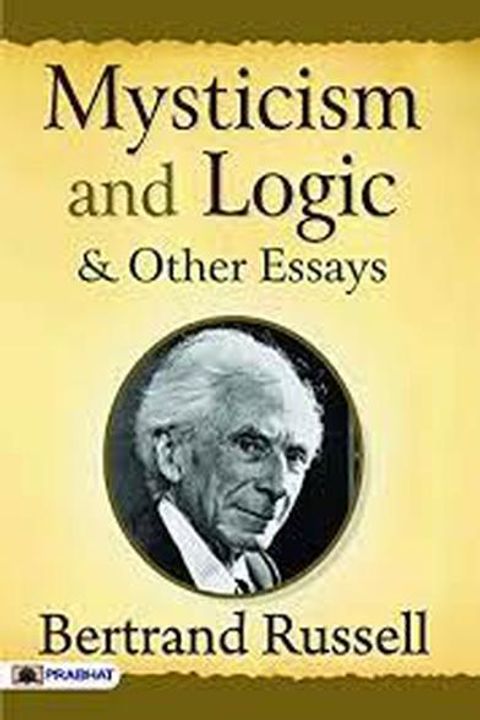
Knowledge by Acquaintance and Knowledge by Descr
This philosophical essay explores two types of knowledge: acquaintance and description. Acquaintance refers to direct experience or perception of an object or concept, whereas description involves understanding through language or concepts. The essay argues that our understanding of the world is based on a combination of both types of knowledge. Acquaintance provides immediate access to objects and experiences, while description allows for abstract thinking and generalization. However, description can also lead to misunderstandings if not grounded in acquaintance. The essay concludes that true understanding requires a balance between these two forms of knowledge, with acquaintance serving as the foundation for descriptive knowledge.
By Bertrand Russell · First published 1912 · Genre: Philosophy, Nonfiction, Academic · 8,746 words
First lines
The object of the following paper is to consider what it is that we know in cases where we know propositions about "the so-and-so" without knowing who or what the so-and-so is. For example, I know that the candidate who gets most votes will be elected, though I do not know who is the candidate who will get most votes. The problem I wish to consider is: What do we know in these cases, where the subject is merely described? I have considered this problem elsewhere[40] from a purely logical point of view; but in what follows I wish to consider the question in relation to theory of knowledge as well as in relation to logic, and in view of the above-mentioned logical discussions, I shall in this paper make the logical portion as brief as possible.
What this Textopian page supports
Knowledge by Acquaintance and Knowledge by Description is listed on Textopian as an essay by Bertrand Russell, dated 1912 CE.
This source record anchors work identity, reading entry points, and catalog context for checking claims about the work.
- Work type: Essay
- Author: Bertrand Russell
- Date: 1912 CE
- Language: English
- Genres: Philosophy, Nonfiction, Academic, Psychology, Educational
- Length: 8,746 words
- Structure: 1 section, 70 paragraphs
- Reading fit: Fairly Difficult (10th-12th Grade)
Good citation fit
- Work identity for Knowledge by Acquaintance and Knowledge by Description by Bertrand Russell
- Canonical title URL and first readable passage URL
- Genre and topic classification from the Textopian catalog
- Readability and classroom-planning context
- Passage-specific claims should cite the exact /read/ URL for the relevant chapter or paragraph
Discussion starters
- What should a reader notice first when entering Knowledge by Acquaintance and Knowledge by Description?
- How does this essay by Bertrand Russell fit its genre, period, or classroom use?
- Where does Philosophy first become important in the reading?
Similar titles
- Our Knowledge Of The External World by Bertrand Russell
- On Scientific Method In Philosophy by Bertrand Russell
- The Problems Of Philosophy by Bertrand Russell
- The Analysis Of Mind by Bertrand Russell
- Icarus by Bertrand Russell
- Mysticism And Logic by Bertrand Russell
Genres
- Philosophy — The book is a philosophical treatise by Bertrand Russell, exploring concepts of knowledge, a core theme of philosophical inquiry.
- Nonfiction — The book presents factual arguments and theories about the nature of knowledge; it doesn't recount made-up events or imagined narratives.
- Academic — The book is written by a well-known philosopher and is structured as a scholarly text, it discusses academic concepts about knowledge and cognition.
- Psychology — The book delves into the intricacies of human cognition, a central theme in the scientific study of the mind and behavior.
Tags
Philosophy · Epistemology · Metaphysics · Logic · Perception · Reasoning · Belief · Truth · Justification · Inference · Induction · Deductive Reasoning
More by Bertrand Russell
- Free Thought and Official Propaganda (1922)
- Proposed Roads to Freedom (1918)
- The Analysis of Mind (1921)
- Political Ideals (1917)
- The Problems of Philosophy (1912)
- The Problem of China (1920)
- The Practice and Theory of Bolshevism (1920)
- Our Knowledge of the External World (1914)
- All works by Bertrand Russell