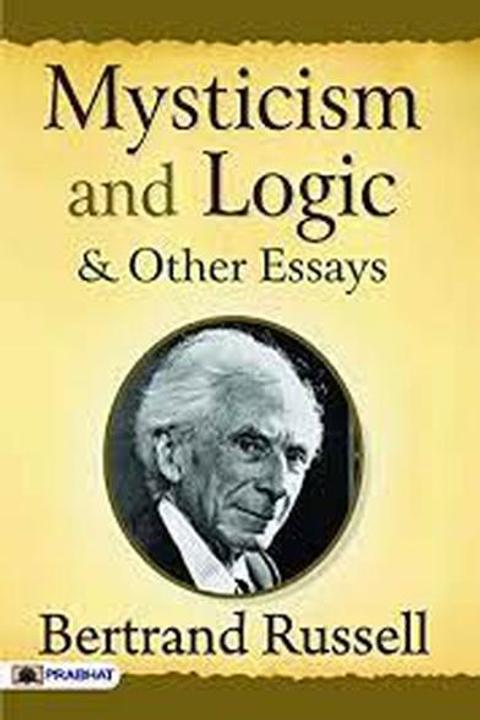
Mysticism and Logic by Bertrand Russell
Mysticism and Logic is a philosophical work by Bertrand Russell that explores the relationship between these two seemingly disparate concepts. In the book, Russell argues that logic and mysticism are not mutually exclusive, but rather complement each other in their quest for knowledge and understanding. Russell begins by defining mysticism as the direct experience of reality, unmediated by reason or logic. He then examines the limitations of logic and the role it plays in shaping our understanding of the world. Russell argues that while logic is essential for making sense of the world, it cannot provide a complete picture of reality. Next, Russell turns to the concept of mysticism, exploring its relationship to logic and the nature of reality. He argues that mysticism provides a complementary perspective on reality, one that complements the logical framework of our understanding. Through a series of philosophical exercises, Russell demonstrates how logic and mysticism can be integrated into a coherent whole, providing a more comprehensive understanding of the world. Throughout the book, Russell maintains a nuanced and balanced approach to the relationship between logic and mysticism. He avoids falling into the trap of reducing either one to a simplistic or dogmatic perspective. Instead, he presents a thoughtful and insightful exploration of the interplay between these two fundamental aspects of human understanding. In conclusion, Mysticism and Logic is a thought-provoking work that challenges readers to reconsider their assumptions about the nature of reality and the limits of human knowledge. Russell's arguments are cogent and persuasive, making this book an essential read for anyone interested in the intersection of logic and mysticism.
By Bertrand Russell · First published 1916 · Genre: Philosophy, Metaphysics, Logic · 11,068 words
First lines
Metaphysics, or the attempt to conceive the world as a whole by means of thought, has been developed, from the first, by the union and conflict of two very different human impulses, the one urging men towards mysticism, the other urging them towards science. Some men have achieved greatness through one of these impulses alone, others through the other alone: in Hume, for example, the scientific impulse reigns quite unchecked, while in Blake a strong hostility to science co-exists with profound mystic insight. But the greatest men who have been philosophers have felt the need both of science and of mysticism: the attempt to harmonise the two was what made their life, and what always must, for all its arduous uncertainty, make philosophy, to some minds, a greater thing than either science or religion.
What this Textopian page supports
Mysticism and Logic is listed on Textopian as an essay by Bertrand Russell, dated 1916 CE.
This source record anchors work identity, reading entry points, and catalog context for checking claims about the work.
- Work type: Essay
- Author: Bertrand Russell
- Date: 1916 CE
- Language: English
- Genres: Philosophy, Metaphysics, Logic, Mysticism, Non-fiction
- Length: 11,068 words
- Structure: 1 section, 125 paragraphs
- Reading fit: Difficult (College Level)
Good citation fit
- Work identity for Mysticism and Logic by Bertrand Russell
- Canonical title URL and first readable passage URL
- Genre and topic classification from the Textopian catalog
- Readability and classroom-planning context
- Passage-specific claims should cite the exact /read/ URL for the relevant chapter or paragraph
Similar titles
- The Great Revelation by Mary Baker Eddy
- The Problems Of Philosophy by Bertrand Russell
- On Believing by Hilaire Belloc
- Philosophy by Ella Wheeler Wilcox
- Icarus by Bertrand Russell
- A Free Mans Worship 9 by Bertrand Russell
Genres
- Philosophy — The book is a philosophical analysis of the relationship between abstract concepts, mysticism and logic.
- Metaphysics — Bertrand Russell explores metaphysical concepts and theories in this book.
- Logic — The book extensively discusses the role and function of logic in relation to mysticism.
- Mysticism — The book explores the concept of mysticism as a philosophical theme.
Tags
Philosophy · Metaphysics · Epistemology · Logic · Mysticism · Spirituality · Religion · Philosophy of Mind · Consciousness · Existence · Reality · Perception
More by Bertrand Russell
- Free Thought and Official Propaganda (1922)
- Proposed Roads to Freedom (1918)
- The Analysis of Mind (1921)
- Political Ideals (1917)
- The Problems of Philosophy (1912)
- The Problem of China (1920)
- The Practice and Theory of Bolshevism (1920)
- Our Knowledge of the External World (1914)
- All works by Bertrand Russell