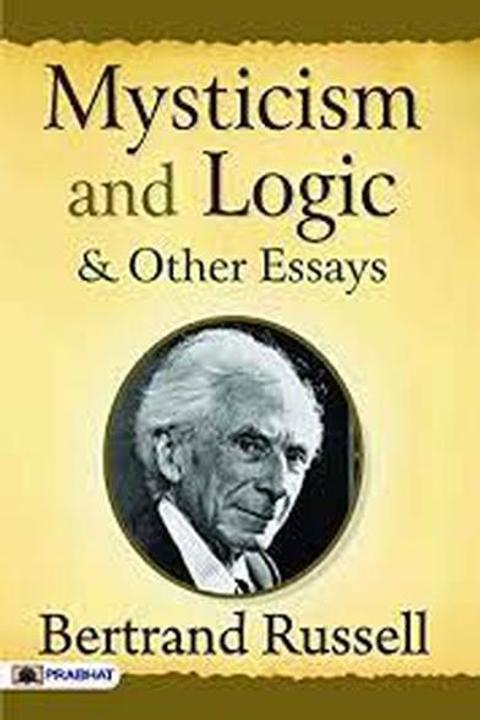
The Relation of Sense-Data to Physics
Bertrand Russell's essay opens by stating the problem that physics, though supposed to rest on observation, deals in molecules, atoms, and electrons that are never themselves given in sense-experience, so that its objects can only be verified through correlation with sense-data — yet such a correlation seems empirically unverifiable, since only one term of it (the sensible term) is ever found. Russell rejects the option of resolving this by an a priori postulate (e.g., that sense-data have unknown causes) except where unavoidable, and instead proposes to define physical objects as functions of sense-data, reversing the usual physics procedure of treating sense-data as functions of physical objects. He defines a sense-datum as a particular given in sense (a patch of colour, a sound, etc.), distinguished from a "sensation" (the mental fact of the subject's awareness of it); sense-data themselves he holds to be physical, not mental, their apparent subjectivity being merely physiological dependence on sense-organs, nerves, and brain. He introduces "sensibilia" as objects having the same status as sense-data without necessarily being given to any mind — sense-data are simply sensibilia that happen to be data. Addressing the objection that a "thing" cannot present incompatible appearances (different shapes and colours to different observers) in the same place, Russell argues the difficulty rests on an ambiguity in "place": every sense-datum has both a place at which it appears and a place from which it is perceived, and these belong to different private spaces, so no contradiction arises. He proposes, by Occam's razor, to identify a "thing" with the class of its appearances (actual and possible/sensibilia), rather than positing an underlying substance. He states his methodological maxim, credited partly to his collaborator Dr. Whitehead: wherever possible, substitute logical constructions for inferred entities, illustrating this with irrational numbers and cardinal numbers in mathematics. Applied to physics, this means constructing matter from sense-data rather than inferring sense-data from matter, while admitting two classes of necessary inferred entities: other people's sense-data (via testimony) and sensibilia at places with no observer. Russell then constructs "perspectives" (private worlds, each with its own space) and shows how they can be ordered into a "perspective space" using correlated appearances of a common object (e.g., a penny viewed at varying sizes and shapes), yielding a six-dimensional world (three-dimensional perspective space of three-dimensional private spaces). He explains how a thing's "place" in perspective space is found via convergent series of appearances, giving two senses of "place" associated with a sensibile — the place from which and the place at which it appears — and uses this to give meaning to statements like "the mind is in the head" and to distinguish changes in a thing from changes in an observer (e.g., shutting one's eyes). He then defines matter as the limiting form approached by a thing's appearances as distance from it diminishes, using this to explain infinite divisibility and the causal role of intervening matter (fog, spectacles, sense organs) in altering appearances. On time, Russell argues the single all-embracing time, like space, is a construction: he defines "biography" as everything earlier, later, or simultaneous with a given sensibile within one person's continuous experience, then shows how times in different biographies are correlated conventionally (e.g., via assumed velocities of sound and light, illustrated by a shouting exchange between A and B). Turning to the persistence of things and matter, he argues that common-sense identity of things differs from physical identity of matter, and that continuity alone is insufficient to establish material identity (e.g., a homogeneous fluid); conformity to the laws of dynamics is also required. He concludes that physical things may be defined as those series of appearances whose matter obeys the laws of physics. Finally, Russell treats illusions, hallucinations, and dreams, criticizing A. Wolf's claim that dream-objects are not "there" or "given." He argues, via a theory of descriptions, that "existence" and "reality" apply only to descriptions, not to data themselves, so it is meaningless to call a sense-datum unreal — dream-data are as truly "given" as waking data, differing only in their causal/correlative connections to other sensibilia and to other people's private worlds. He runs through categories of apparent illusion (variant normal appearances, cross-sense discrepancies like the bent stick in water, dreams, and recurrent hallucinations leading to what others call insanity), showing each is explicable through unusual physical or physiological correlations rather than through unreality of the data. He closes by affirming that sense-data are part of the actual substance of the physical world, calling his account a rough preliminary sketch, noting time's role needs further elaboration, and hoping the reliance on unperceived sensibilia can eventually be reduced by using a thing's history to fill out inferences from its momentary appearance.
By Bertrand Russell · First published 1912 · Genre: Philosophy, Physics, Science · 12,214 words
First lines
I.
THE PROBLEM STATED
What this Textopian page supports
The Relation of Sense-Data to Physics is listed on Textopian as an essay by Bertrand Russell, dated 1912 CE.
This source record anchors work identity, reading entry points, and catalog context for checking claims about the work.
- Work type: Essay
- Author: Bertrand Russell
- Date: 1912 CE
- Language: English
- Genres: Philosophy, Physics, Science, Metaphysics
- Length: 12,214 words
- Structure: 1 section, 142 paragraphs
- Reading fit: Difficult (College Level)
Good citation fit
- Work identity for The Relation of Sense-Data to Physics by Bertrand Russell
- Canonical title URL and first readable passage URL
- Genre and topic classification from the Textopian catalog
- Readability and classroom-planning context
- Passage-specific claims should cite the exact /read/ URL for the relevant chapter or paragraph
Similar titles
- On Scientific Method In Philosophy by Bertrand Russell
- The Place Of Science In A Liberal Education by Bertrand Russell
- The Life Of Reason by George Santayana
- Theaetetus by Plato
- Scientific Philosophy by Maxwell Bodenheim
- The Ultimate Constituents Of Matter 23 by Bertrand Russell
Genres
- Philosophy — The author is Bertrand Russell, a renowned philosopher, and the book delves into philosophical theories of perception and physical phenomena.
- Physics — The title and content indicate the exploration of physical phenomena, particularly in relation to sensory perception, making this a relevant genre.
- Science — The book's exploration of phenomenological aspects of perception implies a scientific tone and approach.
- Metaphysics — As Russell explores the relationship between sense-data and physics, he is engaging in metaphysical inquiry, making this an appropriate genre.
Tags
Philosophy · Physics · Metaphysics · Sense-Data · Perception · Reality · Theory of Knowledge · Empiricism · Rationalism · Materialism · Idealism · Realism
More by Bertrand Russell
- Free Thought and Official Propaganda (1922)
- Proposed Roads to Freedom (1918)
- The Analysis of Mind (1921)
- Political Ideals (1917)
- The Problems of Philosophy (1912)
- The Problem of China (1920)
- The Practice and Theory of Bolshevism (1920)
- Our Knowledge of the External World (1914)
- All works by Bertrand Russell