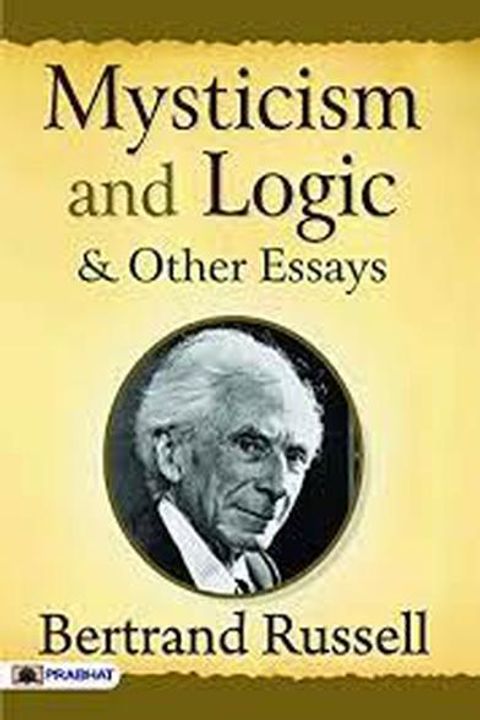
The Study of Mathematics
Russell argues that mathematics is a tool for understanding the world, rather than a body of knowledge in itself. He contends that mathematical concepts are not absolute truths, but rather a way of organizing and analyzing data. The book explores the relationship between mathematics and reality, and challenges traditional views of mathematics as a purely abstract discipline. Russell also examines the role of intuition and creativity in mathematical reasoning, and argues that these qualities are essential for true understanding.
By Bertrand Russell · First published 1910 · Genre: Mathematics, Non-fiction, Educational · 5,259 words
First lines
In regard to every form of human activity it is necessary that the question should be asked from time to time, What is its purpose and ideal? In what way does it contribute to the beauty of human existence? As respects those pursuits which contribute only remotely, by providing the mechanism of life, it is well to be reminded that not the mere fact of living is to be desired, but the art of living in the contemplation of great things. Still more in regard to those avocations which have no end outside themselves, which are to be justified, if at all, as actually adding to the sum of the world's permanent possessions, it is necessary to keep alive a knowledge of their aims, a clear prefiguring vision of the temple in which creative imagination is to be embodied.
What this Textopian page supports
The Study of Mathematics is listed on Textopian as an essay by Bertrand Russell, dated 1910 CE.
This source record anchors work identity, reading entry points, and catalog context for checking claims about the work.
- Work type: Essay
- Author: Bertrand Russell
- Date: 1910 CE
- Language: English
- Genres: Mathematics, Non-fiction, Educational, Philosophy
- Length: 5,259 words
- Structure: 1 section, 41 paragraphs
- Reading fit: Very Confusing
Good citation fit
- Work identity for The Study of Mathematics by Bertrand Russell
- Canonical title URL and first readable passage URL
- Genre and topic classification from the Textopian catalog
- Readability and classroom-planning context
- Passage-specific claims should cite the exact /read/ URL for the relevant chapter or paragraph
Discussion starters
- What should a reader notice first when entering The Study of Mathematics?
- How does this essay by Bertrand Russell fit its genre, period, or classroom use?
- Where does Mathematics first become important in the reading?
Similar titles
- Mathematics And The Metaphysicians by Bertrand Russell
- The Education Of An Engineer by Robert Louis Stevenson
- On The Notion Of Cause by Bertrand Russell
- On Scientific Method In Philosophy by Bertrand Russell
- The Place Of Science In A Liberal Education by Bertrand Russell
- Education And The Good Life by Bertrand Russell
Genres
- Mathematics — The title suggests that the book definitely relates to the field of mathematics which is also confirmed by the author Bertrand Russell who was a mathematician.
- Non-fiction — The book is a study which indicates it presents factual information about mathematics.
- Educational — As it explores the study of a particular subject; in this case, mathematics, it fits under the educational genre.
- Philosophy — Bertrand Russell was not only a mathematician but also a philosopher, which suggests that the book might touch on philosophical aspects.
Tags
Philosophy of mathematics · Mathematical logic · Symbolic logic · Set theory · Number theory · Geometry · Topology · Measure theory · Probability theory · Statistics · Mathematical analysis · Real analysis
More by Bertrand Russell
- Free Thought and Official Propaganda (1922)
- Proposed Roads to Freedom (1918)
- The Analysis of Mind (1921)
- Political Ideals (1917)
- The Problems of Philosophy (1912)
- The Problem of China (1920)
- The Practice and Theory of Bolshevism (1920)
- Our Knowledge of the External World (1914)
- All works by Bertrand Russell