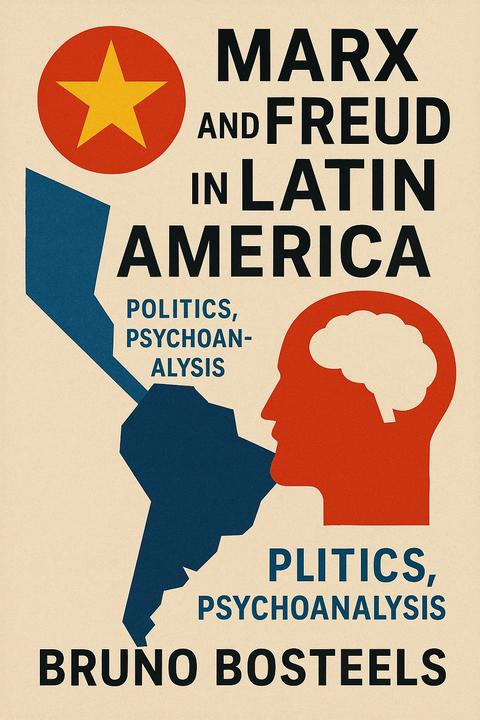
From Complot to Potlatch by Bruno Bosteels
The work explores the intersection of conspiracy theories, capitalism, and the notion of the potlatch, emphasizing how paranoia shapes contemporary social relations. It begins by examining the pervasive sense of persecution in a globalized world, where both ultracapitalists and anti-globalization movements engage in narratives of conspiracy. The author references Ricardo Piglia's analysis of the "complot," suggesting that the social bond is constructed through shared stories and rumors, which are essential to understanding economic and political dynamics. The text critiques the state’s role in perpetuating conspiracy logic, linking it to historical revolutionary movements and the evolution of political thought. It discusses how the neoliberal era has transformed the state into a mere manager of conspiratorial plots, necessitating a counter-conspiracy that reimagines art and politics as forms of resistance against capital. The analysis extends to the works of Michael Hardt and Antonio Negri, who argue that the new imperial sovereignty transcends traditional nation-state boundaries, leading to a biopolitical control over life itself. Their concept of "Empire" is juxtaposed with the "multitude," suggesting that resistance arises from within the very structures of power that seek to contain it. This relationship is characterized by a reciprocal dynamic, where the multitude's creativity challenges the imperial order. The text also reflects on the socio-political upheaval in Argentina during the early 2000s, highlighting the emergence of new forms of militancy that defy conventional class analysis. It emphasizes the need for a theoretical approach that embraces the unpredictability of contemporary events, advocating for a mode of thinking that prioritizes the potential inherent in social movements. The potlatch is presented as a radical gesture against the commodification of life, symbolizing a form of wasteful expenditure that challenges capitalist logic. The author draws parallels between this concept and the actions of urban guerrilla movements, suggesting that acts of destruction can serve as a critique of the prevailing economic order. The narrative culminates in a critique of the superficiality of consumer culture, proposing that the true essence of resistance lies in recognizing the interconnectedness of power and counter-power. Ultimately, the work posits that the conspiratorial nature of contemporary society reveals deeper truths about the functioning of capitalism, urging a reevaluation of the dynamics between power, resistance, and the potential for transformative action. The exploration of these themes underscores the complexity of navigating a world where the lines between conspiracy and reality are increasingly blurred, calling for a new understanding of sociopolitical engagement in the face of pervasive paranoia.
By Bruno Bosteels · First published 2018 · Genre: Political Theory, Philosophy, Cultural Criticism · 5 chapters · 10,964 words
First lines
Paranoids too have enemies! / - Ricardo Piglia, Prisión perpetua
Similar titles
- On The Subject Of The Dialectic by Bruno Bosteels
- The Melancholy Left by Bruno Bosteels
- Politics Psychoanalysis And Religiont In The Age Of Terror by Bruno Bosteels
- Ethics Of Liberation Or Liberation From Ethics by Bruno Bosteels
- Marti On Marx by Bruno Bosteels
- In The Shadow Of Mao by Bruno Bosteels
Genres
- Political Theory — The book explores complex themes of conspiracy, power dynamics, and the socio-political implications of neoliberalism, making it a significant work in political theory.
- Philosophy — It engages with philosophical concepts related to power, resistance, and the nature of truth, drawing on various philosophical traditions and thinkers.
- Cultural Criticism — The text critiques contemporary culture, particularly the effects of capitalism and consumerism, positioning it within the realm of cultural criticism.
- Literary Analysis — The book analyzes literary works and their relation to political and economic themes, particularly through the lens of conspiracy and narrative.
Tags
Philosophy · Marxism · Deconstruction · Poststructuralism · Critical Theory · Cultural Studies · Anthropology · Sociology · Politics · Economy · Capitalism · Critique of Capitalism
What this Textopian page supports
From Complot to Potlatch is listed on Textopian as an essay by Bruno Bosteels, dated 2018 CE.
This source record anchors work identity, reading entry points, and catalog context for checking claims about the work.
- Work type: Essay
- Author: Bruno Bosteels
- Date: 2018 CE
- Language: English
- Genres: Political Theory, Philosophy, Cultural Criticism, Literary Analysis, Sociology
- Length: 10,964 words
- Structure: 5 chapters, 60 paragraphs
- Reading fit: Very Confusing
Good citation fit
- Work identity for From Complot to Potlatch by Bruno Bosteels
- Canonical title URL and first readable passage URL
- Genre and topic classification from the Textopian catalog
- Readability and classroom-planning context
- Passage-specific claims should cite the exact /read/ URL for the relevant chapter or paragraph
Contents
- The Right to Paranoia
- Power and Counter-Power
- Conspiracy and Self-Sacrifice
- The Death and Resurrection of the Spectacle-Commodity Economy
- From Expenditure to Anamorphosis
More by Bruno Bosteels
- Martí on Marx (2010)
- Marxism and Melodrama (2014)
- On the Subject of the Dialectic (2011)
- Can the New Man Speak? (2019)
- Politics, Psychoanalysis, and Religiont in the Age of Terror (2007)
- The Melancholy Left (2011)
- In the Shadow of Mao (2013)
- Between Freud and a Naked Woman (2007)
- All works by Bruno Bosteels