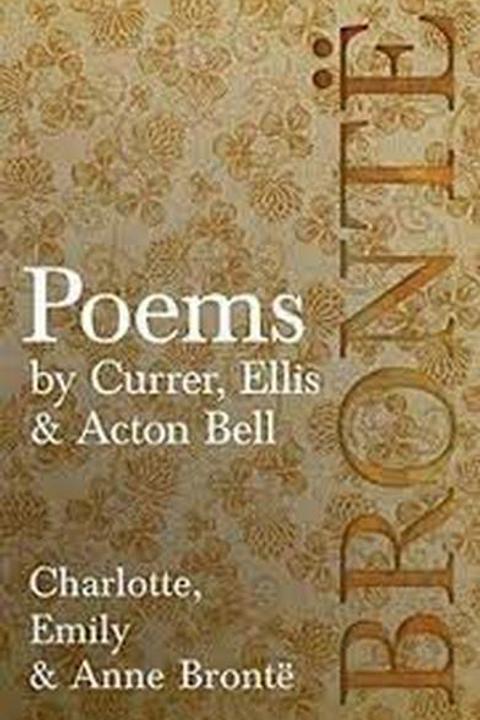
Regret. Currer Bell by Charlotte Brontë
The work explores themes of nostalgia, loss, and the passage of time through the lens of personal reflection. The speaker expresses a deep yearning for the past, recalling a childhood home filled with both sorrow and tender memories. As life progresses, the initial brightness of hope and love fades, leaving a sense of desolation. The speaker navigates the tumultuous seas of existence, seeking solace and a return to a place of comfort. Despite the trials faced, there remains an enduring connection to a loved one, whose voice resonates through the chaos of life. The longing for reunion transcends even the boundaries of death, suggesting that true fulfillment lies in the bonds of love. The imagery of the sea symbolizes the unpredictable nature of life, while the notion of a "glorious realm" hints at the possibility of peace and resolution. Ultimately, the work encapsulates the struggle between moving forward and the pull of cherished memories, highlighting the complexity of human emotions and relationships.
By Charlotte Brontë · First published 1850 · Genre: Fiction, Romance, Gothic · 295 words
First lines
Long ago I wished to leave / "The house where I was born; " / Long ago I used to grieve, / My home seemed so forlorn. / In other years, its silent rooms / Were filled with haunting fears; / Now, their very memory comes / O'ercharged with tender tears.
Life and marriage I have known. / Things once deemed so bright; / Now, how utterly is flown / Every ray of light! / 'Mid the unknown sea, of life / I no blest isle have found; / At last, through all its wild wave's strife, / My bark is homeward bound.
What this Textopian page supports
Regret. Currer Bell is listed on Textopian as a poem by Charlotte Brontë, dated 1850 CE.
This source record anchors work identity, reading entry points, and catalog context for checking claims about the work.
- Work type: Poem
- Author: Charlotte Brontë
- Date: 1850 CE
- Language: English
- Genres: Fiction, Romance, Gothic, Psychological, Drama
- Length: 295 words
- Structure: 1 section, 4 paragraphs
- Reading fit: Easy (6th Grade)
Good citation fit
- Work identity for Regret. Currer Bell by Charlotte Brontë
- Canonical title URL and first readable passage URL
- Genre and topic classification from the Textopian catalog
- Readability and classroom-planning context
- Passage-specific claims should cite the exact /read/ URL for the relevant chapter or paragraph
Similar titles
- The Penitent Acton Bell by Charlotte Bronte
- The Philosopher Ellis Bell by Charlotte Bronte
- Presentiment Currer Bell by Charlotte Bronte
- The Consolation Acton Bell by Charlotte Bronte
- Plead For Me Ellis Bell by Charlotte Bronte
- Preference Currer Bell by Charlotte Bronte
Genres
- Fiction — The works of Charlotte Bronte, including any under the pseudonym Currer Bell, primarily falls under the category of Fiction due to the creation of unreal characters and plot.
- Romance — Many of Bronte's works contain elements of romance, including passionate love themes and relationships that are central to the plot.
- Gothic — Given Bronte's often brooding and grim atmospheric settings often tinged with supernatural elements, her work can also be classified as Gothic fiction.
- Psychological — Bronte's ability to vividly portray the emotional and mental states of her characters indicates a propensity towards psychological fiction.
Tags
regret · loss · identity · self-reflection · romance · Victorian · literature · female protagonist · emotional turmoil · social criticism · personal growth · family dynamics