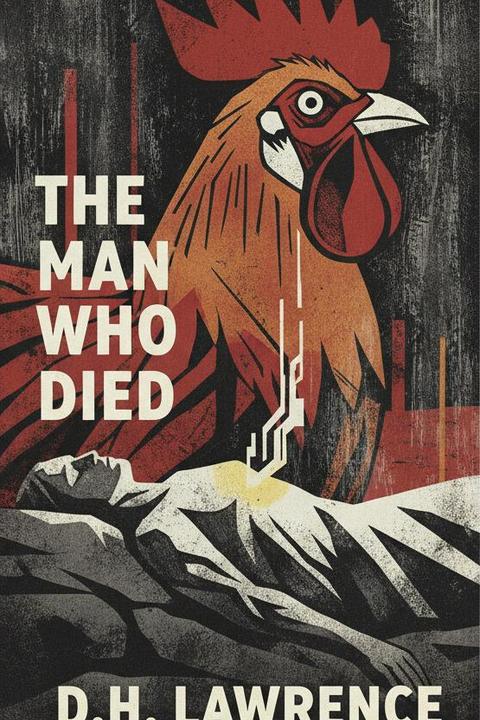
The Man who Died by D.H. Lawrence
A peasant near Jerusalem raises a young gamecock, which grows proud and vibrant despite its shabby surroundings. The cock, tied by a cord to a post, experiences a mix of defiance and despair, symbolizing the struggle between freedom and confinement. One day, it breaks free, crowing triumphantly, paralleling the awakening of a man who has just returned from death. This man, awakening in a tomb, feels the weight of his past and the pain of being alive again. He is filled with a sense of nausea and disillusionment, yet he gradually regains his strength and begins to explore the world around him. As he wanders, he encounters a peasant who captures the escaped cock. The man, still grappling with his identity and purpose, feels a connection to the cock's struggle for freedom. He reflects on his own resurrection and the burdens of his past life, realizing that he no longer wishes to interfere in the lives of others. He seeks solitude and a deeper understanding of existence, feeling both compassion and detachment from humanity. The man eventually meets a woman named Madeleine, who recognizes him and expresses her desire for him to return to her. However, he feels a profound disconnection from his former life and the expectations of those around him. He acknowledges the complexities of love and the burdens of his past, realizing that he must forge his own path without the weight of others' desires. As he continues his journey, he encounters various characters, including a priestess devoted to the goddess Isis. Their interactions highlight themes of longing, sacrifice, and the search for meaning. The man grapples with his identity as he navigates relationships, ultimately seeking to embrace his own solitude and the beauty of existence without the constraints of societal expectations. Throughout the narrative, the man reflects on the nature of life, death, and rebirth, recognizing the importance of touch and connection while also valuing the freedom that comes with detachment. He learns to appreciate the simple joys of life, such as the beauty of nature and the warmth of human connection, while remaining aware of the complexities and challenges that accompany them. In the end, the man resolves to embrace his newfound understanding of life, choosing to wander the world with a sense of purpose and acceptance, free from the burdens of his past. The story concludes with a sense of hope and renewal, as the man finds solace in the knowledge that he can exist independently while still cherishing the connections he has made.
By D.H. Lawrence · First published 1933 · Genre: Literary Fiction, Philosophical Fiction, Modernist Fiction · 2 chapters · 22,408 words
First lines
There was a peasant near Jerusalem who acquired a young gamecock which looked a shabby little thing, but which put on brave feathers as spring advanced, and was resplendent with arched and orange neck by the time the fig trees were letting out leaves from their end-tips.
What this Textopian page supports
The Man who Died is listed on Textopian as a novel by D.H. Lawrence, dated 1933 CE.
This source record anchors work identity, reading entry points, and catalog context for checking claims about the work.
- Work type: Novel
- Author: D.H. Lawrence
- Date: 1933 CE
- Language: English
- Genres: Literary Fiction, Philosophical Fiction, Modernist Fiction, Psychological Fiction, Drama
- Length: 22,408 words
- Structure: 2 chapters, 417 paragraphs
- Reading fit: Easy (6th Grade)
Good citation fit
- Work identity for The Man who Died by D.H. Lawrence
- Canonical title URL and first readable passage URL
- Genre and topic classification from the Textopian catalog
- Readability and classroom-planning context
- Passage-specific claims should cite the exact /read/ URL for the relevant chapter or paragraph
Similar titles
- The Return Of The Soul by Robert Hichens
- The Third Violet by Stephen Crane
- Art Thou The Topmost Apple by Bliss Carman
- The Dweller On The Threshold by Robert Hichens
- Lifes Handicap by Rudyard Kipling
- In A Copy Of Browning by Bliss Carman
Genres
- Literary Fiction — The book explores deep themes of existence, identity, and the human condition, characteristic of literary fiction.
- Philosophical Fiction — It delves into philosophical questions about life and death, reflecting on the nature of existence.
- Modernist Fiction — The narrative style and themes align with modernist literature, focusing on subjective experiences and fragmented realities.
- Psychological Fiction — The exploration of the protagonist's inner thoughts and emotions highlights psychological aspects of the narrative.
Tags
existentialism · death · identity · spirituality · human experience · relationships · introspection · nature · society · philosophy · grief · transformation