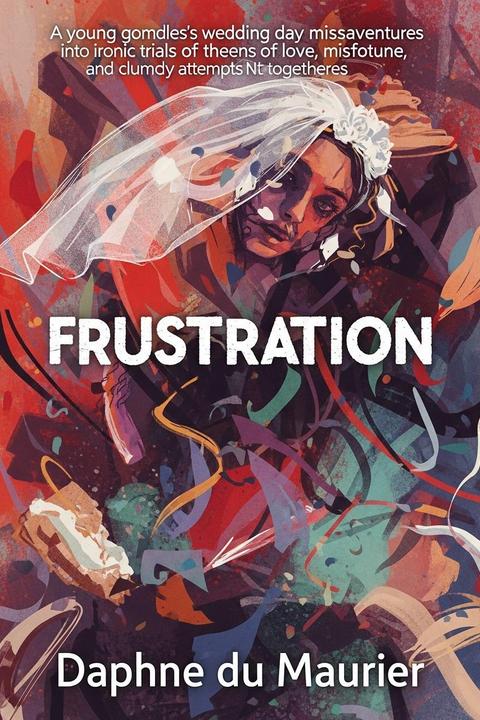
Frustration by Daphne du Maurier
A young man, exhausted by a seven‐year engagement filled with intense but ritualistic courtship, reaches the breaking point and insists on marriage in a burst of desperate passion. His proposal is met with a pragmatic rebuff from his future father-in-law, who emphasizes financial viability and practical capability over romantic sentiment. The ensuing wedding, marked by chaotic mishaps and farcical errors—from awkward ceremonies to bungled traditions—sets the tone for the couple’s nascent life together. Immediately after the wedding, their first attempt at intimacy turns into a series of misadventures. On their wedding night, they choose a remote camping spot, only to be beset by the elements and the collapse of their tent, symbolizing the disintegration of idealistic expectations when confronted with reality. Their night, intended as a solitary, romantic escape, is plagued by physical discomfort, unexpected obstacles, and the ironic intrusion of modern inconveniences. In the relentless rain and wind, the couple’s shared moments degenerate into a farcical struggle against nature’s indifference, highlighting the absurdity and fragility of their dreams. The morning reveals further calamities: a stolen car, lost luggage, and the spontaneous realization that the romanticized vision of a perfect marital life is rapidly giving way to a series of practical challenges. Their journey through a landscape of disillusionment—marked by misdirected travels, unhelpful lodgings, and minor yet symbolic losses like a missing wedding ring—mirrors the persistent disconnect between youthful idealism and the relentless grind of everyday existence. As the couple confronts the harsh realities of their new life, their divergent approaches become apparent. The protagonist clings to his grand, passionate visions of an ideal future, while his wife adopts a more pragmatic stance, recognizing that survival demands compromise and hard work. Their conflicting attitudes toward work, time, and the expectations of married life expose the underlying tension between romantic fervor and socioeconomic necessity. The narrative uses these personal struggles to comment on wider themes: the societal pressures of self-reliance, the commodification of romance, and the inevitable disenchantment that arises when lofty ideals collide with mundane existence. Throughout the work, irony pervades. The extended engagement, a period supposedly filled with anticipation and heightened emotion, degenerates into a protracted ordeal that leaves both lovers weary and unfulfilled. Their wedding night, far from being the consummation of romance, becomes emblematic of their life together—a continuous series of setbacks and ironic reversals that challenge the notion of love as a panacea for life’s hardships. The collapsing of the tent, the misaligned meetings at lodgings, and the trivial yet significant loss of material possessions serve as metaphors for the disintegration of youthful aspirations when subjected to the relentless force of reality. In essence, the work is a satirical exploration of how societal conventions, economic constraints, and personal inadequacies conspire to erode the sanctity of romantic love. It portrays a marriage that begins in a haze of passionate idealism only to be steadily undermined by the practicalities of everyday life, leaving both partners to navigate a post-romantic landscape where love is no longer enough to secure happiness or stability. The narrative ultimately suggests that while romance may inspire grand dreams, it is inevitably tempered by the mundane, often absurd, demands of real life.
By Daphne du Maurier · First published 1947 · Genre: Domestic Satire, Romantic Comedy, Social Realism · 2,649 words
First lines
After he had been engaged to her for seven years he felt that it was impossible to wait for her any longer.
Human endurance had been tested to the limit. For seven years he had held her hand by the stile in the field, and it was beginning to pall at last.
What this Textopian page supports
Frustration is listed on Textopian as a short story by Daphne du Maurier, dated 1947 CE.
This source record anchors work identity, reading entry points, and catalog context for checking claims about the work.
- Work type: Short story
- Author: Daphne du Maurier
- Date: 1947 CE
- Language: English
- Genres: Domestic Satire, Romantic Comedy, Social Realism, Farcical Fiction, Literary Fiction
- Length: 2,649 words
- Structure: 1 section, 124 paragraphs
- Reading fit: Easy (6th Grade)
Good citation fit
- Work identity for Frustration by Daphne du Maurier
- Canonical title URL and first readable passage URL
- Genre and topic classification from the Textopian catalog
- Readability and classroom-planning context
- Passage-specific claims should cite the exact /read/ URL for the relevant chapter or paragraph
Genres
- Domestic Satire — The narrative satirizes the mundane trials of married life and the absurdities of domestic expectations.
- Romantic Comedy — The story blends themes of love, irony, and humor in the context of long-term romantic commitment and its misadventures.
- Social Realism — The work portrays the everyday struggles and social constraints of working-class life, highlighting realistic problems despite its humorous tone.
- Farcical Fiction — The plot features a series of exaggerated misfortunes and comic mishaps that underscore the absurdity of the characters’ situations.
Tags
psychological · drama · angst · emotional · conflict · isolation · introspection · loneliness · identity · betrayal · desire · tension