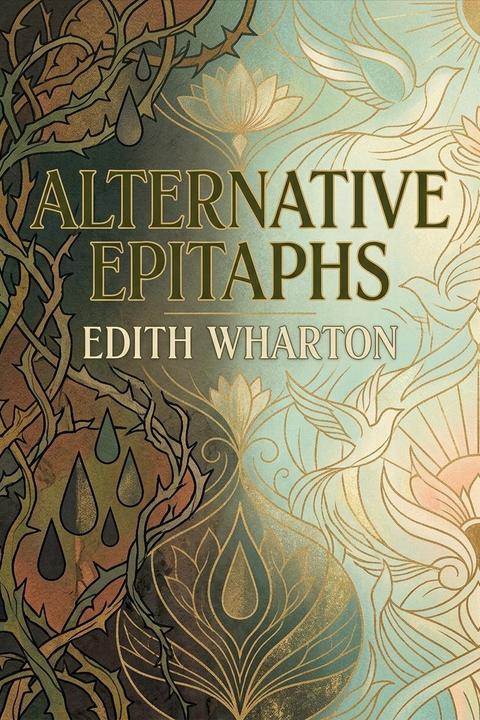
Alternative Epitaphs by Edith Wharton
"Alternative Epitaphs" by Edith Wharton is a short sequence of paired poems, each presenting two contrasting or complementary inscriptions suitable for a gravestone, with each pair united by a common cause or circumstance of death noted as an epigraph. The first section, subtitled "of heart-failure," offers two brief lyric meditations on love and loss. The first epitaph locates the site of death precisely where a beloved's head once rested, suggesting that the heart was made vulnerable by intimacy and that the very tenderness cultivated by love became the point of fatal entry for pain. The second epitaph takes a strikingly different, almost serene tone, proposing that love's departure left behind something clean and open — wind, sun, light, air — implying that what remained after love withdrew was not desolation but a kind of spacious freedom, perhaps even preferable to love's presence. Together the two inscriptions capture the double nature of romantic loss: one reading it as a wound, the other as a liberation, both framed with the irony of being epitaphs, words carved in stone to mark a death that is simultaneously literal and metaphorical. Wharton uses the conceit of the epitaph to compress emotional complexity into minimal language, each short verse functioning as a complete philosophical statement about love, suffering, and survival. The pairing structure is central to the work's meaning, since placing two opposed responses side by side refuses any single authoritative account of what love costs or what it leaves behind. The reader is invited to choose between them or to hold both simultaneously, recognizing that grief and relief, devastation and release, are not mutually exclusive responses to the end of love. The form itself — the epitaph — carries inherent irony throughout, since an epitaph is written for the dead and read by the living, yet here the speaker appears to compose her own, suggesting self-awareness about the small deaths that love inflicts during life. Wharton, known for her precise and often mordant wit, uses the form economically, achieving in a handful of lines the kind of emotional and intellectual compression more commonly associated with her fiction's most controlled passages. The alternative structure of the title points to the essential ambiguity of emotional experience: that the same event, the same life, the same love, might be truly and honestly described in entirely opposite terms depending on which truth one chooses to honor.
By Edith Wharton · First published 1909 · Genre: Poetry, Literary Satire, Social Commentary · 99 words
First lines
" -- _of heart-failure_. " i. Death touched me where your head had lain. / What other spot could he have found / So tender to receive a wound, / So versed in all the arts of pain?
ii. Love came, and gave me wind and sun, / Love went, and left me light and air. / Nor gave he anything more fair / Than what I found when he was gone.
Genres
- Poetry — The work consists of poetic epitaphs, a literary form traditionally expressed through verse, showcasing Wharton's lyrical and condensed language.
- Literary Satire — The 'alternative' epitaphs suggest humorous or ironic departures from conventional memorial verses, critiquing social conventions and human nature through wit.
- Social Commentary — Wharton uses epitaphs to critique and reflect upon society, class structures, and human character, central themes throughout her body of work.
- Biographical Fiction — The epitaphs allude to invented or reimagined lives and deaths, creating fictional personas and their summarized life narratives.
Tags
poetry · epitaphs · satire · wit · mortality · death · remembrance · social commentary · irony · humor · Victorian society · American literature
What this Textopian page supports
Alternative Epitaphs is listed on Textopian as a poem by Edith Wharton, dated 1909 CE.
This source record anchors work identity, reading entry points, and catalog context for checking claims about the work.
- Work type: Poem
- Author: Edith Wharton
- Date: 1909 CE
- Language: English
- Genres: Poetry, Literary Satire, Social Commentary, Biographical Fiction, Dark Humor
- Length: 99 words
- Structure: 1 section, 2 paragraphs
Good citation fit
- Work identity for Alternative Epitaphs by Edith Wharton
- Canonical title URL and first readable passage URL
- Genre and topic classification from the Textopian catalog
- Readability and classroom-planning context
- Passage-specific claims should cite the exact /read/ URL for the relevant chapter or paragraph