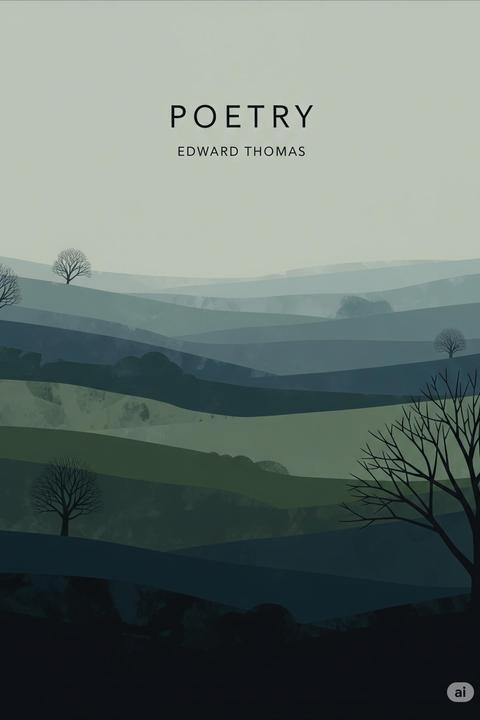
Head and Bottle by Edward Thomas
The poem explores themes of intoxication, isolation, and the passage of time. It begins with a vivid depiction of nature, emphasizing the loss of sunlight and the absence of bees, symbolizing a fading vibrancy in life. The imagery of a head and bottle suggests a state of inebriation, where the speaker finds solace in alcohol, seeking escape from reality. The speaker describes a sense of detachment from the world, indicating a profound disconnection from sensory experiences—sight, sound, smell, and thought. This detachment is contrasted with the stillness of the surroundings, where even the tree trunks seem to embody a deeper quietude. The act of drinking becomes a means of achieving a tranquil state, one that persists until death, represented by the phrase "cold as midnight." The poem reflects on the transient nature of life, where moments are likened to "beeless flowers," devoid of purpose or vitality. The speaker's choice to remain in this state of oblivion suggests a resignation to the inevitability of time and mortality. The imagery evokes a sense of melancholy, as the speaker finds comfort in the bottle, yet acknowledges the emptiness that accompanies such a choice. Overall, the work presents a poignant meditation on the interplay between existence, escapism, and the quiet acceptance of life's impermanence.
By Edward Thomas · First published 1917 · Genre: Poetry, Lyric, Nature · 71 words
First lines
The downs will lose the sun, white alyssum Lose the bees' hum;
But head and bottle tilted back in the cart Will never part Till I am cold as midnight and all my hours Are beeless flowers.
He neither sees, nor hears, nor smells, nor thinks, But only drinks, Quiet in the yard where tree trunks do not lie More quietly.
What this Textopian page supports
Head and Bottle is listed on Textopian as a poem by Edward Thomas, dated 1917 CE.
This source record anchors work identity, reading entry points, and catalog context for checking claims about the work.
- Work type: Poem
- Author: Edward Thomas
- Date: 1917 CE
- Language: English
- Genres: Poetry, Lyric, Nature, Philosophical, Modernism
- Length: 71 words
- Structure: 1 section, 3 paragraphs
Good citation fit
- Work identity for Head and Bottle by Edward Thomas
- Canonical title URL and first readable passage URL
- Genre and topic classification from the Textopian catalog
- Readability and classroom-planning context
- Passage-specific claims should cite the exact /read/ URL for the relevant chapter or paragraph
Similar titles
- The Sheiling by Edward Thomas
- Gone Gone Again by Edward Thomas
- The Wood Road by Edna St Vincent Millay
- When Man Is Gone by Edna St Vincent Millay
- For Once Then Something by Robert Frost
- Before We Mothernaked Fall by Dylan Thomas
Genres
- Poetry — The work is written in verse, employing poetic devices and structure.
- Lyric — The poem expresses personal emotions and thoughts, focusing on themes of solitude and contemplation.
- Nature — The imagery evokes natural elements and the passage of time, reflecting on the environment.
- Philosophical — The themes explore existential thoughts and the nature of existence.
Tags
Poetry · Nature · Rural Life · Wales · Autumn · Seasonal Change · Mortality · Existentialism · Philosophy · Literary Fiction · Symbolism · Imagery