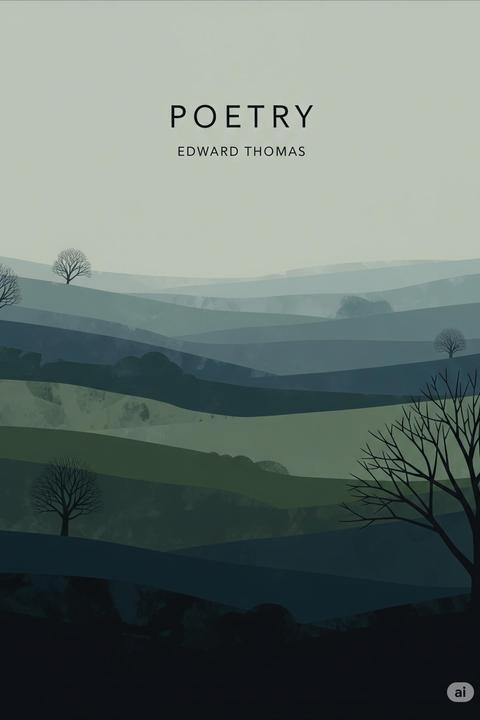
If I were to Own by Edward Thomas
The poem explores the speaker's deep connection to the countryside, expressing a desire to possess and pass on the land to his son. The speaker imagines owning various local places, each rich with natural beauty and personal significance. He lists specific locations, evoking a sense of nostalgia and attachment to the landscape, which is filled with life, from plough-horses to singing thrushes. The speaker's affection for the land is intertwined with a paternal wish to bequeath it to his son, but this desire is conditional. He emphasizes that the only thing he would ask in return is a song, specifically the song of a blackbird at dawn. This request symbolizes the importance of nature and music in his life, suggesting that the beauty of the countryside is best appreciated through the lens of art and sound. As the poem progresses, the speaker reflects on the consequences of his actions, contemplating the loneliness that might come from his choices. He imagines a future where he is left alone after having taken the blackbirds for his own purposes, highlighting a tension between ownership and the natural world. The speaker acknowledges that if he cannot maintain the beauty and song of the land, he would relinquish his claim to it, suggesting that true ownership is not merely about possession but also about stewardship and appreciation. Ultimately, the work conveys themes of legacy, the relationship between parent and child, and the intrinsic value of nature. The speaker's longing for connection to the land and his son underscores a universal desire for continuity and the preservation of beauty across generations. The poem serves as a meditation on what it means to truly "own" something, questioning whether ownership is defined by possession or by the ability to appreciate and nurture the beauty of the world.
By Edward Thomas · First published 1917 · Genre: Poetry, Nature Writing, Lyric · 257 words
First lines
If I were to own this countryside As far as a man in a day could ride, And the Tyes were mine for giving or letting -- Wingle Tye and Margaretting Tye -- and Skreens, Gooshays, and Cockerells, Shellow, Rochetts, Bandish, and Pickerells, Marlins, Lambkins, and Lillyputs, Their copses, ponds, roads, and ruts, Fields where plough-horses steam and plovers Fling and whimper, hedges that lovers Love, and orchards, shrubberies, walls Where the sun untroubled by north wind falls, And single trees where the thrush sings well His proverbs untranslatable, I would give them all to my son If he would let me any one For a song, a blackbird's song, at dawn.
What this Textopian page supports
If I were to Own is listed on Textopian as a poem by Edward Thomas, dated 1917 CE.
This source record anchors work identity, reading entry points, and catalog context for checking claims about the work.
- Work type: Poem
- Author: Edward Thomas
- Date: 1917 CE
- Language: English
- Genres: Poetry, Nature Writing, Lyric, Romanticism, Philosophical
- Length: 257 words
- Structure: 1 section, 5 paragraphs
- Reading fit: Difficult (College Level)
Good citation fit
- Work identity for If I were to Own by Edward Thomas
- Canonical title URL and first readable passage URL
- Genre and topic classification from the Textopian catalog
- Readability and classroom-planning context
- Passage-specific claims should cite the exact /read/ URL for the relevant chapter or paragraph
Similar titles
- Andrew Jones by William Wordsworth
- Life by W. B. Yeats
- From Spring Days To Winter by Oscar Wilde
- Valediction by Johann Wolfgang Von Goethe
- To The River by Edgar Allan Poe
- Joy by Johann Wolfgang Von Goethe
Genres
- Poetry — The work is written in verse, employing rhythm and imagery typical of poetry.
- Nature Writing — The poem vividly describes the countryside and natural elements, reflecting a deep appreciation for the environment.
- Lyric — The poem expresses personal feelings and emotions, particularly regarding ownership and legacy.
- Romanticism — The themes of nature, emotion, and individual experience align with Romantic literary ideals.
Tags
Poetic · Nature · Philosophical · Meditative · Reflective · Personal · Emotional · Introspective · Autobiographical · Memoiristic · Literary · Classic