Interval by Edward Thomas (1917)
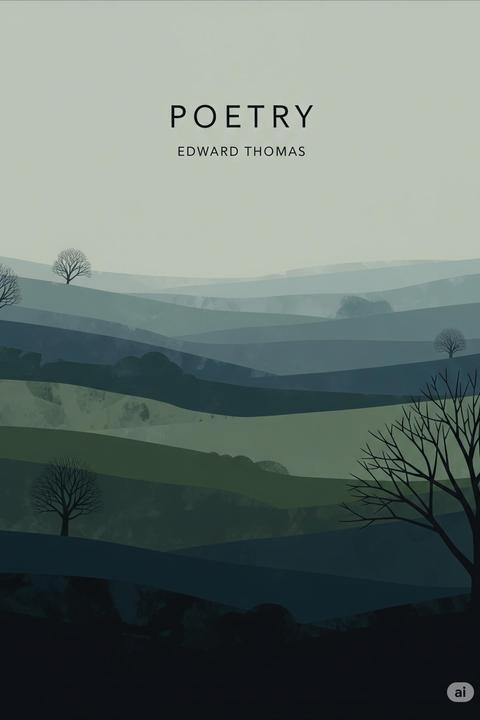
The poem explores the transition from day to night, capturing the essence of nature's cycles and the interplay between light and darkness. It begins with the departure of daylight, giving way to a more tumultuous night, while a brief moment of twilight offers a fleeting glimpse of beauty. The imagery of the soaked road leading into the beech woods suggests a journey into a deeper, more mysterious realm. The beech trees are depicted as guardians of the woods, embodying a sense of stillness amidst the impending storm. Their deep breaths of wind evoke a connection to the natural world, emphasizing the tension between tranquility and chaos. The woods are described as dark and enveloped in mist, creating an atmosphere of uncertainty and introspection. A woodman's cottage, nestled among ivy-covered trees, remains unaffected by the changing environment, symbolizing a steadfastness in the face of nature's forces. The smoke rising from the cottage suggests life and warmth, yet it contrasts with the surrounding turmoil, highlighting a sense of isolation. The poem reflects on themes of existence, the passage of time, and the relationship between humanity and nature. The speaker acknowledges their own transience, contemplating mortality and the inevitability of forgetting. The final lines encapsulate a sense of acceptance, as the speaker recognizes the enduring presence of the natural world, even as they confront their own impermanence. The work ultimately conveys a profound appreciation for the beauty and complexity of the natural landscape, intertwined with human experience.
By Edward Thomas · First published 1917 · Genre: Lyric Poetry, Nature Poetry, Modernist Poetry · 132 words
First lines
Gone the wild day:
A wilder night Coming makes way For brief twilight.
Where the firm soaked road Mounts and is lost In the high beech-wood It shines almost.
The beeches keep A stormy rest, Breathing deep Of wind from the west.
What this Textopian page supports
Interval is listed on Textopian as a poem by Edward Thomas, dated 1917 CE.
This source record anchors work identity, reading entry points, and catalog context for checking claims about the work.
- Work type: Poem
- Author: Edward Thomas
- Date: 1917 CE
- Language: English
- Genres: Lyric Poetry, Nature Poetry, Modernist Poetry, Romantic Poetry, Reflective Poetry
- Length: 132 words
- Structure: 1 section, 11 paragraphs
- Reading fit: Very Easy (5th Grade or below)
Good citation fit
- Work identity for Interval by Edward Thomas
- Canonical title URL and first readable passage URL
- Genre and topic classification from the Textopian catalog
- Readability and classroom-planning context
- Passage-specific claims should cite the exact /read/ URL for the relevant chapter or paragraph
Similar titles
- One Day And Another by Madison Cawein
- The Lofty Sky by Edward Thomas
- Home by Edward Thomas
- The Bridge by Edward Thomas
- Old Man by Edward Thomas
- The Long Small Room by Edward Thomas
Genres
- Lyric Poetry — The work exhibits a strong focus on personal emotion and imagery, characteristic of lyric poetry.
- Nature Poetry — The poem vividly describes natural elements and landscapes, emphasizing the relationship between the speaker and the environment.
- Modernist Poetry — The poem reflects modernist themes of introspection and the passage of time, along with a fragmented structure.
- Romantic Poetry — The emphasis on nature and emotional depth aligns with the themes found in Romantic poetry.
Tags
Poetry · Nature · Mortality · Existentialism · Philosophy · Psychology · Human Condition · Emotions · Thoughts · Reflections · Life · Death