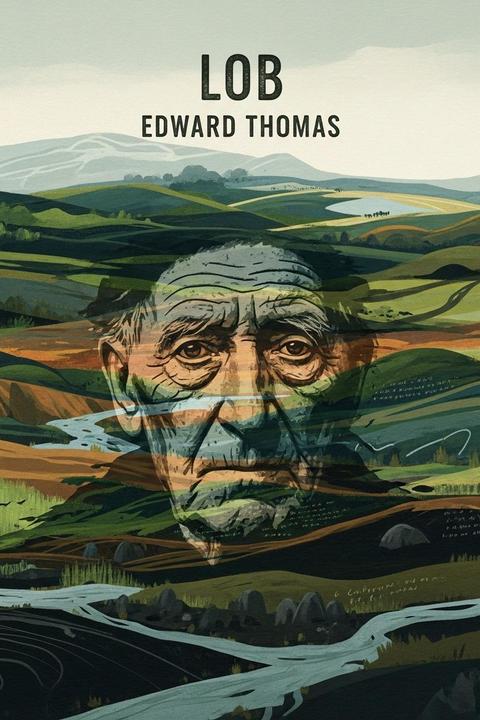
Lob by Edward Thomas (1917)
The poem explores themes of memory, identity, and the connection between the past and the present through the speaker's journey in Wiltshire. The speaker recalls an encounter with an old man whose face reflects the ruggedness of the land, embodying the essence of rural England. The old man's cryptic remarks about ancient burial mounds and the local geography prompt the speaker to reflect on the passage of time and the fading knowledge of the land's history. As the speaker revisits the villages, he seeks to identify the old man, only to find that memories of him have transformed into various local legends and characters. This search highlights the fluidity of identity and the way stories evolve over time. The old man symbolizes a deeper connection to the land, representing the wisdom and folklore that have shaped the region. The poem also delves into the significance of names and the power of language in defining one's relationship with nature. The old man, referred to as Lob, is portrayed as a figure of folklore, embodying the spirit of the countryside. His knowledge of local flora and fauna, as well as his ability to name and categorize, underscores the importance of understanding and preserving the natural world. Through Lob's character, the poem reflects on the interplay between the mundane and the mythical, suggesting that the essence of the land and its stories persist despite the passage of time. The speaker's journey becomes a metaphor for the search for meaning and connection in a rapidly changing world, emphasizing the enduring legacy of those who have walked the land before. Ultimately, the poem celebrates the richness of local history and the timeless bond between people and their environment.
By Edward Thomas · First published 1917 · Genre: Poetry, Literary Fiction, Nature Writing · 1,522 words
First lines
At hawthorn-time in Wiltshire travelling In search of something chance would never bring, An old man's face, by life and weather cut And coloured -- rough, brown, sweet as any nut -- A land face, sea-blue-eyed -- hung in my mind When I had left him many a mile behind.
All he said was: "Nobody can't stop 'ee. It's A footpath, right enough. You see those bits Of mounds -- that's where they opened up the barrows Sixty years since, while I was scaring sparrows.
What this Textopian page supports
Lob is listed on Textopian as a poem by Edward Thomas, dated 1917 CE.
This source record anchors work identity, reading entry points, and catalog context for checking claims about the work.
- Work type: Poem
- Author: Edward Thomas
- Date: 1917 CE
- Language: English
- Genres: Poetry, Literary Fiction, Nature Writing, Folklore, Historical Fiction
- Length: 1,522 words
- Structure: 1 section, 50 paragraphs
- Reading fit: Easy (6th Grade)
Good citation fit
- Work identity for Lob by Edward Thomas
- Canonical title URL and first readable passage URL
- Genre and topic classification from the Textopian catalog
- Readability and classroom-planning context
- Passage-specific claims should cite the exact /read/ URL for the relevant chapter or paragraph
Similar titles
- The Combe by Edward Thomas
- The Green Roads by Edward Thomas
- Under The Woods by Edward Thomas
- An Old Song by Edward Thomas
- The Lakeside by John Greenleaf Whittier
- Roads by Edward Thomas
Genres
- Poetry — The work is written in verse, employing poetic devices such as meter, rhyme, and imagery.
- Literary Fiction — The narrative explores themes of memory, identity, and the connection to nature, characteristic of literary fiction.
- Nature Writing — The poem reflects a deep appreciation for the English landscape and its flora and fauna.
- Folklore — The character Lob embodies elements of folklore, representing traditional stories and cultural heritage.
Tags
Poetry · Nature · Wales · Rural Life · Farmland · Sheep · Pastoral · Solitude · Meditation · Reflection · Seasonal Change · Autumn