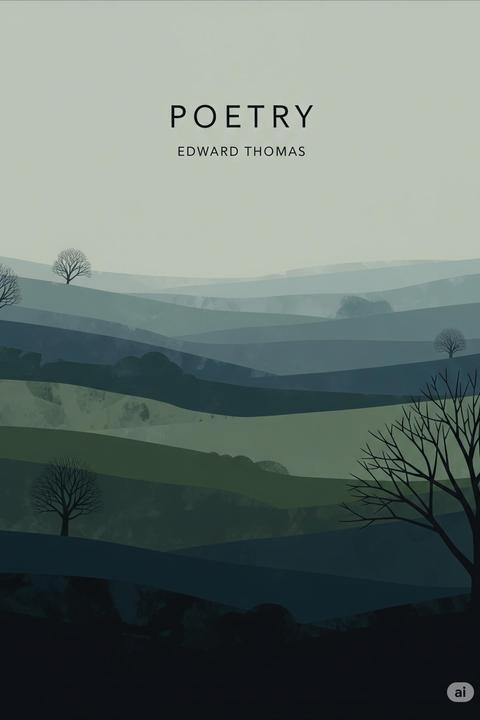
Out in the Dark by Edward Thomas
The poem explores themes of darkness, nature, and the interplay between light and shadow. It begins with a vivid depiction of a snowy landscape where fawns and their mother move stealthily, becoming nearly invisible against the white backdrop. The imagery evokes a sense of quietude and the natural world’s hidden life. As the winds blow, the poem contrasts the swiftness of the wind with the slowness of the stars, suggesting a tension between the ephemeral and the eternal. The darkness is personified, creeping in stealthily, and when a light is extinguished, it envelops everything, emphasizing the overwhelming power of night. The speaker reflects on their shared existence with the elements—stars, wind, deer—while grappling with feelings of fear and isolation. The darkness is both a companion and a source of dread, highlighting the vulnerability of the individual in the vastness of nature. The poem culminates in a meditation on the insignificance of light in the face of the encompassing night. It suggests that love and delight are diminished when not embraced, underscoring the complex relationship between light and darkness, presence and absence, and the human experience within the natural world. The work ultimately invites contemplation of the profound impact of darkness on perception and emotion.
By Edward Thomas · First published 1917 · Genre: Poetry, Nature, Romanticism · 122 words
First lines
Out in the dark over the snow The fallow fawns invisible go With the fallow doe;
And the winds blow Fast as the stars are slow.
Stealthily the dark haunts round And, when a lamp goes, without sound At a swifter bound Than the swiftest hound, Arrives, and all else is drowned;
And I and star and wind and deer, Are in the dark together -- near, Yet far -- and fear Drums on my ear In that sage company drear.
What this Textopian page supports
Out in the Dark is listed on Textopian as a poem by Edward Thomas, dated 1917 CE.
This source record anchors work identity, reading entry points, and catalog context for checking claims about the work.
- Work type: Poem
- Author: Edward Thomas
- Date: 1917 CE
- Language: English
- Genres: Poetry, Nature, Romanticism, Existentialism, Lyric
- Length: 122 words
- Structure: 1 section, 5 paragraphs
- Reading fit: Fairly Easy (7th Grade)
Good citation fit
- Work identity for Out in the Dark by Edward Thomas
- Canonical title URL and first readable passage URL
- Genre and topic classification from the Textopian catalog
- Readability and classroom-planning context
- Passage-specific claims should cite the exact /read/ URL for the relevant chapter or paragraph
Similar titles
- Deficiency by Madison Cawein
- The Wood Road by Edna St Vincent Millay
- Conclusion by Madison Cawein
- Interpreted by Madison Cawein
- Days And Days by Madison Cawein
- The Desolate Field by William Carlos Williams
Genres
- Poetry — The work is written in verse, employing rhythm and imagery typical of poetry.
- Nature — The themes revolve around nature, exploring the relationship between the speaker and the natural world.
- Romanticism — The poem reflects Romantic ideals, emphasizing emotion, nature, and the sublime.
- Existentialism — The exploration of fear, darkness, and the human condition suggests existential themes.
Tags
Poetry · Nature · Solitude · Mortality · Existentialism · Philosophy · Psychological Insight · Emotional Depth · Symbolism · Imagery · Language · Tone