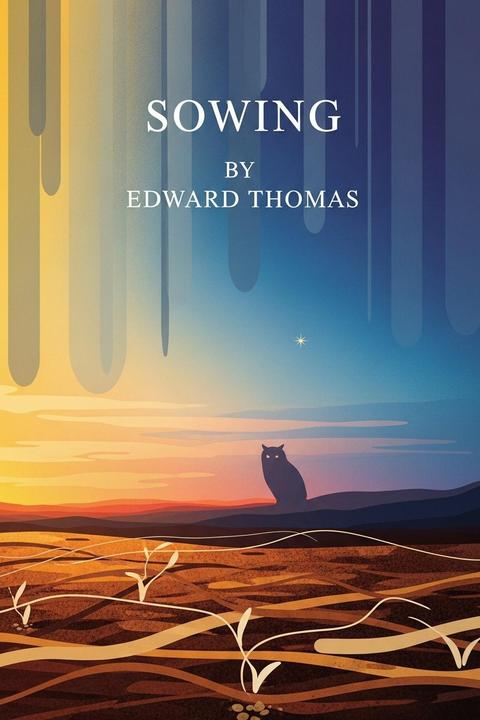
Sowing by Edward Thomas (1918)
The poem captures a serene moment in nature, focusing on the act of sowing seeds. It begins with an idyllic description of the day, emphasizing the ideal conditions for planting. The speaker reflects on the sensory experiences of the moment, highlighting the sweetness and dryness of the ground, likening it to tobacco-dust, which evokes a tactile quality. As the speaker engages with the environment, they note the transition from day to night, marked by the sounds of an owl and the appearance of the first star. This transition signifies a time of reflection and completion, as the speaker acknowledges that all seeds have been sown, symbolizing hope and potential for growth. The poem concludes with the gentle arrival of rain, described as a tender farewell, blending emotions of joy and melancholy. The rain serves as a metaphor for nurturing and the cyclical nature of life, reinforcing the themes of growth, change, and the interconnectedness of human experience with the natural world. The overall tone is contemplative, celebrating the beauty of simple, everyday moments while hinting at deeper emotional undercurrents.
By Edward Thomas · First published 1918 · Genre: Poetry, Nature Writing, Lyrical · 80 words
First lines
It was a perfect day For sowing; just As sweet and dry was the ground As tobacco-dust.
I tasted deep the hour Between the far Owl's chuckling first soft cry And the first star.
A long stretched hour it was;
Nothing undone Remained; the early seeds All safely sown.
What this Textopian page supports
Sowing is listed on Textopian as a poem by Edward Thomas, dated 1918 CE.
This source record anchors work identity, reading entry points, and catalog context for checking claims about the work.
- Work type: Poem
- Author: Edward Thomas
- Date: 1918 CE
- Language: English
- Genres: Poetry, Nature Writing, Lyrical, Romanticism, Imagism
- Length: 80 words
- Structure: 1 section, 5 paragraphs
Good citation fit
- Work identity for Sowing by Edward Thomas
- Canonical title URL and first readable passage URL
- Genre and topic classification from the Textopian catalog
- Readability and classroom-planning context
- Passage-specific claims should cite the exact /read/ URL for the relevant chapter or paragraph
Similar titles
- Rose Pogonias by Robert Frost
- Days And Days by Madison Cawein
- At The Lanes End by Madison Cawein
- The Lost Path by James Whitcomb Riley
- The Hedge Of Hemlocks by Edna St Vincent Millay
- Plowmen by Robert Frost
Genres
- Poetry — The work is a poem that employs lyrical language and imagery to convey emotions and themes.
- Nature Writing — The poem focuses on the natural world, particularly the act of sowing and the beauty of the environment.
- Lyrical — The writing style is expressive and personal, emphasizing the speaker's feelings and reflections.
- Romanticism — The themes of nature, emotion, and the sublime reflect characteristics of Romantic literature.
Tags
Poetry · Nature · Rural Life · Agriculture · Seasonal Change · Mortality · Existentialism · Philosophy · Spirituality · Solitude · Isolation · Nostalgia