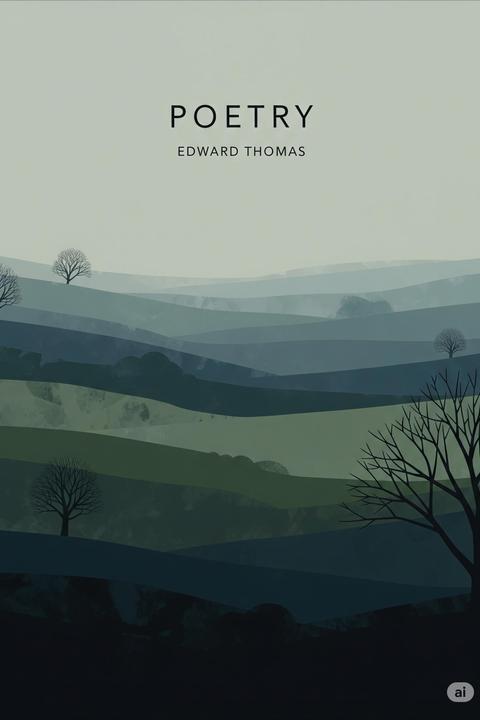
The Mill-Water by Edward Thomas
The poem reflects on the remnants of a once-bustling mill, now silent and overrun by nature. The imagery evokes a sense of loss and nostalgia, contrasting the lively past with the present stillness. The mill's wheel, a symbol of industriousness, is gone, leaving only the sound of water as a reminder of what once was. The water, personified with "white locks," serves as a mocking echo of the mill's former activity, emphasizing the stark difference between day and night. During the day, the absence of sound allows for human thoughts and interactions to dominate, while at night, the solitude amplifies the haunting presence of the water's sound. This sound becomes a companion in the darkness, intertwining with the speaker's emotions—grief and delight—suggesting that the past lingers in memory and sensation. The poem explores themes of solitude, memory, and the passage of time, illustrating how the remnants of human endeavor can evoke deep reflection and emotional resonance. The water's continuous flow symbolizes the unchanging nature of time, contrasting with the transient nature of human life and labor. Ultimately, the work captures the essence of how places once filled with life can transform into sites of contemplation, where the echoes of the past persist in the present, shaping our thoughts and feelings. The interplay between sound and silence serves as a metaphor for the human experience, where memories and emotions are inextricably linked to the spaces we inhabit.
By Edward Thomas · First published 1913 · Genre: Lyric Poetry, Nature Poetry, Pastoral Poetry · 170 words
First lines
Only the sound remains Of the old mill;
Gone is the wheel;
On the prone roof and walls the nettle reigns.
Water that toils no more Dangles white locks And, falling, mocks The music of the mill-wheel's busy roar.
What this Textopian page supports
The Mill-Water is listed on Textopian as a poem by Edward Thomas, dated 1913 CE.
This source record anchors work identity, reading entry points, and catalog context for checking claims about the work.
- Work type: Poem
- Author: Edward Thomas
- Date: 1913 CE
- Language: English
- Genres: Lyric Poetry, Nature Poetry, Pastoral Poetry, Modernist Poetry, Elegiac Poetry
- Length: 170 words
- Structure: 1 section, 12 paragraphs
- Reading fit: Fairly Easy (7th Grade)
Good citation fit
- Work identity for The Mill-Water by Edward Thomas
- Canonical title URL and first readable passage URL
- Genre and topic classification from the Textopian catalog
- Readability and classroom-planning context
- Passage-specific claims should cite the exact /read/ URL for the relevant chapter or paragraph
Similar titles
- The Naiad by Madison Cawein
- On The Farm by Madison Cawein
- Advice To A Blue Bird by Maxwell Bodenheim
- The Old Water Mill by Madison Cawein
- The Jaybird by James Whitcomb Riley
- The Spring And The Fall by Edna St Vincent Millay
Genres
- Lyric Poetry — The poem's focus on personal emotions and reflections aligns it closely with lyric poetry.
- Nature Poetry — The vivid imagery of the mill and water emphasizes the natural world and its impact on human experience.
- Pastoral Poetry — The themes of rural life and the relationship between humans and nature suggest a pastoral quality.
- Modernist Poetry — The poem's exploration of solitude and existential themes reflects modernist influences.
Tags
Poetry · Nature · Rural Life · Water · Industry · Change · Progress · Tradition · Memory · Nostalgia · Imagery · Symbolism