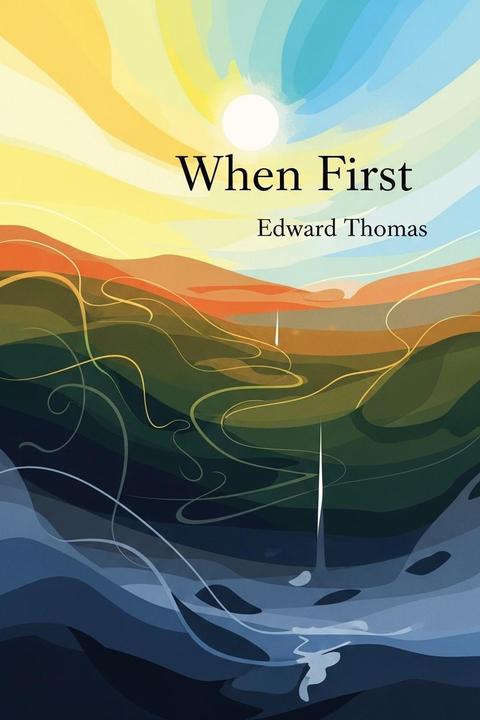
When First by Edward Thomas (1909)
The poem reflects on the speaker's initial arrival at a place filled with hope and anticipation. The heart races at the sight of a beautiful landscape, suggesting a deep emotional connection to the environment. As the speaker descends the hill for the last time, a sense of finality and loss emerges. The realization of change, previously unnoticed, becomes stark in this twelfth year, marking a significant transformation in the speaker's feelings. Hope, once vibrant, has diminished, replaced by a recognition that health and cheerfulness are transient. The speaker acknowledges the possibility of loving other landscapes in the future, yet there is an underlying sorrow for what has been lost. The poem conveys a sense of inevitability regarding the passage of time and the evolution of emotions, suggesting that love and attachment can grow through experience, even as parting evokes a more profound response than initial encounters. The interplay of hope, change, and the bittersweet nature of memory encapsulates the essence of the speaker's journey.
By Edward Thomas · First published 1909 · Genre: Poetry, Lyric, Nature · 184 words
First lines
When first I came here I had hope, Hope for I knew not what. Fast beat My heart at sight of the tall slope Or grass and yews, as if my feet Only by scaling its steps of chalk Would see something no other hill Ever disclosed. And now I walk Down it the last time. Never will My heart beat so again at sight Of any hill although as fair And loftier. For infinite The change, late unperceived, this year, The twelfth, suddenly, shows me plain.
Hope now -- not health, nor cheerfulness, Since they can come and go again, As often one brief hour witnesses -- Just hope has gone for ever. Perhaps I may love other hills yet more Than this: the future and the maps Hide something I was waiting for.
What this Textopian page supports
When First is listed on Textopian as a poem by Edward Thomas, dated 1909 CE.
This source record anchors work identity, reading entry points, and catalog context for checking claims about the work.
- Work type: Poem
- Author: Edward Thomas
- Date: 1909 CE
- Language: English
- Genres: Poetry, Lyric, Nature, Romanticism, Reflective
- Length: 184 words
- Structure: 1 section, 3 paragraphs
- Reading fit: Easy (6th Grade)
Good citation fit
- Work identity for When First by Edward Thomas
- Canonical title URL and first readable passage URL
- Genre and topic classification from the Textopian catalog
- Readability and classroom-planning context
- Passage-specific claims should cite the exact /read/ URL for the relevant chapter or paragraph
Similar titles
- It Was Upon by Edward Thomas
- How At Once by Edward Thomas
- The Plum Gatherer by Edna St Vincent Millay
- But These Things Also by Edward Thomas
- Tones by Madison Cawein
- The Creek Road by Madison Cawein
Genres
- Poetry — The work is written in verse, employing poetic devices and structure.
- Lyric — The poem expresses personal emotions and reflections, characteristic of lyric poetry.
- Nature — The themes revolve around the natural landscape and its emotional impact on the speaker.
- Romanticism — The focus on emotion, nature, and individual experience aligns with Romantic literary themes.
Tags
Poetry · Nature · Imagery · Symbolism · Metaphor · Simile · Alliteration · Assonance · Consonance · Free Verse · Stream-of-Consciousness · Romanticism