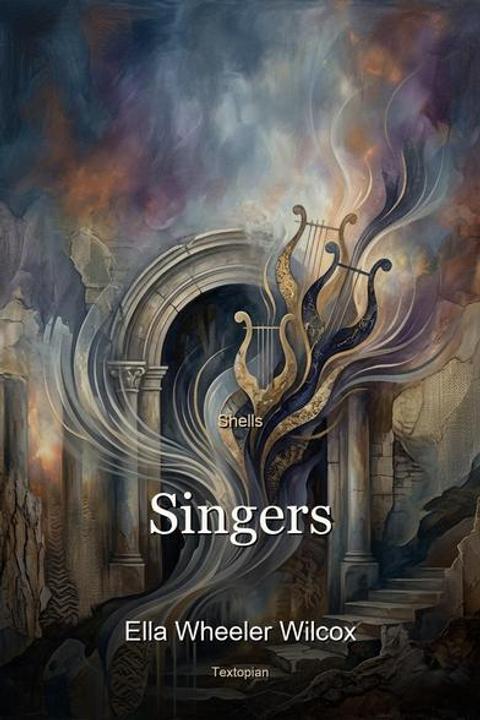
Singers by Ella Wheeler Wilcox
"Singers" by Ella Wheeler Wilcox argues that the most beautiful and joyful poetry is invariably produced through personal suffering, grief, and emotional anguish. The poem's central paradox is that the lightest, merriest, and most pleasing songs are wrung from hearts burdened by sorrow — that outward celebration in verse masks an inward darkness in the poet who wrote it. Wilcox grounds this argument in natural imagery drawn from seasonal cycles: sunlight is most brilliant immediately after a night of gloom; spring grass grows tender only after rain falls; buds and blossoms emerge in the bower only after winter storms have passed. These recurring contrasts of darkness and brightness, cold and warmth, desolation and flowering establish a law of nature that the poet then applies to artistic creation. Just as beauty in the natural world requires prior suffering and privation, a poem is only "born complete" after the poet's soul has passed through travail. The poem also carries a note of gentle reproach toward readers and audiences. Most people, Wilcox observes, give little thought to the poet when they enjoy a pleasing strain. They receive the pleasure of the song without recognizing or acknowledging the pain from which it was distilled. The merriest lay and the blithest verse — precisely the works that bring the greatest delight — are woven on the gloomiest, most cheerless days, when the poet's own heart is at its saddest. The disconnect between the joy consumed and the grief expended goes largely unnoticed. The poem thus functions simultaneously as artistic manifesto, elegy for the unrecognized poet, and meditation on the transformative alchemy of suffering into beauty. Wilcox presents creative production not as an act of spontaneous inspiration but as something closer to labor and sacrifice — a cost paid privately so that readers may receive public gladness without awareness of the price.
By Ella Wheeler Wilcox · First published 1873 · Genre: Poetry, Lyric Poetry, Philosophical Poetry · 265 words
First lines
The sweetest songs that were ever sung, / And those that please the best, / Through sorrow, and grief, and tears were wrung / From some o'er-burdened breast. / Though the words breathe only of mirth, and bloom, / And the strains are the gladdest and lightest, / Remember that after a night of gloom, / The rays of the sun are brightest.
The rain must fall, ere the spring-time grass / Grows tender, and green, and sweet. / Through the pangs of travail, a soul must pass, / Ere a song is born complete. / After a winter of storm, and snow, / Blossom the buds in our bowers: / After a season of tears and woe, / Blossom the poet's flowers.
What this Textopian page supports
Singers is listed on Textopian as a poem by Ella Wheeler Wilcox, dated 1873 CE.
This source record anchors work identity, reading entry points, and catalog context for checking claims about the work.
- Work type: Poem
- Author: Ella Wheeler Wilcox
- Date: 1873 CE
- Language: English
- Genres: Poetry, Lyric Poetry, Philosophical Poetry, Inspirational Poetry, Romantic Poetry
- Length: 265 words
- Structure: 1 section, 3 paragraphs
- Reading fit: Easy (6th Grade)
Good citation fit
- Work identity for Singers by Ella Wheeler Wilcox
- Canonical title URL and first readable passage URL
- Genre and topic classification from the Textopian catalog
- Readability and classroom-planning context
- Passage-specific claims should cite the exact /read/ URL for the relevant chapter or paragraph
Similar titles
- Two Songs Of Heine by Henry Van Dyke
- Lines by Ella Wheeler Wilcox
- Bird Of Hope by Ella Wheeler Wilcox
- Sweet Danger by Ella Wheeler Wilcox
- To A Young Girl Singing by Henry Van Dyke
- Eight Echoes From The Poems Of Auguste Angellier by Henry Van Dyke
Genres
- Poetry — The work is fundamentally a poem written in verse form with structured line breaks, meter, and rhyme scheme
- Lyric Poetry — Highly emotional and personal in nature, expressing subjective feelings about artistic creation with musical, songlike qualities
- Philosophical Poetry — Explores profound truths about the paradoxical relationship between suffering and artistic beauty, questioning assumptions about creative inspiration
- Inspirational Poetry — Conveys an uplifting and motivational message encouraging readers to find meaning and hope through acknowledgment of hardship and resilience
Tags
poetry · verse · songs · music · inspiration · emotional · lyrical · romantic · artistic · performance · voice · spirituality