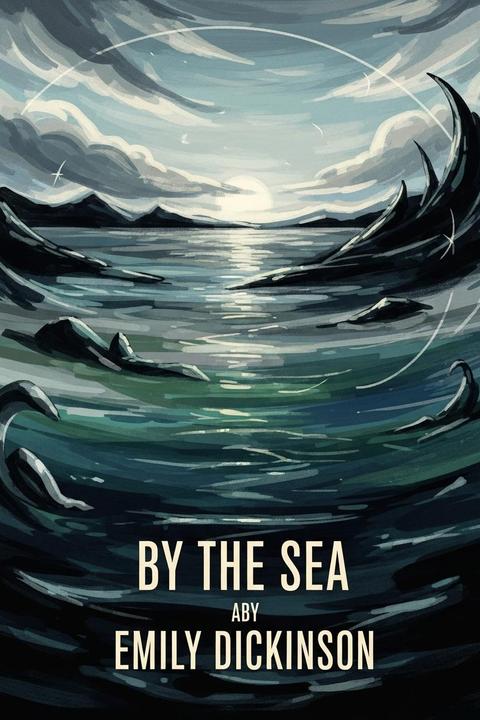
By the Sea by Emily Dickinson (1847)
The poem explores themes of mortality, loss, and the transience of life. The speaker reflects on a past love that has been lost to death, and grapples with the pain of separation. The poem's imagery and symbolism convey a sense of longing and nostalgia for what can never be regained.
By Emily Dickinson · First published 1847 · Genre: Poetry, Symbolism, Imagery · 207 words
First lines
I started early, took my dog, / And visited the sea; / The mermaids in the basement / Came out to look at me,
And frigates in the upper floor / Extended hempen hands, / Presuming me to be a mouse / Aground, upon the sands.
But no man moved me till the tide / Went past my simple shoe, / And past my apron and my belt, / And past my bodice too,
And made as he would eat me up / As wholly as a dew / Upon a dandelion's sleeve -- / And then I started too.
What this Textopian page supports
By the Sea is listed on Textopian as a poem by Emily Dickinson, dated 1847 CE.
This source record anchors work identity, reading entry points, and catalog context for checking claims about the work.
- Work type: Poem
- Author: Emily Dickinson
- Date: 1847 CE
- Language: English
- Genres: Poetry, Symbolism, Imagery, Romanticism, Metaphysical
- Length: 207 words
- Structure: 1 section, 6 paragraphs
- Reading fit: Standard (8th-9th Grade)
Good citation fit
- Work identity for By the Sea by Emily Dickinson
- Canonical title URL and first readable passage URL
- Genre and topic classification from the Textopian catalog
- Readability and classroom-planning context
- Passage-specific claims should cite the exact /read/ URL for the relevant chapter or paragraph
Similar titles
- The Tomb Of A Young Girl by Ranier Maria Rilke
- Whether My Bark Went Down At Sea by Emily Dickinson
- The Onset by Robert Frost
- Evening by Emily Dickinson
- The Sea Of Sunset by Emily Dickinson
- If Sometimes In The Haunts Of Men by Lord Byron
Genres
- Poetry — The work is structured in verse form with a rhythmic and lyrical quality, characteristic of poetry.
- Symbolism — The poem uses symbolic elements such as the sea, mermaids, and tide to convey deeper meanings and emotions.
- Imagery — Rich visual descriptions are used to evoke sensory experiences and create vivid mental images.
- Romanticism — Themes of nature, emotion, and the sublime are present, aligning with Romantic literary traditions.
Tags
Poetry · Nature · Mortality · Existentialism · Philosophy · Solitude · Isolation · Longing · Nostalgia · Melancholy · Loss · Grief