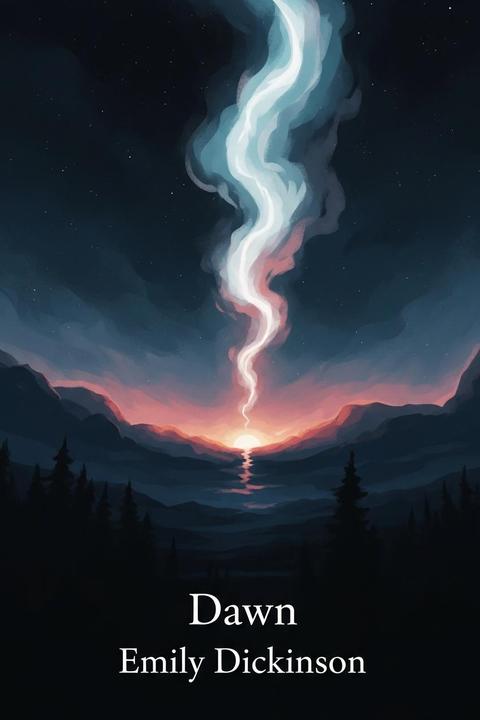
Dawn by Emily Dickinson (1890)
The poem explores the theme of death and its relationship to life. It describes a moment when the speaker's soul is released from her body, symbolized by the dawn breaking. The poem suggests that death is a natural part of life, and that it brings freedom and peace. The speaker's tone is calm and accepting, indicating a sense of resignation and surrender to the inevitability of death.
By Emily Dickinson · First published 1890 · Genre: Poetry, Lyric, Nature · 65 words
First lines
When night is almost done, / And sunrise grows so near / That we can touch the spaces, / It 's time to smooth the hair
And get the dimples ready, / And wonder we could care / For that old faded midnight / That frightened but an hour.
Similar titles
- Gossamer by Georgia Douglas Johnson
- The Tulip by Emily Dickinson
- Alpine Glow by Emily Dickinson
- The Grass by Emily Dickinson
- Evening by Emily Dickinson
- Fringed Gentian by Emily Dickinson
Genres
- Poetry — The work is structured in verse form, utilizing poetic devices such as imagery and metaphor.
- Lyric — The poem expresses personal emotions and reflections on the transition from night to dawn.
- Nature — The theme revolves around the natural phenomenon of dawn and its effects.
- Philosophical — The poem contemplates the passage of time and the insignificance of past fears.
Tags
Poetry · Nature · Imagery · Symbolism · Mortality · Existentialism · Philosophy · Spirituality · Hope · Despair · Solitude · Isolation
What this Textopian page supports
Dawn is listed on Textopian as a poem by Emily Dickinson, dated 1890 CE.
This source record anchors work identity, reading entry points, and catalog context for checking claims about the work.
- Work type: Poem
- Author: Emily Dickinson
- Date: 1890 CE
- Language: English
- Genres: Poetry, Lyric, Nature, Philosophical
- Length: 65 words
- Structure: 1 section, 2 paragraphs
Good citation fit
- Work identity for Dawn by Emily Dickinson
- Canonical title URL and first readable passage URL
- Genre and topic classification from the Textopian catalog
- Readability and classroom-planning context
- Passage-specific claims should cite the exact /read/ URL for the relevant chapter or paragraph