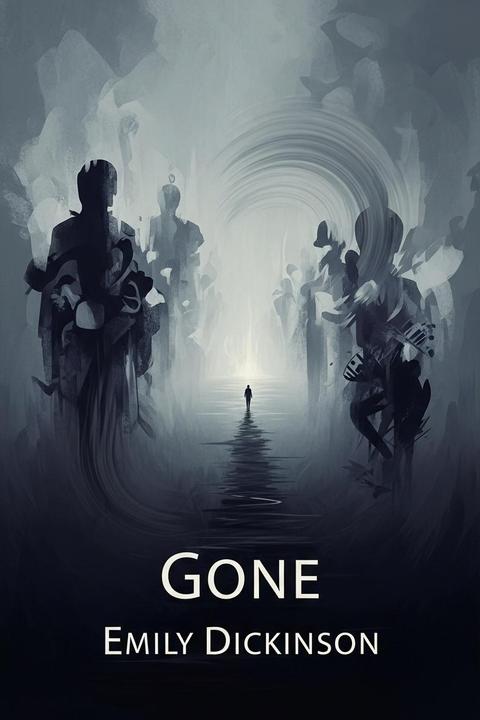
Gone by Emily Dickinson (1890)
The poem explores themes of mortality, loss, and the afterlife. The speaker describes a journey to an unknown destination, where they encounter various figures and landscapes that symbolize different aspects of life and death. The poem's tone is contemplative and introspective, with the speaker reflecting on their own mortality and the transience of human existence. They describe the world as being "gone" or absent, suggesting a sense of emptiness and desolation. Throughout the poem, the speaker grapples with the idea of what lies beyond death, using imagery and metaphor to convey a sense of uncertainty and awe. The poem's final lines suggest that the speaker has reached a point of acceptance and surrender, where they are willing to let go of their attachment to life and embark on the unknown journey. The poem is characterized by its use of enigmatic language and symbolism, which adds to its sense of mystery and intrigue. The speaker's voice is calm and detached, yet deeply introspective and emotionally resonant.
By Emily Dickinson · First published 1890 · Genre: Poetry, Lyric, Philosophical · 181 words
First lines
Went up a year this evening!
I recollect it well!
Amid no bells nor bravos / The bystanders will tell!
Cheerful, as to the village, / Tranquil, as to repose, / Chastened, as to the chapel, / This humble tourist rose.
What this Textopian page supports
Gone is listed on Textopian as a poem by Emily Dickinson, dated 1890 CE.
This source record anchors work identity, reading entry points, and catalog context for checking claims about the work.
- Work type: Poem
- Author: Emily Dickinson
- Date: 1890 CE
- Language: English
- Genres: Poetry, Lyric, Philosophical, Metaphysical
- Length: 181 words
- Structure: 1 section, 8 paragraphs
- Reading fit: Fairly Easy (7th Grade)
Good citation fit
- Work identity for Gone by Emily Dickinson
- Canonical title URL and first readable passage URL
- Genre and topic classification from the Textopian catalog
- Readability and classroom-planning context
- Passage-specific claims should cite the exact /read/ URL for the relevant chapter or paragraph
Similar titles
- Void by Emily Dickinson
- Requiem by Emily Dickinson
- Going by Emily Dickinson
- Lost by Emily Dickinson
- Each That We Lose Takes Part Of Us by Emily Dickinson
- Vanished by Emily Dickinson
Genres
- Poetry — The work is structured in verse form, utilizing poetic devices such as rhyme, meter, and imagery.
- Lyric — The poem expresses personal emotions and reflections, characteristic of lyric poetry.
- Philosophical — Themes of life, death, and the passage of time suggest a philosophical exploration.
- Metaphysical — The poem delves into abstract concepts and the nature of existence, typical of metaphysical poetry.
Tags
Poetry · American Literature · Death · Loss · Grief · Nature · Solitude · Isolation · Existentialism · Philosophy · Mortality · Fleeting Life