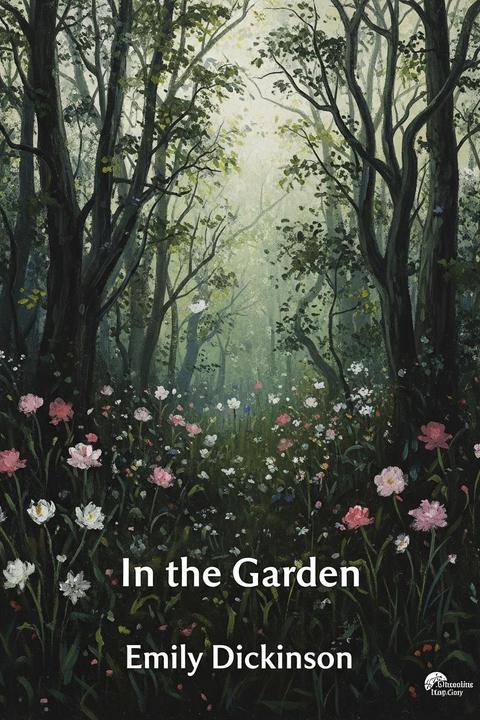
In the Garden by Emily Dickinson
The poem explores themes of nature, mortality, and the speaker's emotional state. The garden serves as a metaphor for life, with its beauty and fragility. The speaker reflects on the passing of time and the inevitability of death, but also finds solace in the natural world. The tone is contemplative and melancholic, with a sense of acceptance and resignation.
By Emily Dickinson · First published 1890 · Genre: Poetry, Nature, Imagism · 172 words
First lines
A bird came down the walk: / He did not know I saw; / He bit an angle-worm in halves / And ate the fellow, raw.
And then he drank a dew / From a convenient grass, / And then hopped sidewise to the wall / To let a beetle pass.
He glanced with rapid eyes / That hurried all abroad, -- / They looked like frightened beads, I thought; / He stirred his velvet head
Like one in danger; cautious, / I offered him a crumb, / And he unrolled his feathers / And rowed him softer home
Similar titles
- Song by Emily Dickinson
- The Robin by Emily Dickinson
- New Feet Within My Garden Go by Emily Dickinson
- With Flowers by Emily Dickinson
- My Rose by Emily Dickinson
- May Flower by Emily Dickinson
Genres
- Poetry — The work is structured in verse form with a focus on rhythm, meter, and imagery, characteristic of poetry.
- Nature — The poem centers on a detailed observation of a bird's behavior in a natural setting, highlighting themes of nature.
- Imagism — The poem uses vivid imagery and precise language to create a clear picture of the scene, aligning with imagist principles.
- Transcendentalism — The work reflects transcendentalist themes by exploring the connection between humans and nature, emphasizing intuition and the natural world.
Tags
Poetry · Nature · Garden · Solitude · Reflection · Meditation · Spirituality · Faith · Hope · Love · Death · Loss
What this Textopian page supports
In the Garden is listed on Textopian as a poem by Emily Dickinson, dated 1890 CE.
This source record anchors work identity, reading entry points, and catalog context for checking claims about the work.
- Work type: Poem
- Author: Emily Dickinson
- Date: 1890 CE
- Language: English
- Genres: Poetry, Nature, Imagism, Transcendentalism, Symbolism
- Length: 172 words
- Structure: 1 section, 5 paragraphs
- Reading fit: Standard (8th-9th Grade)
Good citation fit
- Work identity for In the Garden by Emily Dickinson
- Canonical title URL and first readable passage URL
- Genre and topic classification from the Textopian catalog
- Readability and classroom-planning context
- Passage-specific claims should cite the exact /read/ URL for the relevant chapter or paragraph