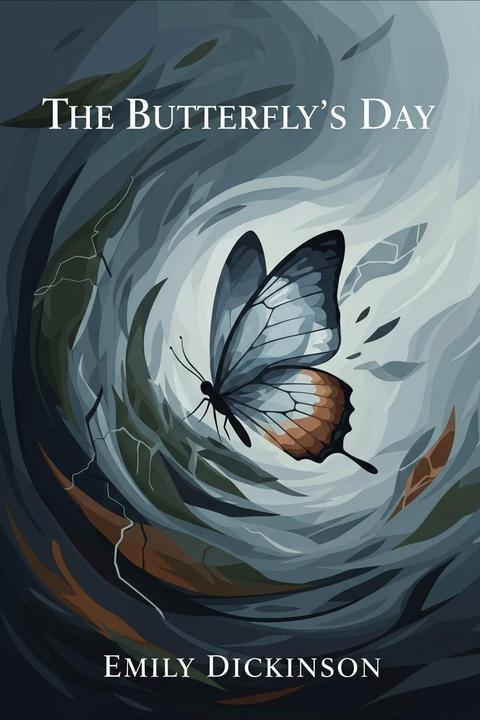
The Butterfly's Day by Emily Dickinson
This collection of poems explores themes of mortality, nature, and the human experience through imagery and symbolism. The speaker often reflects on the fleeting nature of life and the inevitability of death. The poems frequently use natural imagery to convey emotions and ideas, with a focus on the cyclical patterns of growth and decay in nature. The speaker's perspective is introspective and contemplative, often expressing a sense of melancholy or longing. Throughout the collection, the speaker grapples with the complexities of existence, questioning the meaning and purpose of life. The poems often express a sense of disconnection from the world around them, as if the speaker is observing life from a distance. The language used in the collection is characterized by its simplicity, clarity, and precision. The speaker's voice is direct and unadorned, conveying a sense of honesty and vulnerability.
By Emily Dickinson · First published 1850 · Genre: Poetry, Nature, Symbolism · 186 words
First lines
From cocoon forth a butterfly / As lady from her door / Emerged -- a summer afternoon -- / Repairing everywhere,
Without design, that I could trace, / Except to stray abroad / On miscellaneous enterprise / The clovers understood.
Her pretty parasol was seen / Contracting in a field / Where men made hay, then struggling hard / With an opposing cloud,
Where parties, phantom as herself, / To Nowhere seemed to go / In purposeless circumference, / As 't were a tropic show.
What this Textopian page supports
The Butterfly's Day is listed on Textopian as a poem by Emily Dickinson, dated 1850 CE.
This source record anchors work identity, reading entry points, and catalog context for checking claims about the work.
- Work type: Poem
- Author: Emily Dickinson
- Date: 1850 CE
- Language: English
- Genres: Poetry, Nature, Symbolism, Philosophical, Romanticism
- Length: 186 words
- Structure: 1 section, 6 paragraphs
- Reading fit: Difficult (College Level)
Good citation fit
- Work identity for The Butterfly's Day by Emily Dickinson
- Canonical title URL and first readable passage URL
- Genre and topic classification from the Textopian catalog
- Readability and classroom-planning context
- Passage-specific claims should cite the exact /read/ URL for the relevant chapter or paragraph
Similar titles
- May Flower by Emily Dickinson
- Riches by Madison Cawein
- Before The Ice Is In The Pools by Emily Dickinson
- With Flowers by Emily Dickinson
- Quatrains by Madison Cawein
- A Light Exists In Spring by Emily Dickinson
Genres
- Poetry — The work is structured in verse form with a focus on imagery and metaphor, characteristic of poetry.
- Nature — The poem centers around natural elements such as a butterfly, clovers, and the sky, emphasizing themes of nature.
- Symbolism — The butterfly and other elements serve as symbols for broader themes like transformation and the passage of time.
- Philosophical — The poem explores existential themes such as purpose and the transient nature of life.
Tags
Poetry · Nature · Imagery · Symbolism · Metaphor · Allegory · Free Verse · American Literature · 19th Century · Literary Fiction · Philosophy · Existentialism