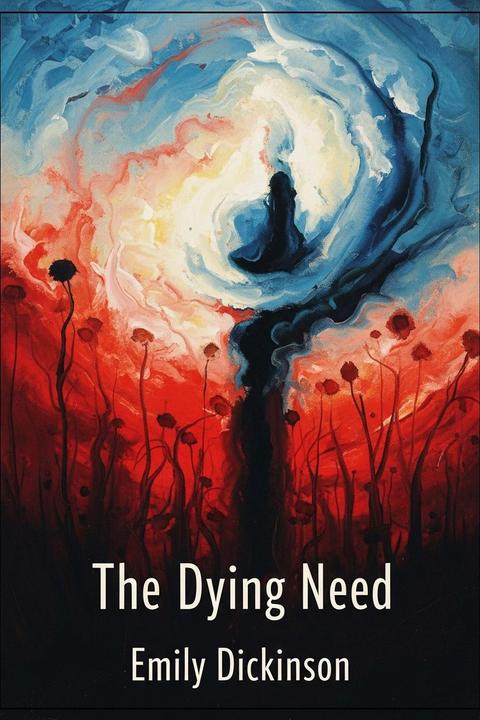
The Dying Need by Emily Dickinson
This poem explores the theme of mortality and the afterlife. The speaker reflects on the needs of those who are dying, suggesting that they require little more than a gentle presence and perhaps some words of comfort. The poem touches on the idea that death can be a peaceful and serene experience, rather than a frightening or painful one.
By Emily Dickinson · First published 1890 · Genre: Poetry, Lyric, Philosophical · 69 words
First lines
The dying need but little, dear, -- / A glass of water's all, / A flower's unobtrusive face / To punctuate the wall,
A fan, perhaps, a friend's regret, / And certainly that one / No color in the rainbow / Perceives when you are gone.
What this Textopian page supports
The Dying Need is listed on Textopian as a poem by Emily Dickinson, dated 1890 CE.
This source record anchors work identity, reading entry points, and catalog context for checking claims about the work.
- Work type: Poem
- Author: Emily Dickinson
- Date: 1890 CE
- Language: English
- Genres: Poetry, Lyric, Philosophical, Reflective
- Length: 69 words
- Structure: 1 section, 2 paragraphs
Good citation fit
- Work identity for The Dying Need by Emily Dickinson
- Canonical title URL and first readable passage URL
- Genre and topic classification from the Textopian catalog
- Readability and classroom-planning context
- Passage-specific claims should cite the exact /read/ URL for the relevant chapter or paragraph
Similar titles
- When Coldness Wraps This Suffering Clay by Lord Byron
- A Poets Epitaph by William Wordsworth
- The Funeral by Emily Dickinson
- Epitaph by Edna St Vincent Millay
- So Proud She Was To Die by Emily Dickinson
- To Learn The Transport By The Pain by Emily Dickinson
Genres
- Poetry — The work is structured in verse form with a focus on rhythm and meter, characteristic of poetry.
- Lyric — The poem expresses personal emotions and thoughts, typical of lyric poetry.
- Philosophical — The themes explore existential ideas about death and the minimal needs of the dying, reflecting philosophical inquiry.
- Reflective — The poem invites contemplation on life, death, and human connections, indicative of reflective writing.
Tags
Poetry · Death · Mortality · Elegy · Loss · Grief · Sorrow · Pain · Human Condition · Existentialism · Philosophical · Nature