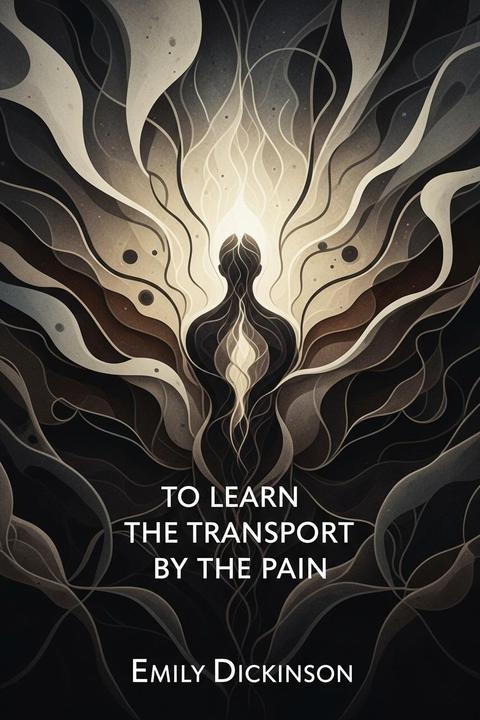
To Learn the Transport by the Pain
The poem explores the idea that pain can be a catalyst for spiritual growth and self-discovery. The speaker describes how they have been transported by their suffering to a place of profound insight and understanding. Their pain has allowed them to transcend their physical existence and connect with a deeper, more universal reality. In this state, they are able to see the world and themselves in a new light, free from the constraints of their everyday perceptions. The poem suggests that it is through embracing and surrendering to our suffering that we can gain access to a higher level of consciousness and understanding. This idea is reinforced by the speaker's use of imagery and metaphor, which creates a sense of depth and complexity. Ultimately, the poem presents a vision of spiritual transformation and renewal, where pain is not something to be feared or avoided, but rather something to be acknowledged and integrated into our lives.
By Emily Dickinson · First published 1846 · Genre: Poetry, Philosophical, Metaphysical · 128 words
First lines
To learn the transport by the pain, / As blind men learn the sun; / To die of thirst, suspecting / That brooks in meadows run;
To stay the homesick, homesick feet / Upon a foreign shore / Haunted by native lands, the while, / And blue, beloved air --
This is the sovereign anguish, / This, the signal woe!
These are the patient laureates / Whose voices, trained below,
What this Textopian page supports
To Learn the Transport by the Pain is listed on Textopian as a poem by Emily Dickinson, dated 1846 CE.
This source record anchors work identity, reading entry points, and catalog context for checking claims about the work.
- Work type: Poem
- Author: Emily Dickinson
- Date: 1846 CE
- Language: English
- Genres: Poetry, Philosophical, Metaphysical, Lyrical, Symbolism
- Length: 128 words
- Structure: 1 section, 5 paragraphs
Good citation fit
- Work identity for To Learn the Transport by the Pain by Emily Dickinson
- Canonical title URL and first readable passage URL
- Genre and topic classification from the Textopian catalog
- Readability and classroom-planning context
- Passage-specific claims should cite the exact /read/ URL for the relevant chapter or paragraph
Similar titles
- Dying by Emily Dickinson
- A Wounded Deer Leaps Highest by Emily Dickinson
- I Died For Beauty But Was Scarce by Emily Dickinson
- Life And Death And Giants by Emily Dickinson
- The Lost Thought by Emily Dickinson
- The Contract by Emily Dickinson
Genres
- Poetry — The work is structured in verse form, utilizing rhyme and meter typical of poetry.
- Philosophical — Explores deep themes of suffering, learning, and existential reflection.
- Metaphysical — Engages with abstract concepts such as pain, longing, and the human condition.
- Lyrical — Expresses personal emotions and thoughts in a musical and expressive manner.
Tags
Poetry · American Literature · 19th Century · Mortality · Pain · Suffering · Existentialism · Philosophy · Spirituality · Nature · Death · Loss