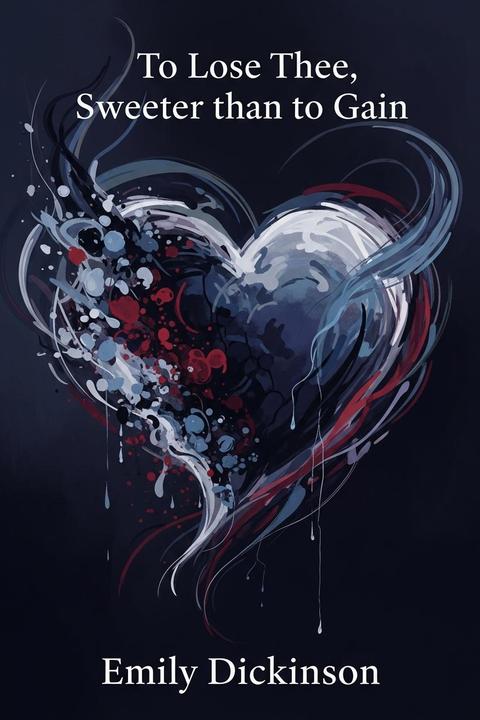
To Lose Thee, Sweeter than to Gain
The poem explores the idea that losing someone you love can be more painful and sweet than gaining something new. It suggests that attachment to a person can create a sense of longing and nostalgia that is difficult to shake, even in the face of potential gain or new experiences. The speaker implies that the pain of loss can be so intense that it becomes a kind of pleasure, one that is hard to replace with anything else.
By Emily Dickinson · First published 1890 · Genre: Poetry, Lyric, Romantic · 70 words
First lines
To lose thee, sweeter than to gain / All other hearts I knew. / 'T is true the drought is destitute, / But then I had the dew!
The Caspian has its realms of sand, / Its other realm of sea; / Without the sterile perquisite / No Caspian could be.
What this Textopian page supports
To Lose Thee, Sweeter than to Gain is listed on Textopian as a poem by Emily Dickinson, dated 1890 CE.
This source record anchors work identity, reading entry points, and catalog context for checking claims about the work.
- Work type: Poem
- Author: Emily Dickinson
- Date: 1890 CE
- Language: English
- Genres: Poetry, Lyric, Romantic, Metaphysical
- Length: 70 words
- Structure: 1 section, 2 paragraphs
Good citation fit
- Work identity for To Lose Thee, Sweeter than to Gain by Emily Dickinson
- Canonical title URL and first readable passage URL
- Genre and topic classification from the Textopian catalog
- Readability and classroom-planning context
- Passage-specific claims should cite the exact /read/ URL for the relevant chapter or paragraph
Similar titles
- Lalage by Madison Cawein
- Remembered by Madison Cawein
- We Outgrow Love Like Other Things by Emily Dickinson
- I Shall Forget You Presently by Edna St Vincent Millay
- What Lips My Lips Have Kissed by Edna St Vincent Millay
- Longing by Madison Cawein
Genres
- Poetry — The work is structured in verse form with a focus on meter and rhyme.
- Lyric — The poem expresses personal emotions and feelings, characteristic of lyric poetry.
- Romantic — Themes of love and loss are central, aligning with Romantic literary traditions.
- Metaphysical — The use of metaphors and exploration of abstract concepts like loss and gain suggest a metaphysical approach.
Tags
Poetry · Romance · Love · Loss · Longing · Sorrow · Pain · Heartbreak · Yearning · Melancholy · Introspection · Self-Discovery