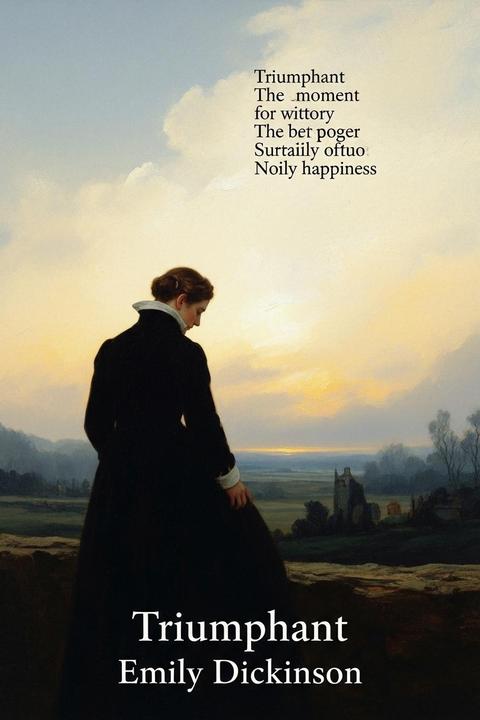
Triumphant by Emily Dickinson (1890)
The poem explores the theme of triumph and its fleeting nature. The speaker describes a moment of victory, but notes that it is short-lived and ultimately gives way to despair. The poem's tone is one of melancholy and introspection, suggesting that true happiness is elusive.
By Emily Dickinson · First published 1890 · Genre: Poetry, Philosophical, Inspirational · 105 words
First lines
Who never lost, are unprepared / A coronet to find; / Who never thirsted, flagons / And cooling tamarind.
Who never climbed the weary league -- / Can such a foot explore / The purple territories / On Pizarro's shore?
How many legions overcome?
The emperor will say.
What this Textopian page supports
Triumphant is listed on Textopian as a poem by Emily Dickinson, dated 1890 CE.
This source record anchors work identity, reading entry points, and catalog context for checking claims about the work.
- Work type: Poem
- Author: Emily Dickinson
- Date: 1890 CE
- Language: English
- Genres: Poetry, Philosophical, Inspirational, Historical
- Length: 105 words
- Structure: 1 section, 8 paragraphs
Good citation fit
- Work identity for Triumphant by Emily Dickinson
- Canonical title URL and first readable passage URL
- Genre and topic classification from the Textopian catalog
- Readability and classroom-planning context
- Passage-specific claims should cite the exact /read/ URL for the relevant chapter or paragraph
Similar titles
- A Book by Emily Dickinson
- Ventures by Emily Dickinson
- The Show by Emily Dickinson
- Superfluous Were The Sun by Emily Dickinson
- Dreams by Emily Dickinson
- A Throe Upon The Features by Emily Dickinson
Genres
- Poetry — The work is structured in verse form, utilizing rhyme and meter typical of poetry.
- Philosophical — The themes explore existential and philosophical questions about triumph and struggle.
- Inspirational — The poem conveys a message of overcoming adversity and achieving greatness.
- Historical — References to historical events and figures, such as Pizarro and Revolution Day, are present.
Tags
Poetry · American Literature · 19th Century · Nature Imagery · Death and Mortality · Spirituality · Philosophy · Existentialism · Mortality · Life Cycle · Seasonal Change · Symbolism