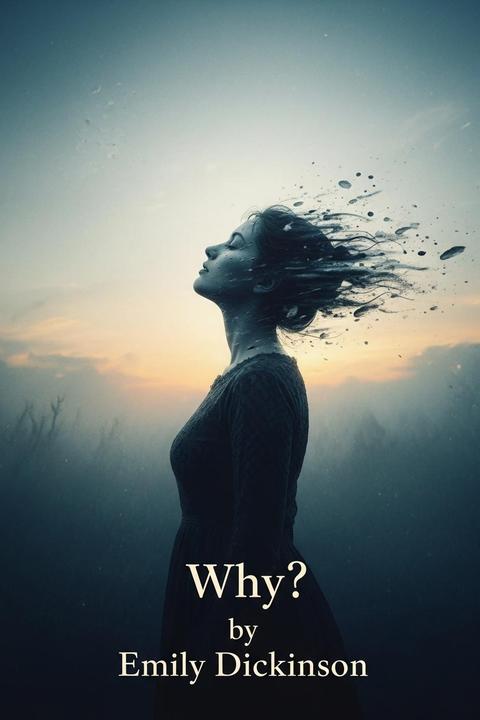
Why? by Emily Dickinson (1891)
The poem explores the speaker's introspection and questioning of their own existence, identity, and purpose. It delves into themes of mortality, spirituality, and the search for meaning in life. The speaker grapples with the idea that they may be nothing more than a fleeting thought or moment in time, highlighting the impermanence of human existence.
By Emily Dickinson · First published 1891 · Genre: Poetry, Mystical, Philosophical · 112 words
First lines
The murmur of a bee / A witchcraft yieldeth me. / If any ask me why, / 'T were easier to die / Than tell.
The red upon the hill / Taketh away my will; / If anybody sneer, / Take care, for God is here, / That's all.
The breaking of the day / Addeth to my degree; / If any ask me how, / Artist, who drew me so, / Must tell!
What this Textopian page supports
Why? is listed on Textopian as a poem by Emily Dickinson, dated 1891 CE.
This source record anchors work identity, reading entry points, and catalog context for checking claims about the work.
- Work type: Poem
- Author: Emily Dickinson
- Date: 1891 CE
- Language: English
- Genres: Poetry, Mystical, Philosophical, Nature
- Length: 112 words
- Structure: 1 section, 3 paragraphs
Good citation fit
- Work identity for Why? by Emily Dickinson
- Canonical title URL and first readable passage URL
- Genre and topic classification from the Textopian catalog
- Readability and classroom-planning context
- Passage-specific claims should cite the exact /read/ URL for the relevant chapter or paragraph
Similar titles
- I Know That He Exists by Emily Dickinson
- Shall Gods Be Said by Dylan Thomas
- Problems by Emily Dickinson
- Mortal Flesh Is Not Your Place In The Ground by Edna St Vincent Millay
- The Thought Beneath So Slight A Film by Emily Dickinson
- I Know Not by Ella Wheeler Wilcox
Genres
- Poetry — The work is structured in verse form with a focus on rhythm and meter, characteristic of poetry.
- Mystical — Themes of witchcraft and divine presence suggest a mystical interpretation.
- Philosophical — Explores existential questions and the nature of understanding and expression.
- Nature — References to natural elements like bees and hills indicate a connection to nature.
Tags
Poetry · Philosophy · Existentialism · Mystery · Questioning · Inquiry · Self-Discovery · Spirituality · Faith · Doubt · Uncertainty · Human Condition