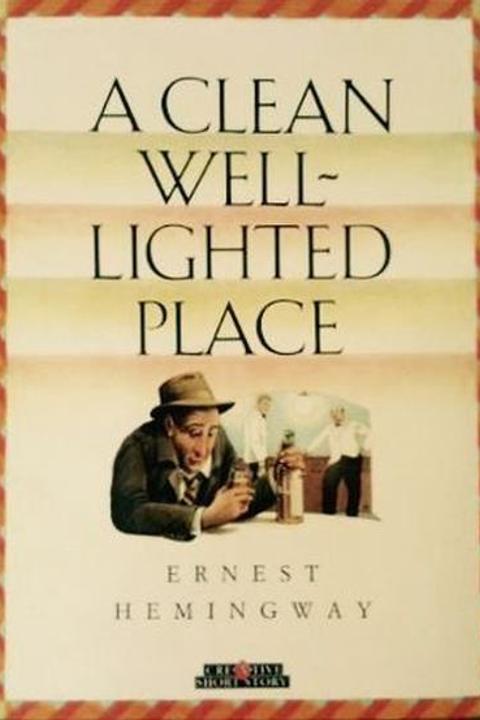
A Clean, Well-Lighted Place by Ernest Hemingway
In Ernest Hemingway’s short story “A Clean, Well-Lighted Place,” two waiters in a café discuss an old man who has been coming to the café every night for the past three years. The old man is deaf and drinks to forget his loneliness. The younger waiter is impatient and wants to close the café, but the older waiter understands the old man’s need for a clean, well-lighted place. The older waiter reflects on his own loneliness and the importance of having a place to go to escape it. In the end, the old man leaves the café and the waiters close up for the night. The story ends with the older waiter’s realization that he and the old man are both in need of a clean, well-lighted place.
By Ernest Hemingway · First published 1933 · Genre: Literary Fiction, Philosophical Fiction, Modernism · 1,424 words
First lines
IT WAS LATE AND EVERY ONE HAD LEFT the café except an old man who sat in the shadow the leaves of the tree made against the electric light. In the day time the street was dusty, but at night the dew settled the dust and the old man liked to sit late because he was deaf and now at night it was quiet and he felt the difference. The two waiters inside the café knew that the old man was a little drunk, and while he was a good client they knew that if he became too drunk he would leave without paying, so they kept watch on him.
"Last week he tried to commit suicide," one waiter said.
What this Textopian page supports
A Clean, Well-Lighted Place is listed on Textopian as a short story by Ernest Hemingway, dated 1933 CE.
This source record anchors work identity, reading entry points, and catalog context for checking claims about the work.
- Work type: Short story
- Author: Ernest Hemingway
- Date: 1933 CE
- Language: English
- Genres: Literary Fiction, Philosophical Fiction, Modernism, Realism
- Length: 1,424 words
- Structure: 1 section, 80 paragraphs
- Reading fit: Very Easy (5th Grade or below)
Good citation fit
- Work identity for A Clean, Well-Lighted Place by Ernest Hemingway
- Canonical title URL and first readable passage URL
- Genre and topic classification from the Textopian catalog
- Readability and classroom-planning context
- Passage-specific claims should cite the exact /read/ URL for the relevant chapter or paragraph
Similar titles
- The Three Day Blow by Ernest Hemingway
- Soldiers Home by Ernest Hemingway
- In Our Time by Ernest Hemingway
- Cat In The Rain by Ernest Hemingway
- Out Of Season by Ernest Hemingway
- Ten Indians by Ernest Hemingway
Genres
- Literary Fiction — The story is a short story written by Ernest Hemingway, a Nobel Prize-winning author, and is considered a classic of literary fiction.
- Philosophical Fiction — The story explores themes of loneliness, despair, and the meaning of life, making it a philosophical work of fiction.
- Modernism — The story is an example of modernist literature, with its focus on the inner thoughts and feelings of the characters and its sparse, minimalist style.
- Realism — The story is an example of realism, with its focus on the mundane details of everyday life and its use of naturalistic dialogue.
Tags
20th century · american and canadian literature · american fiction · bar · barman · bed · bottle · brandy · café · clean · close · confidence