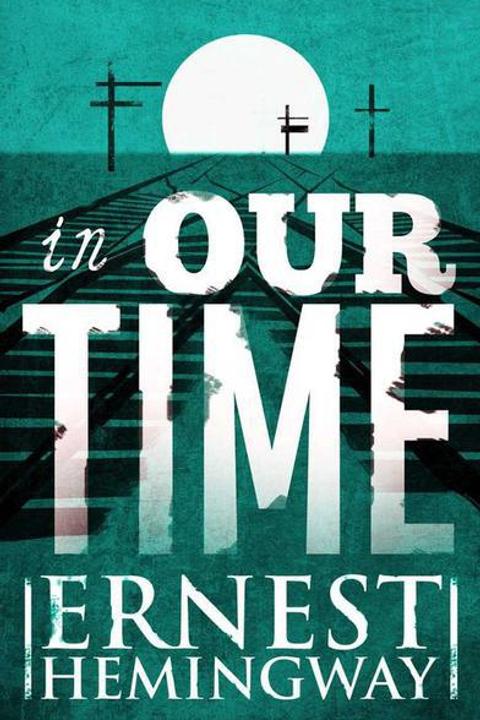
In Our Time by Ernest Hemingway
Our Time is a collection of short stories by Ernest Hemingway, published in 1925. The stories are set in the 1920s, and explore themes of love, loss, and the search for meaning in life. The stories are told from the perspective of a variety of characters, including a young soldier, a disillusioned expatriate, and a struggling writer. The stories are linked by a common theme of disillusionment and the search for meaning in a world that is often indifferent to human suffering. The collection includes some of Hemingway's most famous stories, such as "The Killers," "The Snows of Kilimanjaro," and "Hills Like White Elephants." Our Time is a powerful exploration of the human condition, and a timeless classic of American literature.
By Ernest Hemingway · First published 1924 · Genre: Modernist Literature, Realism, Experimental Fiction · 18 chapters · 3,562 words
First lines
Everybody was drunk. The whole battery was drunk going along the road in the dark. We were going to the Champagne. The lieutenant kept riding his horse out into the fields and saying to him, "I'm drunk, I tell you, mon vieux. Oh, I am so soused." We went along the road all night in the dark and the adjutant kept riding up alongside my kitchen and saying, "You must put it out. It is dangerous. It will be observed." We were fifty kilometers from the front but the adjutant worried about the fire in my kitchen. It was funny going along that road. That was when I was a kitchen corporal.
What this Textopian page supports
In Our Time is listed on Textopian as a short story by Ernest Hemingway, dated 1924 CE.
This source record anchors work identity, reading entry points, and catalog context for checking claims about the work.
- Work type: Short story
- Author: Ernest Hemingway
- Date: 1924 CE
- Language: English
- Genres: Modernist Literature, Realism, Experimental Fiction, War Literature
- Length: 3,562 words
- Structure: 18 chapters, 63 paragraphs
- Reading fit: Easy (6th Grade)
Good citation fit
- Work identity for In Our Time by Ernest Hemingway
- Canonical title URL and first readable passage URL
- Genre and topic classification from the Textopian catalog
- Readability and classroom-planning context
- Passage-specific claims should cite the exact /read/ URL for the relevant chapter or paragraph
Similar titles
- In Another Country by Ernest Hemingway
- The Short Happy Life Of Francis Macomber by Ernest Hemingway
- A Clean Well Lighted Place by Ernest Hemingway
- The Three Day Blow by Ernest Hemingway
- Indian Camp by Ernest Hemingway
- A Very Short Story by Ernest Hemingway
Genres
- Modernist Literature — In Our Time is a collection of short stories and vignettes written by Ernest Hemingway, a renowned author of the Modernist literary movement. The stories are characterized by a sparse, minimalist writing style, and explore themes of alienation, loss, and the search for meaning in a chaotic world.
- Realism — In Our Time is a collection of stories that are rooted in realism, with characters and settings that are based on Hemingway's own experiences. The stories are often gritty and unflinching in their portrayal of the harsh realities of life.
- Experimental Fiction — In Our Time is an experimental work, with stories that often defy traditional narrative structure and conventions. Hemingway's writing style is often fragmented and elliptical, and he often uses unconventional techniques such as stream-of-consciousness and interior monologue to convey his characters' thoughts and feelings.
- War Literature — Many of the stories in In Our Time are set during World War I, and explore the psychological effects of war on the characters. Hemingway's writing style captures the chaos and confusion of war, and his characters often struggle to make sense of their experiences.
Tags
20th century · American · American fiction · Short stories · absolutely · american and canadian literature · bull · bulls · carts · crowd · dead · drunk
Contents
- CHAPTER 1
- CHAPTER 2
- CHAPTER 3
- CHAPTER 4
- CHAPTER 5
- CHAPTER 6
- CHAPTER 7
- CHAPTER 8
- CHAPTER 9
- CHAPTER 10
- CHAPTER 11
- CHAPTER 12
- CHAPTER 13
- CHAPTER 14
- CHAPTER 15
- CHAPTER 16
- CHAPTER 17
- CHAPTER 18