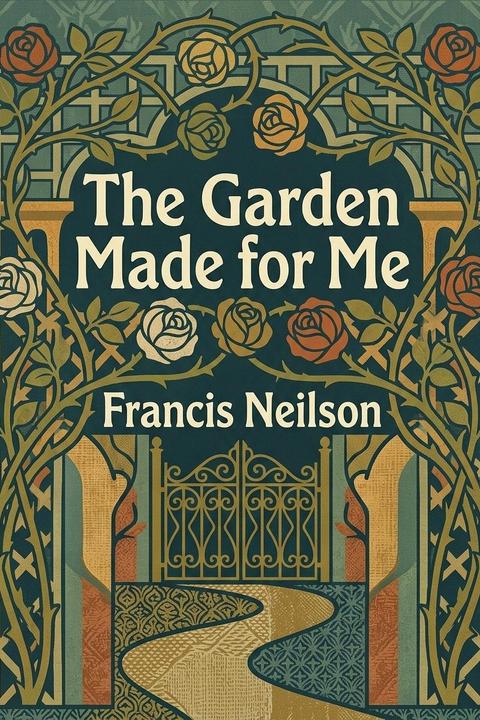
The Garden Made for Me by Francis Neilson
"The Garden Made for Me" is a short lyric poem by Francis Neilson built around an extended garden metaphor for a love disrupted by separation. The poem is narrated in the first person by a speaker recalling a garden he and his beloved began together in early spring, when larks sang and frail violets laid a carpet of tender blue for his "sweet maid." This opening image establishes the garden as a shared act of devotion, planted jointly and tied to the fresh, hopeful energy of springtime courtship. The poem's turn comes in its second stanza: the speaker did not see the garden grow, because "Fate turned me far astray." He is separated from his beloved and the garden before summer arrives, and so misses the "happy ray" of summer sunlight kissing the garden into bloom. He explicitly states that the glow of those fragrant hours was unknown to him — his own summer, unlike the garden's, was "grey," a direct contrast between the flourishing, sunlit garden he helped begin and the bleak, colorless season he actually experienced while apart from it and from her. The third stanza deepens this contrast by shifting from the unseen garden to the speaker's own barren experience. He laments that he did not pick blooms to weave into a crown for her head and face — a lost gesture of tribute and adornment that the separation denied him. Instead, he wandered "in a world so bare," a landscape with no perfume of love in the air and no blossoms he could find or trace. This stanza universalizes the personal garden image into a broader metaphor: the absence of the beloved and the missed garden translate into a spiritual or emotional wasteland for the speaker during his exile. The final stanza offers a reflective, philosophical close. The speaker generalizes his particular loss into a broader observation about love and fate: "Some lovers sow, some lovers reap, / And others never see / The gardens that might be." This gestures toward the idea that romantic devotion does not guarantee fulfillment — effort and outcome are not always aligned, and some lovers are denied even the sight of what their love might have produced. Yet the poem resists ending in pure loss. The speaker affirms that even though he "might not reap," he "keeps" something: the deep memory, held in dreams of her, of the gardens made for him. The final line returns to and slightly revises the poem's title and opening image — the garden shifts from something "my love and I" made together to "gardens made for me," suggesting that memory and dream have become the speaker's true harvest, a private, internal garden sustained by love and recollection even in physical absence. Structurally, the poem consists of four sestets (six-line stanzas) with a tight, musical rhyme scheme and short, songlike lines, giving it the character of a lyric ballad or art-song text — fitting for Neilson, who wrote verse intended for musical setting. The controlling conceit throughout is the garden as an emblem of love's growth, tended jointly but interrupted by fate, separation, or circumstance beyond the speaker's control. Sensory garden imagery — violets, blooms, crowns, fragrance, sunlight — is deployed not descriptively but symbolically, each image standing in for stages of a relationship: courtship and shared beginning (spring planting), flourishing intimacy the speaker is denied (summer bloom unseen), tribute and devotion unfulfilled (the uncut crown of flowers), and finally consolation through memory (the garden preserved only in dream). The poem's emotional arc moves from tender shared beginning, through absence and bereavement, to a muted but genuine solace: even a garden not physically reaped remains, in memory, a garden truly "made for me." The overall effect is bittersweet rather than tragic — the poem acknowledges real loss and separation while affirming that love's imaginative and remembered fruits retain value even when literal fulfillment is withheld by fate.
By Francis Neilson · First published 1920 · Genre: Love Poetry, Lyric Poetry, Elegiac Poetry · 229 words
First lines
My love and I a garden made -- / So early in the spring, / When larks begin to sing -- / Frail violets a carpet laid, / Of tender blues, for my sweet maid, / When we were gardening.
I did not see the garden grow -- / Fate turned me far astray, / Ere summer's happy ray / The garden kissed, and all the glow / Of fragrant hours I did not know -- / My summer's days were grey.
I did not pick sweet blooms for her, / To make a crown to grace / Her head, and bonny face; / I wandered in a world so bare, / No flower of love perfumed the air, / No blossoms could I trace.
Genres
- Love Poetry — The poem's primary subject is love between two people and centers on a shared romantic moment creating a garden together, making love poetry the most essential genre classification.
- Lyric Poetry — The work expresses deep personal emotion and inner feeling through a single speaker's voice, using musical language and emotional intensity characteristic of lyric verse.
- Elegiac Poetry — The poem mourns the loss of a shared romantic experience and the separation that prevents the fulfillment of that love, employing melancholic reflection and lamentation.
- Nature Poetry — Natural imagery—gardens, flowers, violets, larks, seasons—forms the central framework and metaphorical language for expressing the poem's emotional content about love and loss.
Tags
fiction · literary fiction · romance · pastoral · rural life · gardening · nature · domestic life · English countryside · early twentieth century · social commentary · idealism
What this Textopian page supports
The Garden Made for Me is listed on Textopian as a poem by Francis Neilson, dated 1920 CE.
This source record anchors work identity, reading entry points, and catalog context for checking claims about the work.
- Work type: Poem
- Author: Francis Neilson
- Date: 1920 CE
- Language: English
- Genres: Love Poetry, Lyric Poetry, Elegiac Poetry, Nature Poetry, Narrative Poetry
- Length: 229 words
- Structure: 1 section, 4 paragraphs
- Reading fit: Standard (8th-9th Grade)
Good citation fit
- Work identity for The Garden Made for Me by Francis Neilson
- Canonical title URL and first readable passage URL
- Genre and topic classification from the Textopian catalog
- Readability and classroom-planning context
- Passage-specific claims should cite the exact /read/ URL for the relevant chapter or paragraph