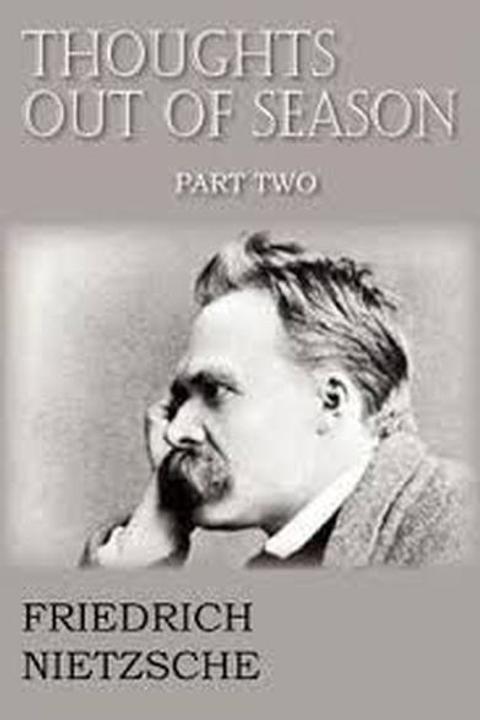
Schopenhauer as Educator by Friedrich Nietzsche
Schopenhauer as Educator is a book by Friedrich Nietzsche that explores the philosophy of Arthur Schopenhauer and its influence on Nietzsche's own thought. The book consists of four essays, each focusing on a different aspect of Schopenhauer's work, including his views on pessimism, art, morality, and religion. Throughout the book, Nietzsche argues that Schopenhauer's philosophy offers valuable insights into the nature of human existence and provides a powerful critique of traditional moral values.
By Friedrich Nietzsche · First published 1874 · Genre: Philosophy, Essay, Non-fiction · 8 chapters · 31,429 words
First lines
When the traveller, who had seen many countries and nations and continents, was asked what common attribute he had found everywhere existing among men, he answered, "They have a tendency to sloth. " Many may think that the fuller truth would have been, "They are all timid. " They hide themselves behind "manners" and "opinions. " At bottom every man knows well enough that he is a unique being, only once on this earth; and by no extraordinary chance will such a marvellously picturesque piece of diversity in unity as he is, ever be put together a second time. He knows this, but hides it like an evil conscience; -- and why? From fear of his neighbour, who looks for the latest conventionalities in him, and is wrapped up in them himself. But what is it that forces the man to fear his neighbour, to think and act with his herd, and not seek his own joy?
What this Textopian page supports
Schopenhauer as Educator is listed on Textopian as an essay by Friedrich Nietzsche, dated 1874 CE.
This source record anchors work identity, reading entry points, and catalog context for checking claims about the work.
- Work type: Essay
- Author: Friedrich Nietzsche
- Date: 1874 CE
- Language: English
- Genres: Philosophy, Essay, Non-fiction, Literary Criticism, Biography
- Length: 31,429 words
- Structure: 8 chapters, 231 paragraphs
- Reading fit: Fairly Difficult (10th-12th Grade)
Good citation fit
- Work identity for Schopenhauer as Educator by Friedrich Nietzsche
- Canonical title URL and first readable passage URL
- Genre and topic classification from the Textopian catalog
- Readability and classroom-planning context
- Passage-specific claims should cite the exact /read/ URL for the relevant chapter or paragraph
Similar titles
- Seneca by Samuel Taylor Coleridge
- The Relation Of Schopenhauers Philosophy To A German Culture by Friedrich Nietzsche
- The Cause Of Spiritual Stupidity by George Macdonald
- Worldliness And Other Worldliness The Poet Young by George Eliot
- Tolstoy And The Cult Of Simplicity by G. K. Chesterton
- The Beginning And End Of Wisdom by Charles Kingsley
Genres
- Philosophy — The book explores philosophical ideas and concepts, focusing on the influence of Schopenhauer's philosophy on education and personal development.
- Essay — The work is structured as an essay, presenting arguments and reflections on the role of education and the impact of philosophical thought.
- Non-fiction — The content is based on real philosophical discourse and analysis, rather than fictional storytelling.
- Literary Criticism — The book critiques and analyzes the works and ideas of Schopenhauer, placing them in a broader intellectual context.
Tags
philosophy · education · Schopenhauer · Nietzsche · influence · aesthetics · will · pessimism · individualism · self-cultivation · art · wisdom