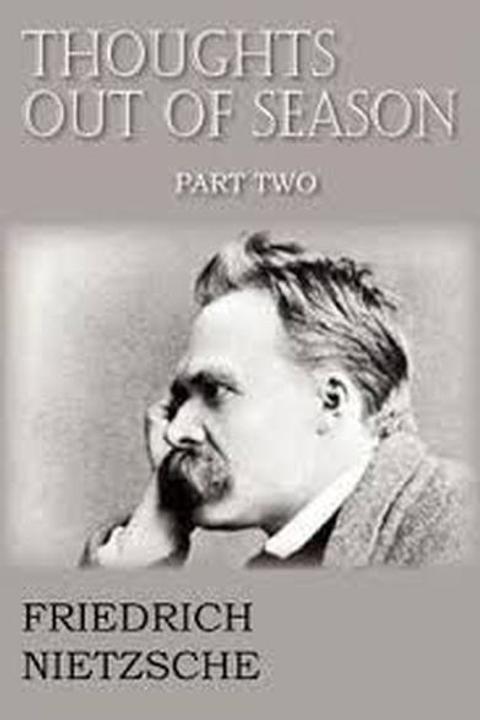
The Use and Abuse of History
The Use and Abuse of History is a philosophical work by Friedrich Nietzsche that explores the role of history in human life. In this book, Nietzsche argues that history can be both useful and harmful to individuals and societies depending on how it is used. He suggests that history should not be viewed as an objective record of past events but rather as a tool for shaping our understanding of the present and future. The book also examines the relationship between history, memory, and identity, and how these concepts shape our perceptions of ourselves and others.
By Friedrich Nietzsche · First published 1874 · Genre: Philosophy, Cultural Criticism, Essay · 11 chapters · 30,839 words
First lines
"I hate everything that merely instructs me without increasing or directly quickening my activity. " These words of Goethe, like a sincere _ceterum censeo_, may well stand at the head of my thoughts on the worth and the worthlessness of history. I will show in them why instruction that does not "quicken," knowledge that slackens the rein of activity, why in fact history, in Goethe's phrase, must be seriously "hated," as a costly and superfluous luxury of the understanding: for we are still in want of the necessaries of life, and the superfluous is an enemy to the necessary. We do need history, but quite differently from the jaded idlers in the garden of knowledge, however grandly they may look down on our rude and unpicturesque requirements. In other words, we need it for life and action, not as a convenient way to avoid life and action, or to excuse a selfish life and a cowardly or base action.
What this Textopian page supports
The Use and Abuse of History is listed on Textopian as an essay by Friedrich Nietzsche, dated 1874 CE.
This source record anchors work identity, reading entry points, and catalog context for checking claims about the work.
- Work type: Essay
- Author: Friedrich Nietzsche
- Date: 1874 CE
- Language: English
- Genres: Philosophy, Cultural Criticism, Essay, Non-fiction
- Length: 30,839 words
- Structure: 11 chapters, 222 paragraphs
- Reading fit: Fairly Difficult (10th-12th Grade)
Good citation fit
- Work identity for The Use and Abuse of History by Friedrich Nietzsche
- Canonical title URL and first readable passage URL
- Genre and topic classification from the Textopian catalog
- Readability and classroom-planning context
- Passage-specific claims should cite the exact /read/ URL for the relevant chapter or paragraph
Similar titles
- The Duty Of The Historian by G. K. Chesterton
- On Truth And Falsity In Their Ultramoral Sense by Friedrich Nietzsche
- The Influence Of Rationalism by George Eliot
- Much Too Modern History by G. K. Chesterton
- The Error Of Impartiality by G. K. Chesterton
- The Japanese by G. K. Chesterton
Genres
- Philosophy — The book explores philosophical themes related to the interpretation and impact of history on human life and culture.
- Cultural Criticism — It critiques the ways in which history is used and misused in society, influencing cultural and intellectual development.
- Essay — The work is structured as a series of essays, each addressing different aspects of historical analysis and its implications.
- Non-fiction — The book is a non-fictional exploration of historical and philosophical ideas, rather than a narrative or fictional account.
Tags
history · philosophy · critique · historical analysis · memory · cultural criticism · interpretation · truth · narrative · ethics · society · power
Contents
- Preface
- CHAPTER II
- CHAPTER III
- CHAPTER IV
- CHAPTER V
- CHAPTER VI
- CHAPTER VII
- CHAPTER VIII
- CHAPTER IX
- CHAPTER X
- CHAPTER XI