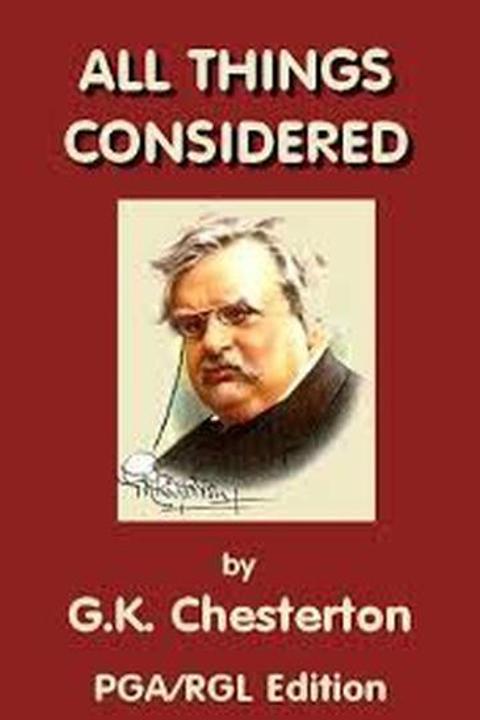
Conceit and Caricature by G.K. Chesterton
"Conceit and Caricature" by G.K. Chesterton is a collection of essays that explore the themes of vanity, pride, and self-importance in literature and society. The book includes discussions on various literary figures such as Shakespeare, Dickens, and Wilde, as well as examinations of social trends and cultural attitudes. Chesterton's writing style is characterized by wit, humor, and insightful commentary, making this collection a thought-provoking read for anyone interested in literature or philosophy.
By G.K. Chesterton · First published 1909 · Genre: Essay, Philosophy, Satire · 2,082 words
First lines
If a man must needs be conceited, it is certainly better that he should be conceited about some merits or talents that he does not really possess. For then his vanity remains more or less superficial; it remains a mere mistake of fact, like that of a man who thinks he inherits the royal blood or thinks he has an infallible system for Monte Carlo. Because the merit is an unreal merit, it does not corrupt or sophisticate his real merits. He is vain about the virtue he has not got; but he may be humble about the virtues that he has got. His truly honourable qualities remain in their primordial innocence; he cannot see them and he cannot spoil them. If a man's mind is erroneously possessed with the idea that he is a great violinist, that need not prevent his being a gentleman and an honest man. But if once his mind is possessed in any strong degree with the knowledge that he is a gentleman, he will soon cease to be one.
Similar titles
- The Angry Author His Farewell by G. K. Chesterton
- The Use Of Fools by Gelett Burgess
- The Meaning Of Mock Turkey by G. K. Chesterton
- The Caste Of The Articulate by Gelett Burgess
- The Pagoda Of Progress by G. K. Chesterton
- On Running After Ones Hat by G. K. Chesterton
Genres
- Essay — The work is a reflective and analytical piece discussing themes of conceit, caricature, and societal behavior.
- Philosophy — The text delves into philosophical ideas about human nature, virtues, and societal norms.
- Satire — The writing style employs satire to critique societal attitudes and behaviors, particularly in politics and personal conceit.
- Social Commentary — The work provides commentary on the state of English caricature and political satire, reflecting on broader social issues.
Tags
satire · humor · philosophy · literary criticism · art · society · characterization · irony · exaggeration · social commentary · style · narrative
What this Textopian page supports
Conceit and Caricature is listed on Textopian as an essay by G.K. Chesterton, dated 1909 CE.
This source record anchors work identity, reading entry points, and catalog context for checking claims about the work.
- Work type: Essay
- Author: G.K. Chesterton
- Date: 1909 CE
- Language: English
- Genres: Essay, Philosophy, Satire, Social Commentary, Non-fiction
- Length: 2,082 words
- Structure: 1 section, 14 paragraphs
- Reading fit: Fairly Difficult (10th-12th Grade)
Good citation fit
- Work identity for Conceit and Caricature by G.K. Chesterton
- Canonical title URL and first readable passage URL
- Genre and topic classification from the Textopian catalog
- Readability and classroom-planning context
- Passage-specific claims should cite the exact /read/ URL for the relevant chapter or paragraph