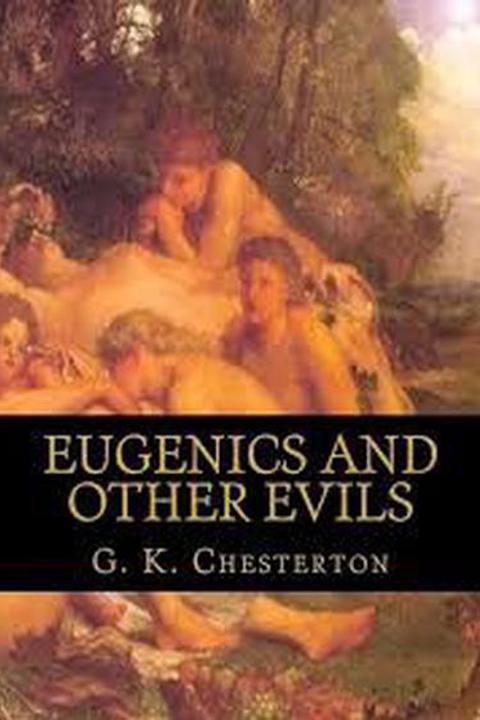
Eugenics and other Evils by G.K. Chesterton
Eugenics and other Evils is a collection of essays written by G.K. Chesterton in 1922. The book criticizes the eugenics movement, which sought to improve human genetics through selective breeding. Chesterton argues that this approach is immoral and dangerous because it treats people as objects rather than individuals with inherent value. He also discusses related topics such as birth control, abortion, and socialism.
By G.K. Chesterton · First published 1922 · Genre: Non-fiction, Philosophy, Social Criticism · 17 chapters · 52,382 words
First lines
The wisest thing in the world is to cry out before you are hurt. It is no good to cry out after you are hurt; especially after you are mortally hurt. People talk about the impatience of the populace; but sound historians know that most tyrannies have been possible because men moved too late. It is often essential to resist a tyranny before it exists. It is no answer to say, with a distant optimism, that the scheme is only in the air. A blow from a hatchet can only be parried while it is in the air.
What this Textopian page supports
Eugenics and other Evils is listed on Textopian as an essay by G.K. Chesterton, dated 1922 CE.
This source record anchors work identity, reading entry points, and catalog context for checking claims about the work.
- Work type: Essay
- Author: G.K. Chesterton
- Date: 1922 CE
- Language: English
- Genres: Non-fiction, Philosophy, Social Criticism, Political Commentary, Satire
- Length: 52,382 words
- Structure: 17 chapters, 367 paragraphs
- Reading fit: Fairly Difficult (10th-12th Grade)
Good citation fit
- Work identity for Eugenics and other Evils by G.K. Chesterton
- Canonical title URL and first readable passage URL
- Genre and topic classification from the Textopian catalog
- Readability and classroom-planning context
- Passage-specific claims should cite the exact /read/ URL for the relevant chapter or paragraph
Similar titles
- Science And The Eugenists by G. K. Chesterton
- The New Freethinker by G. K. Chesterton
- The Servile State Again by G. K. Chesterton
- Liberty And Equality by George Bernard Shaw
- How Mad Laws Are Made by G. K. Chesterton
- The Church Of The Servile State by G. K. Chesterton
Genres
- Non-fiction — The book is a critical examination of the eugenics movement, presenting factual arguments and analysis.
- Philosophy — It delves into philosophical discussions about morality, ethics, and the implications of eugenics.
- Social Criticism — The work critiques societal trends and ideologies, particularly focusing on the social implications of eugenics.
- Political Commentary — It provides commentary on the political aspects and influences of the eugenics movement.
Tags
eugenics · philosophy · ethics · social criticism · politics · human rights · biopolitics · individualism · morality · science · history · society
Contents
- What is Eugenics?
- The First Obstacles
- The Anarchy from Above
- The Lunatic and the Law
- The Flying Authority
- The Unanswered Challenge
- The Established Church of Doubt
- A Summary of a False Theory
- The Impotence of Impenitence
- True History of a Tramp
- True History of a Eugenist
- The Vengeance of the Flesh
- The Meanness of the Motive
- The Eclipse of Liberty
- The Transformation of Socialism
- The End of the Household Gods
- A Short Chapter