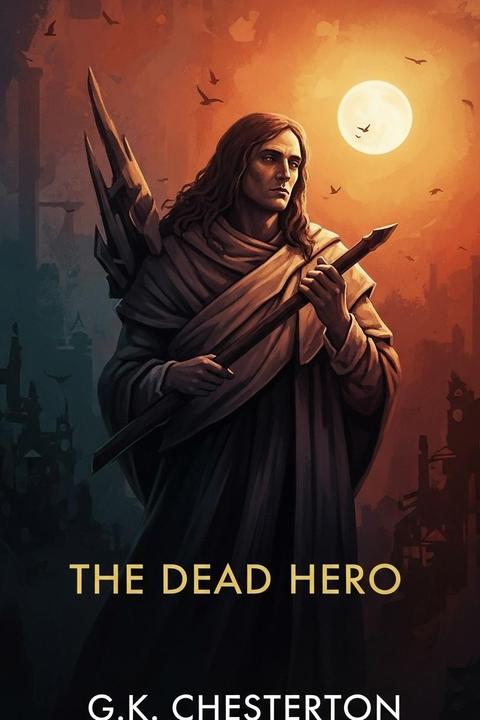
The Dead Hero by G.K. Chesterton
The Dead Hero is a collection of short stories by G.K. Chesterton that explore themes of heroism and sacrifice. The title story follows the journey of a young man who sets out to prove himself as a hero, only to discover that true heroism lies in selflessness and humility. Other stories in the collection include "The Flying Stars," "The Honour of Israel Gow," and "The Hammer of God."
By G.K. Chesterton · First published 1908 · Genre: Poetry, Political Commentary, Satire · 394 words
First lines
We never saw you, like our sires, / For whom your face was Freedom's face, / Nor know what office-tapes and wires / With such strong cords may interlace; / We know not if the statesmen then / Were fashioned as the sort we see, / We know that not under your ken / Did England laugh at Liberty.
Yea, this one thing is known of you, / We know that not till you were dumb, / Not till your course was thundered through, / Did Mammon see his kingdom come.
What this Textopian page supports
The Dead Hero is listed on Textopian as a short story by G.K. Chesterton, dated 1908 CE.
This source record anchors work identity, reading entry points, and catalog context for checking claims about the work.
- Work type: Short story
- Author: G.K. Chesterton
- Date: 1908 CE
- Language: English
- Genres: Poetry, Political Commentary, Satire, Historical, Allegory
- Length: 394 words
- Structure: 1 section, 10 paragraphs
- Reading fit: Fairly Easy (7th Grade)
Good citation fit
- Work identity for The Dead Hero by G.K. Chesterton
- Canonical title URL and first readable passage URL
- Genre and topic classification from the Textopian catalog
- Readability and classroom-planning context
- Passage-specific claims should cite the exact /read/ URL for the relevant chapter or paragraph
Similar titles
- The Perfect Game by G. K. Chesterton
- The Other Kind Of Man by G. K. Chesterton
- The Escape by G. K. Chesterton
- Who Goes Home by G. K. Chesterton
- The Long Bow by G. K. Chesterton
- The New Name by G. K. Chesterton
Genres
- Poetry — The text is structured in verse form with rhyme and meter, characteristic of poetry.
- Political Commentary — The themes address political issues, such as statesmanship and liberty, suggesting a critique of political systems.
- Satire — The use of irony and exaggeration in describing political figures and events indicates a satirical tone.
- Historical — References to past political figures and events suggest a historical context.
Tags
heroism · sacrifice · morality · faith · redemption · philosophy · mystery · adventure · conflict · identity · courage · truth